
Global high-mix volume high-speed PCBA manufacturer
9:00 -18:00, Mon. - Fri. (GMT+8)
9:00 -12:00, Sat. (GMT+8)
(Except Chinese public holidays)





HomePage > Blog > Knowledge Base > PCB Material: PCB Material Types, Properties, and Selection
Nowadays, most electronic products cannot do without printed circuit boards, and the core of printed circuit boards is PCB material. These materials are used to connect electronic components and provide a stable support structure for circuits. In the process of PCB design, choosing suitable PCB material is very important because it will directly affect the electrical performance, mechanical strength, heat dissipation and the overall reliability of the product.
The application range of electronic products is very wide, from common consumer electronics to aerospace systems. Therefore, the requirements for circuit boards vary greatly. When engineers design circuits, they need to choose from a variety of different types of PCB materials. Understanding the characteristics and applicable scenarios of various board materials can help designers make more reasonable choices.
In this article, we will introduce the basic knowledge of PCB materials, including their structure, important performance properties, and common types of PCB materials, as well as how to select suitable substrate materials in different applications.
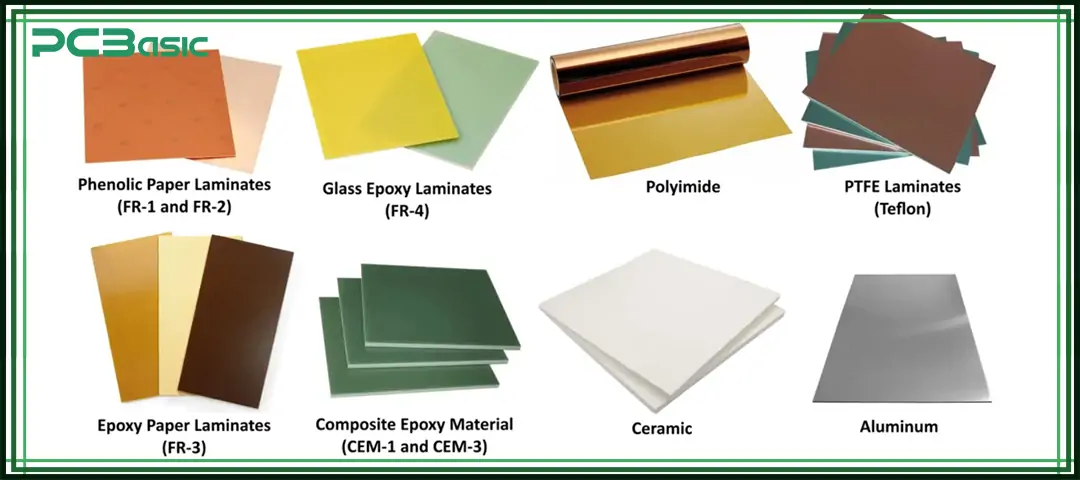
PCB material refers to the insulating substrate used to manufacture printed circuit boards. In simple terms, it is the base material of the circuit board that is used to hold copper traces and support electronic components. These materials can separate different conductive copper layers while providing structural support for the entire circuit board.
In a multilayer circuit board, the PCB material is located between the copper traces. It acts as a dielectric layer and also affects the transmission of electrical signals in the circuit board. Different PCB materials have different dielectric properties, thus affecting signal loss, impedance control, electromagnetic interference and overall signal integrity.
When engineers mention PCB materials, they are usually talking about the base substrate materials used to build the PCB stack-up. These circuit board materials not only need to provide good electrical insulation, but also need to have sufficient mechanical strength, stable heat resistance, and be suitable for PCB manufacturing processes.

Most PCB materials are actually composite structures composed of multiple layers of circuit materials. These materials work together to form a stable and reliable PCB substrate.
Generally speaking, common PCB materials mainly consist of three parts: copper foil, resin and glass fiber reinforcement.
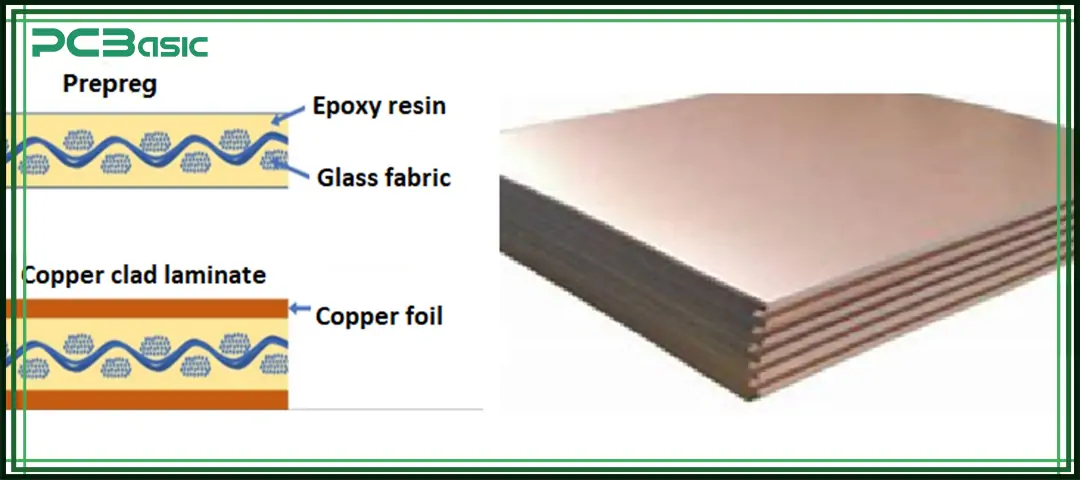
Most modern PCB materials are made from three basic raw materials:
• Copper
• Resin
• Glass fiber
When these three materials are combined, they form a reliable substrate material that can support multilayer PCB structures.
Copper foil is the conductive layer in PCB. It is responsible for forming all electrical connections. During the PCB manufacturing, the copper layer is etched to create signal traces, ground planes and power planes.
Resin has a significant influence on the electrical and thermal performance of PCB materials. Its function is to bond the glass fibers together and form the insulating structure of the substrate material at the same time.
Common resin systems for PCB materials include:
• Epoxy resin (epoxy resin)
• Polyimide resin (polyimide resin)
• PTFE resin (PTFE resin)
Different resins can affect many key properties, such as dielectric constant, heat resistance, moisture resistance and mechanical strength.
Glass fiber is usually added to many PCB materials because it can enhance the mechanical strength and dimensional stability of the materials.
In most circuit board materials, glass fiber is usually used in the form of woven fabric to create a rigid PCB substrate. Different glass fiber styles can also affect the electrical performance of substrate materials, especially in high-speed circuit designs.
In addition, the ratio of glass fiber to resin also affects the dielectric properties of the material. Therefore, this is very important when designing high-performance circuit boards.
Time is money in your projects – and PCBasic gets it. PCBasic is a PCB assembly company that delivers fast, flawless results every time. Our comprehensive PCB assembly services include expert engineering support at every step, ensuring top quality in every board. As a leading PCB assembly manufacturer, we provide a one-stop solution that streamlines your supply chain. Partner with our advanced PCB prototype factory for quick turnarounds and superior results you can trust.
In the multilayer PCB material structure, there are two very important materials: laminates and prepregs.
Laminate is a common PCB material. It is composed of glass fiber and resin, with a layer of copper foil bonded to its surface.
Prepreg is a partially cured resin sheet that is used to bond different laminate layers together during the PCB lamination process.
By laminating layers of laminates and prepregs, a complete multilayer PCB material laminated structure can be formed, thereby supporting modern high-density PCB designs.
There are many different types of PCB materials available on the market today, and each material is designed for specific performance requirements. Understanding these types of PCB materials can help us select the appropriate circuit materials when designing electronic circuits.
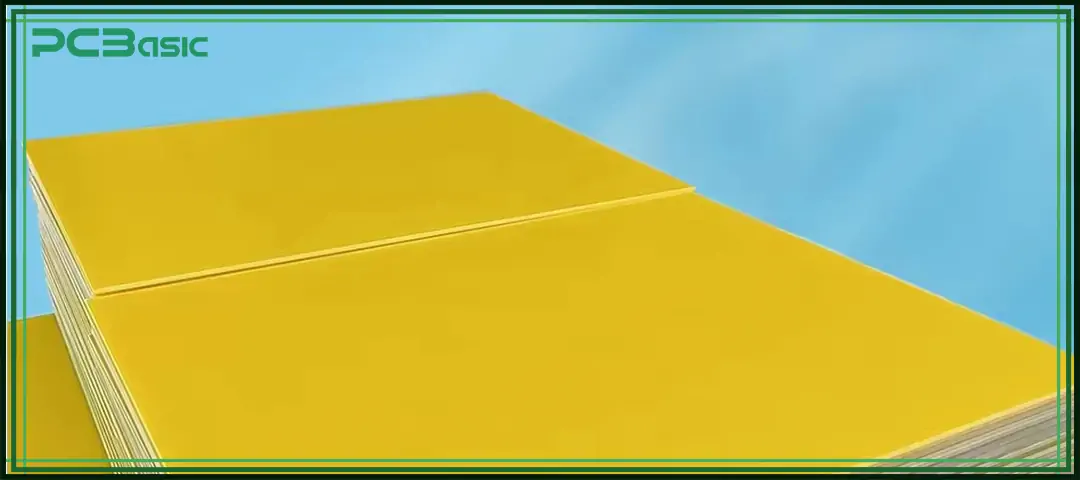
FR4 is one of the most widely used PCB materials in the electronics industry. It is a composite material made from woven fiberglass and epoxy resin.
FR4 circuit board materials provide a relatively good balance between electrical insulation, mechanical strength and cost.
Due to its affordable price and stable performance, FR4 remains the mainstream choice in many PCB materials and is widely used in consumer electronics, industrial equipment, and various general PCB designs.
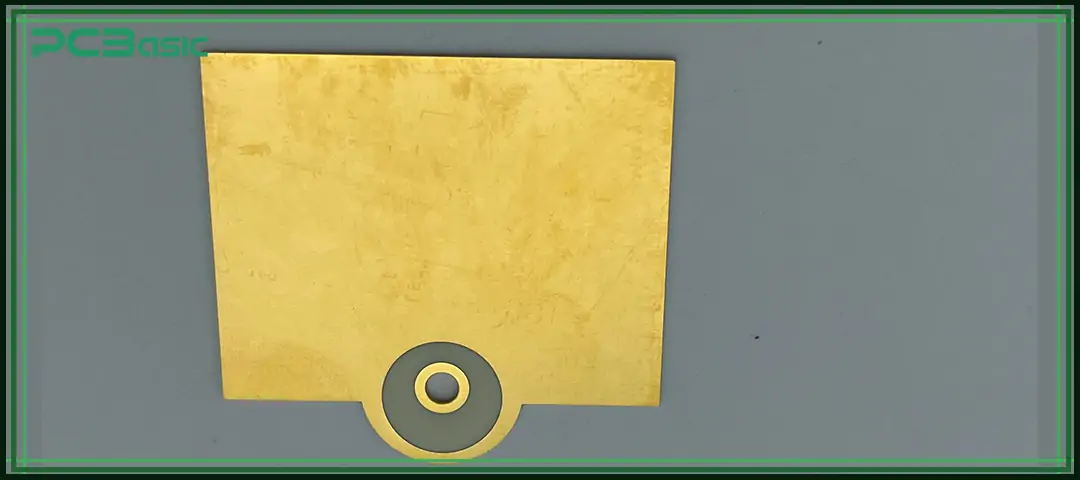
In high-speed digital circuits, standard PCB materials sometimes fail to meet the signal integrity requirements, so materials with lower dielectric loss are needed.
These advanced circuit materials usually use modified epoxy resins or cyanate ester resins, which can reduce signal attenuation and maintain stable signal transmission in high-frequency environments.
Common examples include advanced board materials such as Megtron laminates, as well as other low-loss substrate materials. These materials are typically used in high-speed computing devices, networking equipment, and data centers.
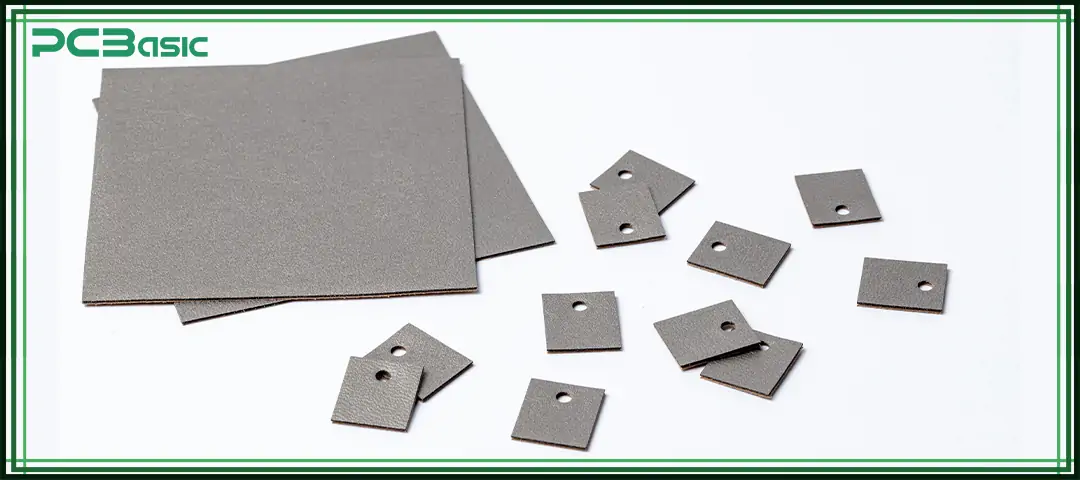
Rogers laminates are a type of PCB material specifically used for RF and microwave applications.
Compared with standard printed circuit board materials, Rogers PCB materials have a more stable dielectric constant and lower signal loss.
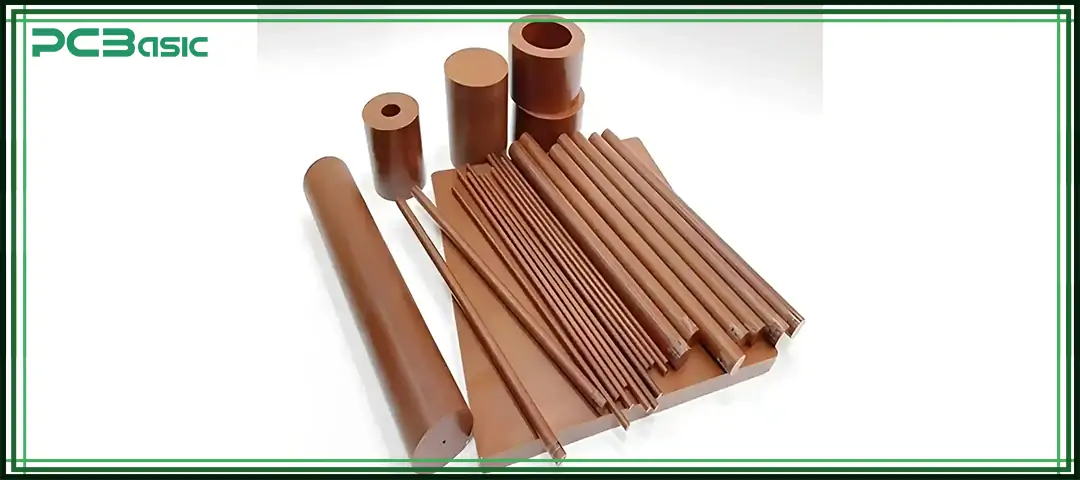
Polyimide-based PCB materials are usually used in high-temperature environments and flexible circuits.
These circuit materials provide excellent thermal stability, and their glass transition temperature is usually around 250°C. Due to their simultaneous characteristics of high-temperature resistance and flexibility, polyimide PCB materials are often used in aerospace electronics, medical devices, and flexible PCB designs.
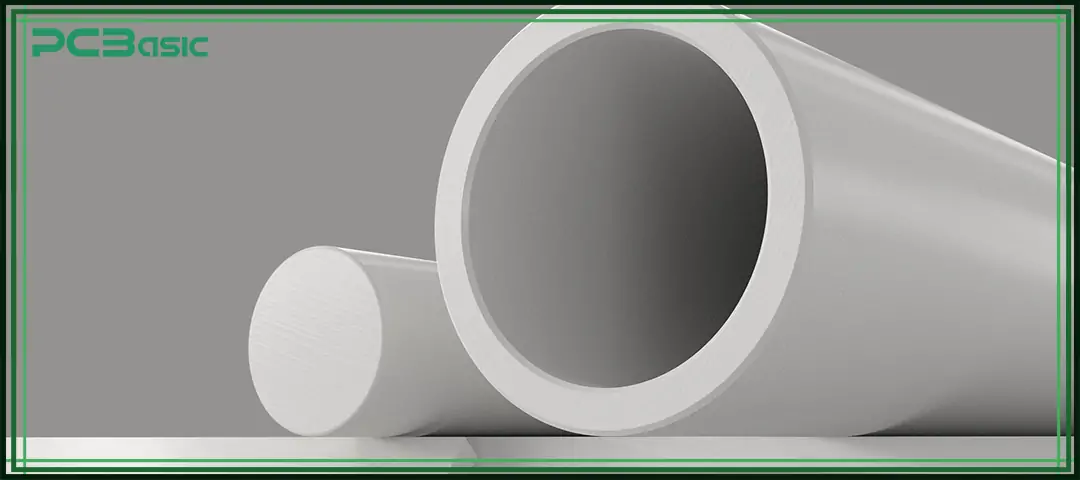
PTFE is currently one of the PCB materials with the lowest loss. Due to its very low dielectric constant and d minimal signal loss, PTFE-based circuit board materials are particularly suitable for RF and microwave circuits.
However, compared with traditional printed circuit board materials such as FR4, PTFE substrate materials are more expensive and more difficult to process.
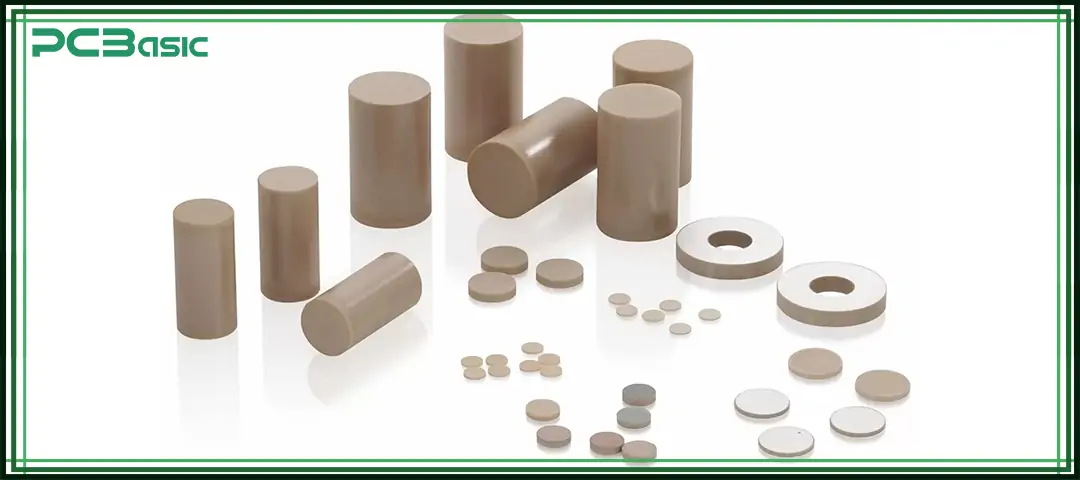
Ceramic PCB materials use inorganic substrates such as alumina or aluminum nitride.
These circuit materials provide excellent thermal conductivity and high-temperature resistance. Because ceramic board materials can dissipate heat efficiently, they are commonly used in high-power electronics, LED lighting systems and RF power modules.
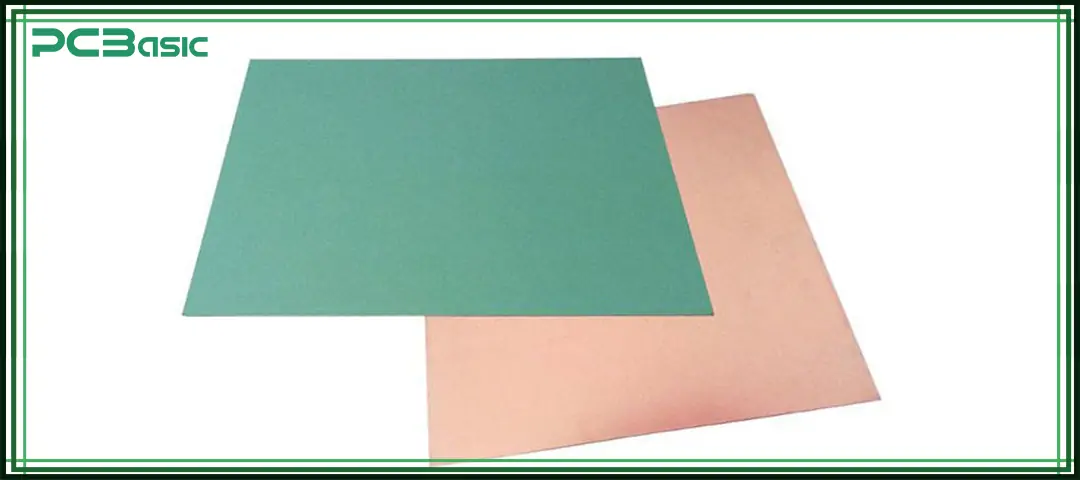
Metal-core PCB materials incorporate a metal base layer beneath traditional substrate materials, usually using aluminum as the base.
This structure can significantly enhance the heat dissipation capacity. Therefore, these printed circuit board materials are often used in power electronics and LED lighting systems and are one of the most widely used circuit materials.
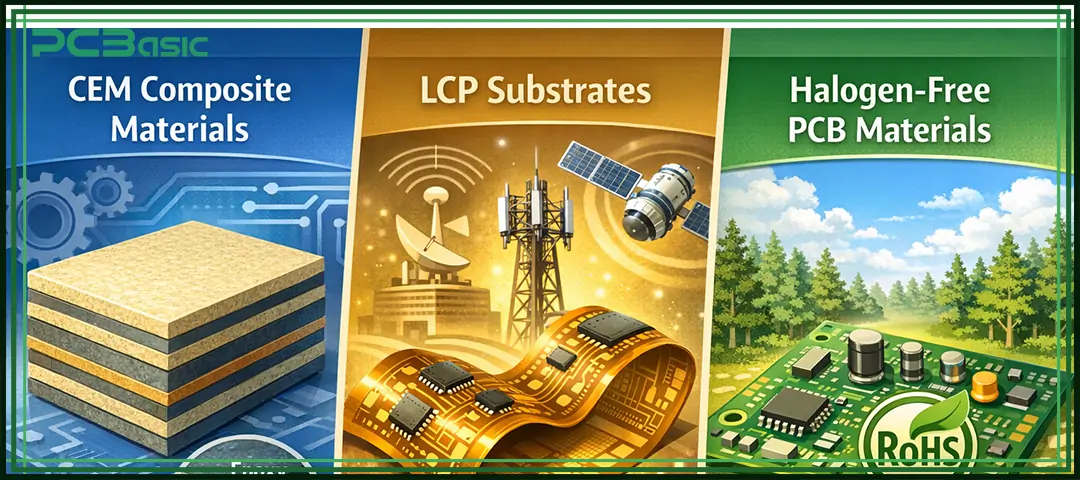
In addition to the common PCB materials, there are also some circuit materials specifically used for specific applications.
Examples include:
• CEM composite materials
• LCP substrates
• Halogen-free PCB materials
These specialized board materials are usually selected for environmentally friendly designs, cost reduction, or high-frequency circuit applications.
When choosing PCB materials, the most important thing is to understand their key properties. Different projects have different requirements for materials. Only by understanding these parameters can we select the appropriate substrate materials.
The dielectric constant is one of the most fundamental properties of PCB materials. Simply put, it determines how fast signals travel through the board. This parameter is very crucial when doing impedance control (such as 50Ω traces).
The dissipation factor can be understood as how much the signal is "lost" during transmission.
In PCB materials, the lower the Df, the lower the signal loss. Low-loss printed circuit board materials perform better and provide more stable signals in high-frequency or high-speed circuits.
Tg is the temperature at which a material begins to "soften".
When the temperature exceeds Tg, the structure of PCB materials will become less stable. Therefore, for high-temperature applications (such as automotive electronics and industrial control), high Tg board materials are typically preferred.
Td is the temperature at which a material truly begins to break down chemically.
For PCB materials, the higher the Td, the safer the material is at high temperatures.
CTE indicates how much the material will expand when heated.
PCB materials will expand when heated. If the expansion is inconsistent with that of the copper layer or substrate materials, it may lead to problems such as via cracking or solder joint failure.
Thermal conductivity determines the heat dissipation capacity of a material.
The heat dissipation capacity of standard PCB materials is limited, while high-performance circuit materials like ceramics can transfer heat more efficiently and are suitable for high-power applications.
Some printed circuit board materials can absorb moisture from the air. This may affect electrical performance. In severe cases, delamination (popcorning) problems may occur during reflow soldering.
The mechanical properties of PCB materials determine whether they are prone to deformation or damage during processing and use.
High-quality circuit board materials can remain stable during drilling, lamination, transportation and operation.
CTI reflects the material's ability to resist electrical tracking.
For high-voltage applications, the higher the CTI value in PCB materials, the better the safety, and it is less likely to have leakage or breakdown.
|
Key Factor |
Simple Explanation |
Recommended PCB Materials |
|
Operating Frequency |
For low-frequency circuits, standard materials are used; for high-speed/RF designs, low-loss materials are required to avoid signal deterioration |
Low frequency: standard PCB materials (e.g., FR4) High frequency: low-loss circuit board materials |
|
Temperature Requirements |
Higher operating temperatures require better heat resistance |
High Tg PCB materials or heat-resistant board materials |
|
Thermal Management |
Higher power means a greater need for heat dissipation |
High Tg PCB materials or heat-resistant board materials |
|
Flexibility |
Designs that require bending or folding need flexible materials |
Flexible PCB materials, such as polyimide-based printed circuit board materials |
|
Reliability |
High-reliability applications require more stable materials |
High-quality PCB materials and stable circuit board materials |
|
Cost & Manufacturability |
Higher performance usually means higher cost and more complex processing |
Low cost: standard PCB materials like FR4 High performance: advanced circuit materials |
|
Comparison |
Key Difference |
Electrical Performance |
Thermal Performance |
Flexibility |
Cost |
Recommended Use |
|
FR4 vs. High-Tg FR4 |
Higher Tg provides better heat resistance |
Similar |
High-Tg is more stable |
Rigid |
Low / Medium |
FR4: general electronics High-Tg: high-temperature, lead-free processes |
|
FR4 vs. Rogers |
Rogers offers lower loss and better high-frequency performance |
Rogers is better |
Similar |
Rigid |
Low / High |
FR4: general designs Rogers: RF/high-speed circuits |
|
FR4 vs. Polyimide |
Polyimide offers higher heat resistance and flexibility |
Polyimide is more stable |
Polyimide is better |
Flexible (Polyimide) |
Low / High |
FR4: standard boards Polyimide: high-temp/flexible applications |
|
Polyimide vs. PTFE |
PTFE has lower loss for high-frequency applications |
PTFE is better |
Polyimide is better |
Polyimide is better |
High / High |
Polyimide: high-temperature PTFE: RF/microwave |
|
Ceramic vs. Metal Core |
Ceramic offers superior thermal performance but higher cost |
Ceramic is better |
Ceramic is better |
Rigid |
High / Medium |
Ceramic: high-power applications Metal Core: LED/power electronics |
Only by choosing the right PCB material can the circuit board be made stable and reliable. Different PCB materials will vary in electrical performance, heat dissipation capacity and mechanical strength.
As long as the characteristics and applicable scenarios of various types of PCB materials are clearly understood, it will be easier to select the appropriate substrate materials. Whether using conventional FR4 circuit materials or more advanced RF materials, if the right materials are selected, the performance of the product and production will be smoother.

What is the most commonly used PCB material?
The most widely used PCB material is FR4. It offers a good balance of cost, electrical insulation, and mechanical strength, making it the standard choice among PCB materials for most applications.
What are the main types of PCB materials?
The main types of PCB materials include FR4, high-speed epoxy, Rogers, polyimide, PTFE, ceramic, and metal-core materials. Each type of circuit material is designed for different electrical, thermal, or mechanical requirements.
How do I choose the right PCB material?
To select the right PCB materials, consider operating frequency, temperature, thermal management, flexibility, reliability, and cost. Different applications require different substrate materials to achieve optimal performance.
What PCB materials are best for high-temperature applications?
For high-temperature environments, polyimide and high-Tg PCB materials are commonly used. These board materials maintain stability and reliability under extreme heat.
Are flexible PCB materials different from rigid PCB materials?
Yes, flexible PCB materials are designed to bend and fold, while rigid circuit board materials remain solid. Flexible PCB materials are commonly made from polyimide.
What factors affect the cost of PCB materials?
The cost of PCB materials depends on performance requirements, raw materials, processing complexity, and volume. Advanced circuit materials with low loss or high thermal performance are usually more expensive.
Assembly Enquiry
Instant Quote
Phone contact

+86-755-27218592
In addition, we've prepared a Help Center. We recommend checking it before reaching out, as your question and its answer may already be clearly explained there.
Wechat Support

In addition, we've prepared a Help Center. We recommend checking it before reaching out, as your question and its answer may already be clearly explained there.
WhatsApp Support

In addition, we've prepared a Help Center. We recommend checking it before reaching out, as your question and its answer may already be clearly explained there.
