
Global high-mix volume high-speed PCBA manufacturer
9:00 -18:00, Mon. - Fri. (GMT+8)
9:00 -12:00, Sat. (GMT+8)
(Except Chinese public holidays)





HomePage > Blog > Knowledge Base > PCB Fabrication and Assembly: How to Choose a Reliable One-Stop PCBA Manufacturer
If you need a PCB board for your product, you're at the root of a basic problem with PCB fabrication and assembly. The reason is simple: many manufacturers claim both fabrication and assembly, but they often lack one. So this decision is very important to launch your product on time.
PCB fabrication is the process of manufacturing the board. Technicians convert your design into layers of copper, insulation material, and traces. Next, it's time for assembly. Thousands of tiny components are placed on that board, soldered in place permanently, and tested to ensure that they function.
Now this is the real world. Most manufacturers design their products for either fabrication or assembly. You have to deal with one company; they generally outsource the PCB assembly to a partner, and you have to wait. Simultaneously, communication is also lost. A one-stop PCB manufacturer performs both tasks in a single location.
For example, if you have to share the work between two suppliers, it can be a real headache. For example, PCB fabrication companies will manufacture your board per your specifications. However, they won't know how assembly affects design.
If you use one manufacturer for both services, their engineers review your design before fabrication starts. They ask questions. They can recognize issues that generally cost money to correct later. This is called DFM.
You may have a shorter timeline as a result. Your costs drop. Your quality improves. Why? Communication is short distance. One project manager is responsible for tracking everything. A quality team is observing all actions.

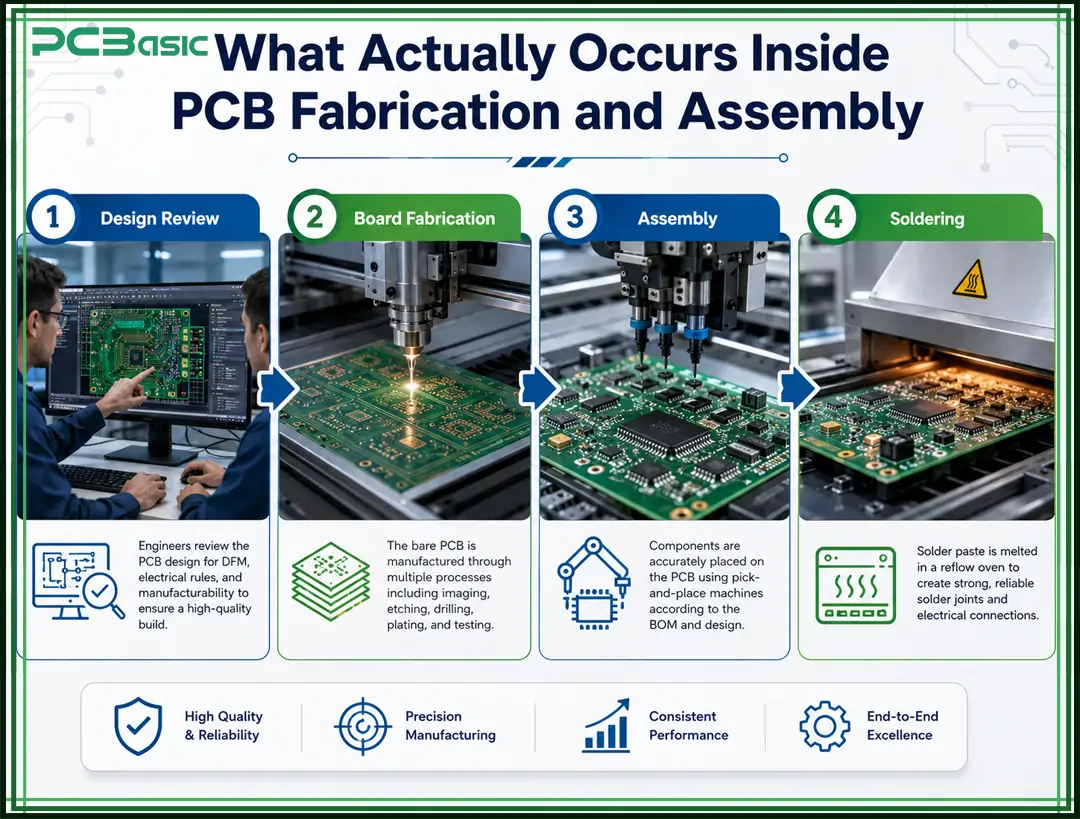
Your design begins with files. These files are uploaded to the manufacturer's software. Technicians do what they call artwork. This is an image, much like a blueprint, that directs all the machines in this artwork.
Here is the process for the fabrication part. Photolithography is the process used to create Copper layers. Basically, the manufacturer shines light through a mask to form patterns on the copper. Unwanted copper is removed by chemical processes. Multiple layers stack and bond together. The holes are then drilled to attach parts. This is no easy task. One mistake will ruin everything.
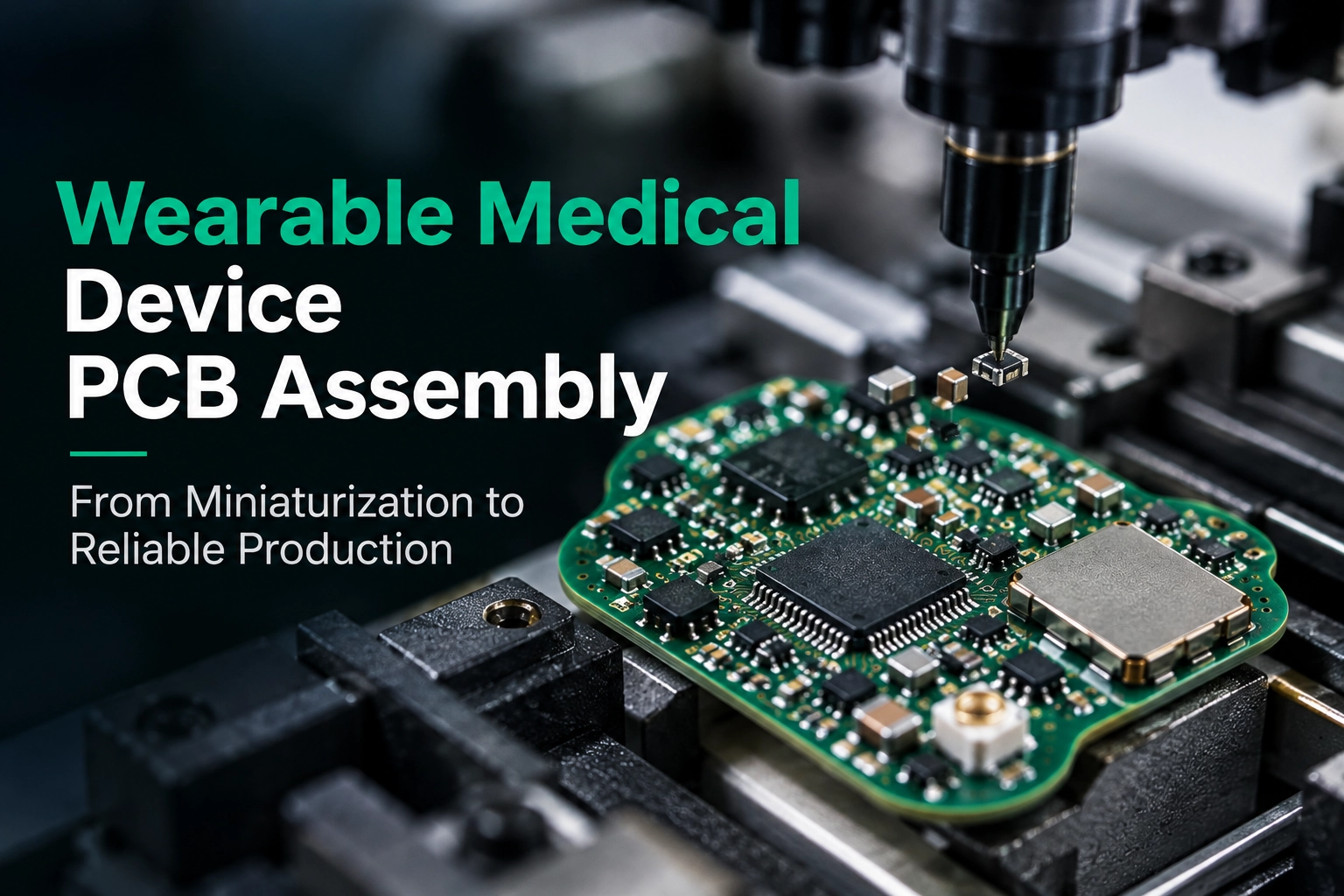
When the board is finished, it goes to assembly. The components are delivered in reels or trays. A pick and place machine reads your design file and places each individual component. The purpose of this machine is to be fast and accurate. The challenge, however, is that it will not operate without complete data.
Then comes soldering. In this type, the board is moved through an oven. Next, the solder paste, along with heat, will fuse the parts to the board. Averaged temperatures are not acceptable. If it is too hot, components will be damaged. Solder joints fail if they are too cold. The point of manufacturers investing in an expensive oven is to see if your board really works.
Time is money in your projects – and PCBasic gets it. PCBasic is a PCB assembly company that delivers fast, flawless results every time. Our comprehensive PCB assembly services include expert engineering support at every step, ensuring top quality in every board. As a leading PCB assembly manufacturer, we provide a one-stop solution that streamlines your supply chain. Partner with our advanced PCB prototype factory for quick turnarounds and superior results you can trust.
Let me list what actually goes wrong in fabrication and assembly, based on experience.
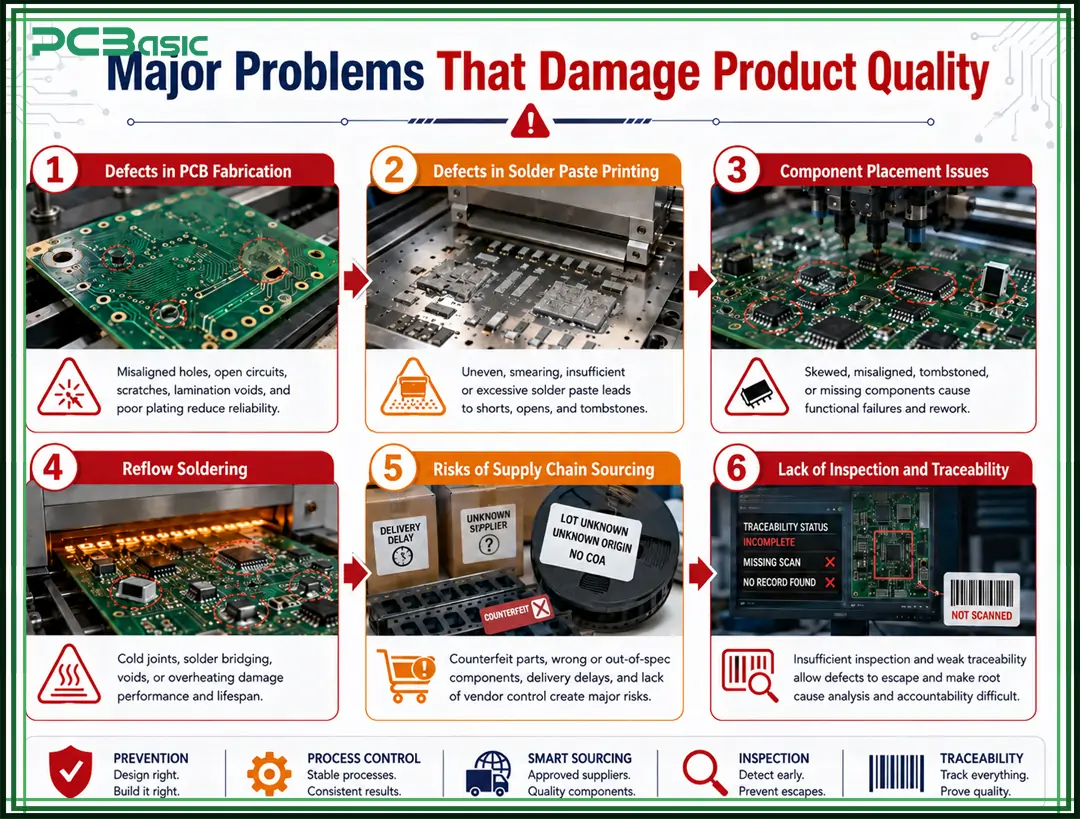
Rather than design flaws, fabrication defects occur when machinery is no longer operating within established tolerances. Consider that one company specifies a trace width of 0.2 millimeters. The fabrication machinery, when properly calibrated, should produce traces of exactly that width.
However, if the machinery produces traces that are 0.18 millimeters wide, there is a fabrication defect, and the circuitry will not function as intended.
Surprisingly, the process of Solder Paste Printing is critical to the function of the circuitry being produced. This is because there must be exactly the right amount of Solder Paste on each pad. If there is too much solder, a solder bridge is created, and a short circuit occurs. Conversely, if there is too little solder, the joint can become mechanically faulty and fail. This is also one of the most common causes for failure in PCB assembly.
A common defect in PCB assembly is incorrect component placement. This can occur with very small components, such as the 0402 Capacitor, which can be placed upside down. An incorrect placement can even occur for a 180-degree rotation of a component. This can occur when a technician reads a mislabeled resistor label and places an incorrect resistor into the machine.
The multiplication of errors is the actual problem. For example, if you have a PCB with 500 components and the placement mechanism has a 99 percent correct placement rate, there will still be 5 components incorrectly placed, and the board will not function as required.
Reflow soldering can also result in defects, such as cold joints, which occur when the solder does not melt completely, and a component does not sit flush with the PCB. A connection is fully functional; however, over time, if the board is subjected to vibration, it will fail. Bridges between solder, which connect two or more components that should not be connected, will also form.
Risks associated with supply chain sourcing are becoming increasingly more critical. The reason for this is counterfeit components. A seller might say they possess authentic chips, but the truth is they are from reclaimed or previously used inventory. Typically, these components fail soon. Certainly, this is a serious threat that many buyers neglect until failures occur in the field.
Lack of inspection and traceability prevents substantiation of why problems occurred. The manufacturer has assembled your board, but they lack documentation on the specific reflow oven used to process your batch, the technician who loaded the components, and the test results. When a customer calls with a failure, there is no data to investigate.
Before ordering, see PCBA manufacturing facility. In fact, this is more significant than reading their web page. These are the things to keep an eye out for.
Ask them what equipment they have: Do they have automatic optical inspection, called AOI? This machine takes images of all the boards and compares them to the design, identifying placement and soldering errors that are not visible to the human eye. Do they have X-ray equipment?
Secondly, inquire about their process documentation. Ask them to draw a picture of how they work. Questions: Who types who?Questions: Who checks who at each step? For instance, do they test bare PCBs after they're made, before PCB assembly begins? Without performing this, defects propagate. Are components checked prior to installation? Is there any pre-ship testing done of finished boards?
Thirdly, inquire about their suppliers. Where do they get their parts? Are they in direct or indirect contact with manufacturers? Are they able to present documentation of the authenticity of components? Why it is important is that one batch of bad components can spoil hundreds of boards.
Fourth, learn about their traceability system. Are they using Manufacturing Execution System (MES)? This software logs all boards and the machine that processed the board, and stores test data. So, if you call in about a problem, they can pull up what happened.
Fifth, check their rework ability. Mistakes happen. If they do, can they fix the board, or do they have to throw it away? With the right equipment and adept technicians, boards can be salvaged and put to good use where they might otherwise be discarded.
PCBasic is one of the top one-stop PCB manufacturers that does several things that most don't.
PCBasic brings everything together in one place. They handle board fabrication, parts ordering, SMT assembly, and box assembly. Their website will provide you with a fast PCB online quote. This tool provides you with prices quickly, without waiting for an email. The online quote system connects to major component sellers via the API to give real market prices.
PCBasic offers PCB prototype and small batch services without any minimums. So why is this important? Your design has to be tested before you make a thousand of them! If a manufacturer asks you to purchase 5,000 boards to test, you are wasting money. The better way is to make 50 boards, test them, identify the issues, and then proceed to volume production.
You can have the DFM reviewed before paying anything with PCBasic. This is the role of an engineer: to consider your design and advise you on what will cause issues. For example, if you have parts in your design that are too close together, the pick and place machine won't be able to reach them. Your traces will be weak if they're too fine. These are solved before the fabrication process – saving money and time.
PCBasic is the software for managing component sourcing. As a result, they don't let you go around searching for hard-to-find parts; they find them for you. For instance, if a specific chip is back ordered all over, they will order it from their network or another similar component.
PCBasic has AOI and X-ray inspection. These machines detect the defects automatically. This is important because manual inspection is not possible. A fatigued technician overlooks issues. They are all secure each time a machine catches them.
Functional testing is performed using PCBasic. An unstressed board will look great, but will not function electrically. Functional testing actually powers up your board, runs through all its circuits, and tests its functionality. Testing methods vary among boards. An understanding PCB fabrication and assembly company will collaborate with you to develop suitable test procedures.
With MES systems, PCBasic follows everything. To keep you updated on your order. Test reports are available for download. If something goes wrong, and you have evidence to show it.

With turnkey PCB assembly manufacturer, you can avoid bad parts and late delivery in your electronic project. You will hear promises from everyone, without doubt! The question is which of these can truly demonstrate the proof? Request their AOI reports, test results on sample boards, and documentation.
Price is important, but the lowest price can be an indication of lower quality. So assess on the basis of overall cost. The added expense of a good manufacturer's product is not as significant as the rework and failures of a cheap supplier.
The Gerber file and an accurate Excel part list must be submitted. Manufacturer code numbers and part coordinates will be added.
PCBasic sources its parts directly from original factories and authorized global suppliers. They maintain proper records so they don't end up with unverified brokers.
Yes, the SMT machines are equipped with high-resolution cameras that can place complex chips. Then the factory will check the solder point using X-ray machines.
Assembly Enquiry
Instant Quote
Phone contact

+86-755-27218592
In addition, we've prepared a Help Center. We recommend checking it before reaching out, as your question and its answer may already be clearly explained there.
Wechat Support

In addition, we've prepared a Help Center. We recommend checking it before reaching out, as your question and its answer may already be clearly explained there.
WhatsApp Support

In addition, we've prepared a Help Center. We recommend checking it before reaching out, as your question and its answer may already be clearly explained there.
