
Global high-mix volume high-speed PCBA manufacturer
9:00 -18:00, Mon. - Fri. (GMT+8)
9:00 -12:00, Sat. (GMT+8)
(Except Chinese public holidays)





HomePage > Blog > Knowledge Base > Flex Printed Circuit Board | The Ultimate Guide to FPCB
Flexible Printed Circuit Board, known as FPCB, emerged as a game-changer in modern electronics with its ability to flex, bend, and fit in complex geometries. FPCBs are widely used in industries due to their various advantages, including flexible structure, lightweight, compact, and the ability to fit in various spaces. Flexible PCBs are generally made from polyimide or polyester film material. These materials’ properties allow FPCBs to flex and bend without being damaged. Their ability to flex and bend makes them a popular choice for many electronic manufacturing industries where compactness and robustness are required, including wearable electronics, handheld electronic devices, medical devices, and consumer electronics.
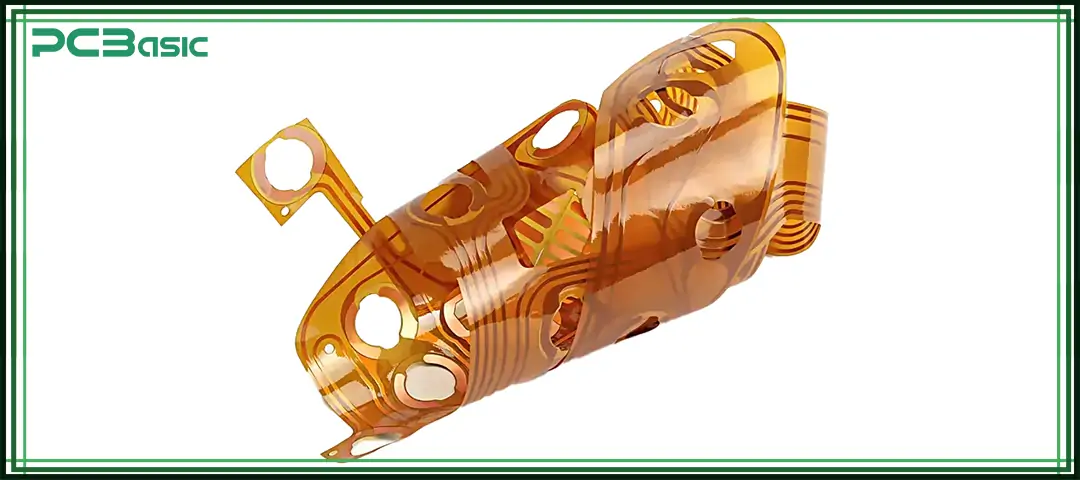
The FPCB structure plays a vital role in determining the functionalities of the printed circuit board. The basic elements of the FPCB structure are as follows:
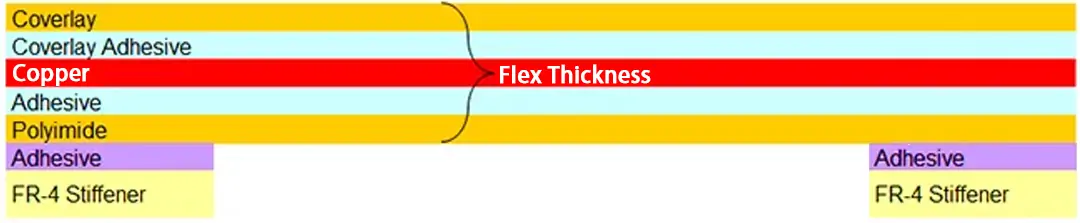
The conductive layer of FPCB is made up of copper, providing the necessary electrical conductivity for the circuit.
The dielectric substrate serves as a physical base in FPCB layer structures for conductive materials.
The adhesive layer in FPCBs is used to bind the substrate to copper foil, resulting in board height and flexibility.
Coverlay is made of polyimide material and protects the conductive circuits from dust and moisture.
Stiffeners are mostly FR4 material, which is used to strengthen areas and make the FPCB more robust.
Flexible electronics are transforming modern product design, and flex printed circuit boards have become a key solution. From compact consumer electronics to highly reliable industrial systems, flex printed circuit boards have unique advantages over traditional rigid boards.
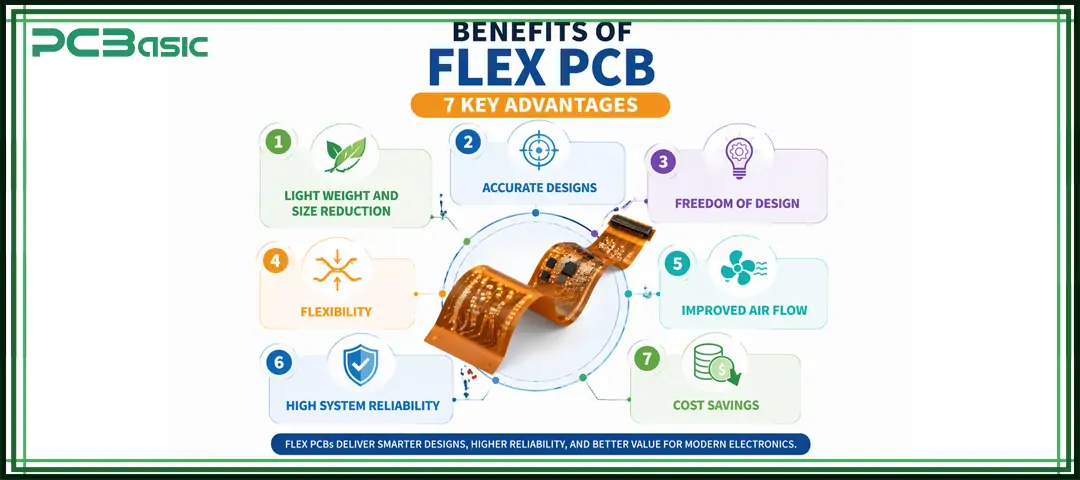
One of the most obvious advantages of the flex printed circuit board is that it significantly reduces the weight and size of the PCB.
Compared with traditional rigid PCBs, flexible printed circuit boards use lightweight materials such as polyimide that are very suitable for miniaturized devices. Meanwhile, by replacing bulky wiring harnesses and connectors, flex printed circuit boards can achieve a more compact structural design.
For applications that pursue lightweight and compact products, flex circuit boards are ideal choices.
Another major advantage of flex printed circuit boards is their high precision. Through advanced manufacturing processes, FPCB can achieve finer circuit layouts and more stable performance.
Meanwhile, due to the reduced use of connectors, flex circuit boards have a lower error rate during the assembly process, thereby enhancing the overall reliability.
Unlike rigid PCBs, flexible printed circuit boards can be bent, folded and even twisted, and can be applied in curved structures, tight spaces and even dynamic moving parts. These advantages enable engineers to design more innovative product structures.
In addition, flexible printed circuit boards can also integrate multiple rigid boards into a single FPCB, greatly simplifying the system structure.
As the name suggests, flex printed circuit boards have excellent flexibility and can withstand repeated bending and mechanical stress without damage. Therefore, flex circuit boards are highly suitable for applications that require frequent movement, such as foldable devices, medical equipment and automotive electronic systems.
Flexible printed circuit boards can also improve the airflow inside the equipment. Due to their thinner and more flexible structure, flex circuit boards can optimize the internal layout. This design helps to enhance heat dissipation and prevent overheating.
By reducing connectors and solder joints, flex circuit boards minimize potential failure points. Flex printed circuit board design is superior to traditional PCB in terms of vibration, shock, and temperature variations.
Although the initial cost of a flex printed circuit board may be higher than that of a rigid PCB, the overall system cost is usually lower.
By integrating multiple functions into a single flexible printed circuit board, assembly steps, connectors and labor costs can be reduced. Flexible circuit boards also reduce maintenance costs due to their high reliability.
So, from the perspective of the lifecycle, flex printed circuit boards have a higher cost-performance.
Rigid PCBs and Flexible PCBs consist of multiple layers laminated together. FPCB layers differ a bit from traditional PCB layers due to their flexibility. The FPCBs can be categorized based on their layers.
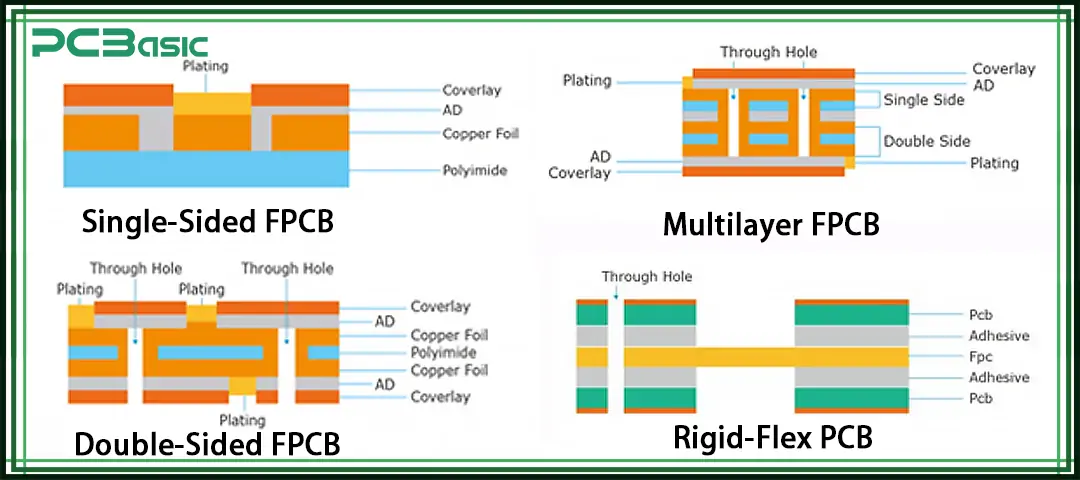
A single-sided Flex PCB is considered the simplest board that consists of a substrate layer, conductive layer, overlay, and silkscreen only. It is called a single-sided FPCB because it has only a single layer of flexible polyimide or polymer film. Therefore, the conductive copper layer is reachable on one side of the FPCB. The other side of this type of PCB is used to place electronic components.
• Why Single-Sided FPCB?
Among all types of FPCB, the single-sided flexible PCB is widely used in many electronics applications, including wearable and consumer electronics, due to its simplicity and cost-effectiveness.
In a double-sided flexible PCB, trace patterns can be created on either side of the PCB. The accessibility of both top and bottom side copper layers makes it a suitable choice for dense electronic boards. In a double-sided flexible circuit board, layers can be connected using the through holes.
• Why Double-Sided FPCB?
These boards have the flexibility to use both sides to create trace patterns and, therefore, are suitable for complex and dense electronic products such as medical devices and consumer electronics. They are suitable when more functionality is required within a limited area.
Multilayer flex PCB, as the name suggests, has multiple copper layers that are connected using the through holes. Multilayer flex PCBs are complex among all types because they consist of individual copper and dielectric layers. Mostly, multilayer flexible circuit boards are suitable choices for applications where design freedom, dense design requirements, and multiple functionalities are required in a limited area, such as smartphones, space electronic devices, digital cameras, and heart pacemakers.
• Why Multilayer FPCB?
Multilayer FPCBs are mainly suitable for complex designs where various functionalities are desired in limited areas, such as hearing aids and heart pacemakers.
Rigid-flex PCB is a hybrid type of flexible printed circuit board. It integrates the rigid PCB part with the flexible printed circuit boards in the same structure. This type of flex circuit board is made by laminating multiple layers of flexible substrates (such as polyimide) with rigid boards, enabling the design to have the advantages of both rigid support and flexible connection.
In this design of the flex printed circuit board, the flexible part usually acts as a "bridge" connecting different rigid areas, thereby reducing or even replacing traditional connectors, flat cables and solder joints. This makes flex printed circuit boards more compact and reliable in assembly compared to traditional PCBs. Each layer in the FPCB structure has been precisely designed to ensure mechanical bending performance while maintaining good signal integrity.
• Why Rigid-Flex PCB?
The flex printed circuit boards combine the advantages of both rigid PCBs and FPCB. By integrating multiple circuit boards into a single entity, a flex printed circuit board, manufacturers can significantly reduce assembly complexity, connectors, and potential points of failure.
Based on the application, FPCB is typically classified into static and dynamic flexible PCBs.
Static flexible PCBs are designed for applications where minimal movement is required. Usually, they are designed to bend in a specific radius. In the assembly process, static flex PCBs are bent beyond radius curvature and angle using a specialized tool to ensure plastic deformation during forming. When you are defining the bending radius and angle, it is important to consider the margin of safety in track thickness. This is important to ensure that the hairline remains intact and does not crack.
Dynamic flexible PCBs are used where more freedom of flexibility is required, such as in robotic arms. Whether it is static or dynamic PCBs, the design considerations for flex PCBs are usually the same, except for the fact that dynamic PCBs are designed for more repeated bending and folding. The durability of these flexible PCBs is increased to achieve a greater bending and curvature angle.
Flexibility in FPCBs is achieved using specialized materials. Basic materials that are used in flex circuit boards are substrate material, conductive material, and adhesive materials.
The base material used for almost all types of PCBs is the same, which is woven fiberglass. Although these materials are used in rigid printed circuit boards, it is not the fiberglass that makes them rigid, but the curved epoxy that makes the board rigid. The single laminated layer has enough flexibility that it can be used for simple flexible circuit boards where constant movement is not required. The commonly used material choice for flexible PCBs is flexible polyimide, which is heat-resistant. Polyester can also be a choice for flexible PCBs, but it is not often used or preferred because it cannot survive the high temperatures of soldering.
The most typical conductor material used for cheap electronics is copper. Copper comes in different forms, and it depends on the application for which copper is suitable. For example, if you aim to reduce the time and manufacturing cost by eliminating the cabling and connectors, then the copper foil is a fine choice. If your application requirement is continuous bending and flexing of the circuit board, then copper foil is not the best choice, and you may consider high-grade foils. The high-grade foil improves the FPCB flexibility, but it increases the cost considerably. So, it is a trade-off between achieving high-grade flexibility and cost savings. The annealed foil improves the flexibility that is required for flexible PCBs.
Simply speaking, an adhesive is a material that is used to bond two materials together to form a strong bond. In flexible PCBs or rigid PCBs, adhesives are required for bonding the copper foil. In FR4 material, annealed copper has fewer teeth, and the heat is not enough to make a robust bond. Thus, adhesives play a critical role in making a strong bond and providing the flexibility required for FPCBs.
The typical steps involved in the manufacturing process of FPCBs include:
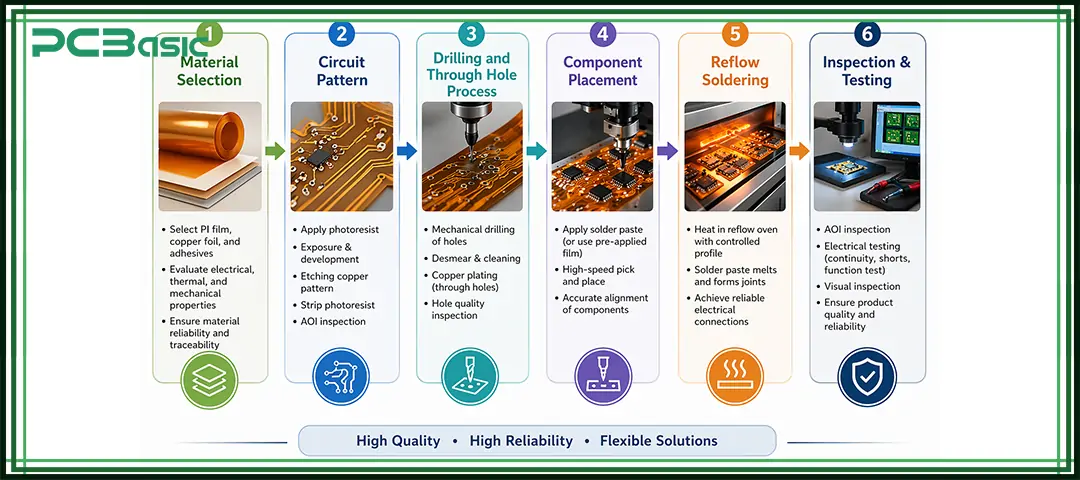
This step is critical in the manufacturing process of FPCBs as it determines the overall flexibility of the circuit board. Usually, the polyimide material is used as a substrate due to its heat resistance and durability. Copper layers are used to create trace patterns.
Photoresistive material is applied to the surface of copper, and it is exposed to UV light via a mask to create a desired circuit pattern. Using the etching process, the undesired copper is removed.
Holes are created using a specialized device for vias and through holes. Through holes and vias are made conductive using copper to connect them with other layers of the flexible PCB.
First, solder paste is applied using a stencil. Using a pick and place machine, components are placed on the designated pad.
The FPCB is now passed through a reflow oven to heat the solder paste. Upon heating the solder paste, it melts and creates a strong connection between components and pads.
Using specialized equipment, FPCBs are inspected to identify any errors. Automated Optical Inspection Machine scans the FPCB and detects any missing components and solder bridges. X-ray inspection is also done to identify any soldering defects in the FPCB.
FPCB's ability to flex and fold makes it ideal for many industry applications, including satellites, consumer electronics, wearable electronics, and medical devices.
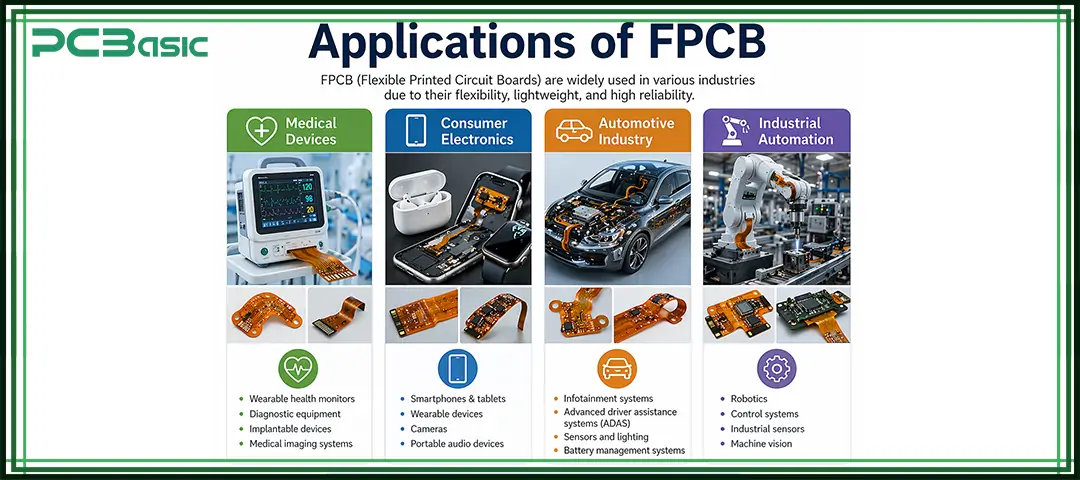
Flexible PCBs are compact, lightweight, and reliable, and their ability to fit in complex geometries makes them ideal for many medical devices such as Pacemakers, hearing aids, CT scans, MRI machines, and diagnostic equipment.
Modern consumer electronics are becoming smart with each passing day, and they demand lightweight, compact, and efficient PCBs. FPCB fills this gap and is used in many applications, including Smartphones, Smartwatches, laptops, and wearables.
The automotive industry is transforming with modern technologies. Modern vehicles require seamless communication between sensors. FPCBs are becoming popular in the automotive industry and are used in dashboard displays, sensors, and vehicle lighting systems.
The world is shifting towards automation, and robots are becoming popular in many applications. FPCBs provide the required flexibility and reliability to robotic arms to make them efficient and autonomous.
Flexible PCBs have their unique advantages. However, they offer some disadvantages, but it depends on the requirements and type of application for which you are designing the FPCB.
|
Pros of FPCB |
Cons of FPCB |
|
FPCBs are flexible as they can be bent and folded. They can easily be fitted into complex geometries. |
FPCBs' manufacturing cost is higher than that of traditional FPCBs. |
|
FPCBs are lightweight and compact, making them suitable for applications where space and weight are integral. |
The FPCB assembly process is complex. |
|
FPCBs offer fewer connection joints and eliminate the need for connectors. This improves the signal integrity. |
FPCBs are not designed to carry large currents and thus carry only limited currents. |
|
FPCBs are durable as compared to traditional PCBs due to their ability to bend up to 360 degrees. Their durability enables them to survive extreme vibrations and mechanical stress. |
FPCB repair and rework are difficult. |
|
FPCBs are good at heat dissipation due to their thinner substrate. |
Testing and troubleshooting of FPCBs is difficult compared to rigid PCBs. |
1. Based on your application, choose the right substrate material for your FPCB design.
2. Make an accurate bend radius to avoid any failure.
3. Always use staggered Vias in FPCB design.
4. It is not recommended to use solder joints. Therefore, always try to use the minimum number of solder joints.
5. Optimize trace width to reduce resistance.
6. Always perform comprehensive testing for FPCBs before integrating them into the design.
7. Always use proper heat dissipation techniques in FPCB design.
8. Use proper shielding techniques to minimize EMI interference.
9. Appropriately use overlay materials to ensure durability.
10. Use proper techniques to prevent cracks in Flex PCB.
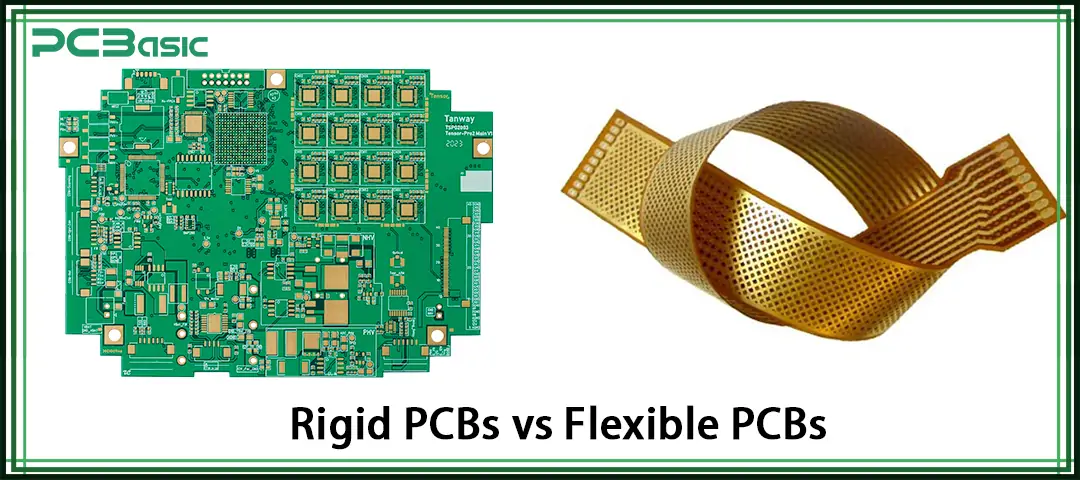
|
Feature |
Rigid PCB |
Flexible PCB |
|
Structure |
These PCBs are rigid and cannot bend or fold. |
FPCBs are designed to bend and fold. |
|
Weight |
Rigid PCBs are Heavy |
FPCBs are lightweight and compact. |
|
Cost |
Rigid PCBs have a low manufacturing cost |
FPCBs have high manufacturing costs. |
|
Durability |
These PCBs are more susceptible to failure upon mechanical stress. |
FPCBs are designed to withstand mechanical and vibration stress. |
|
Assembly |
These are easy to assemble |
They are difficult to assemble. |
|
Applications |
Suitable for applications such as desktop computers, servers, and industrial applications. |
Suitable for smart and compact applications such as smartphones, smartwatches, and other consumer electronics |
Flexible PCBs emerged as a game-changer in modern electronics by offering flexible, reliable, lightweight, and space-saving solutions for various applications, including wearable electronics, consumer electronics, and the medical industry. FPCBs' ability to fit into complex geometries makes them ideal for modern electronic designs. FPCBs' manufacturing cost is higher, but their advantages outweigh their disadvantages.

Assembly Enquiry
Instant Quote

Phone contact

+86-755-27218592
In addition, we've prepared a Help Center. We recommend checking it before reaching out, as your question and its answer may already be clearly explained there.
Wechat Support

In addition, we've prepared a Help Center. We recommend checking it before reaching out, as your question and its answer may already be clearly explained there.
WhatsApp Support

In addition, we've prepared a Help Center. We recommend checking it before reaching out, as your question and its answer may already be clearly explained there.
