
Global high-mix volume high-speed PCBA manufacturer
9:00 -18:00, Mon. - Fri. (GMT+8)
9:00 -12:00, Sat. (GMT+8)
(Except Chinese public holidays)





HomePage > Blog > Knowledge Base > How to Choose the Right PCB Stencil for Your Application
In electronics manufacturing, precision is critical. Consider solder paste printing: the accuracy of this step directly affects component placement, soldering quality, and ultimately the electrical performance and reliability of the final product. That’s why solder paste printing is so important, whether for prototyping or mass production, which make the PCB stencil essential.
A PCB stencil, also called solder stencil, SMT stencil, or circuit board stencil, is a fundamental tool in SMT assembly. It is used to print solder onto the PCB precisely. Today’s market offers many different types of stencils: laser-cut stencils, electroformed stencils, step stencils, and more. So when facing different product requirements, how should you choose the right one?
In the following article, we’ll look at what a PCB stencil is, how it works, what the main types contain, and how to choose a proper one for your application.
PCB stencil is actually a thin metal sheet. On the stencil, there are many precise holes corresponding to the pad positions on the circuit board, allowing the PCB solder paste to pass through these holes and be accurately applied to the designated locations, facilitating the subsequent assembly of components.
We can see a solder paste stencil as a kind of screen. Its job is simple, just to make sure the solder paste is printed exactly where it should be, in the right amount, no more, no less. Once the stencil is lifted, the solder will remain on the board, which is ready for the Surface Mount Device (SMD) to be placed.
This is kind of like using a spray-paint stencil for advertising: only the cut-out areas get the paint, while the rest remains untouched.
Before stencils were used, solder paste had to be applied manually and you can imagine how slow that was. After the SMT stencil introducing, the entire process became faster and much more precise. That’s why almost every SMT production line uses this indispensable tool today.
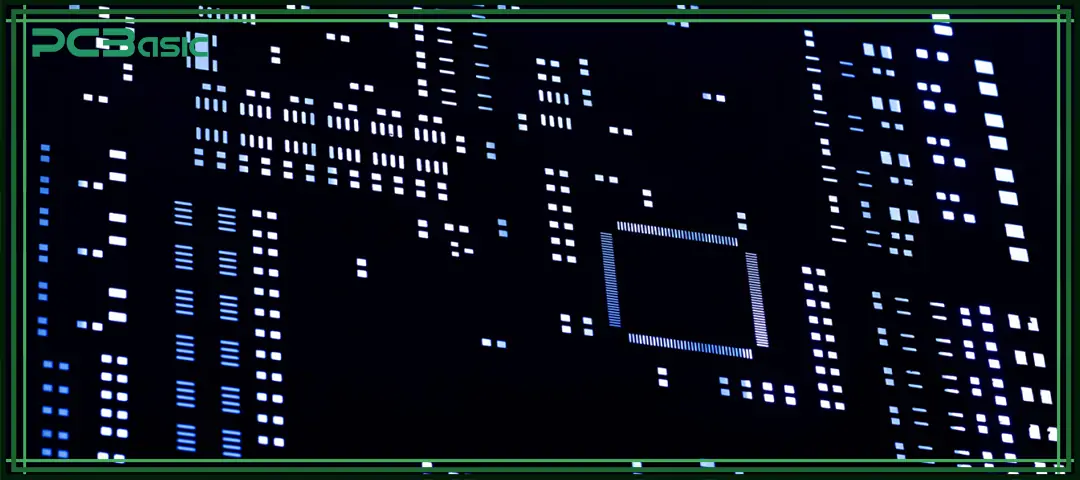
Using a PCB stencil correctly is key to achieving high-quality solder joints. Here’s a step-by-step overview.
Before using a solder stencil, prepare the following:
Clean PCB
PCB stencil (aligned with design)
Squeegee
PCB solder paste
Printing machine or manual setup
Proper preparation ensures consistent results when using any SMT stencil.
Place the circuit board stencil over the PCB and align it precisely with the pads.
Alignment is critical. Even slight misalignment in a solder paste stencil can cause defects like bridging or insufficient solder.
Spread PCB solder paste across the PCB stencil using a squeegee.
Apply consistent pressure and speed to ensure the paste fills all apertures in the laser cut stencils or laser stencils evenly.
Carefully lift the SMT stencil vertically.
A clean release ensures that the PCB solder paste deposits remain intact and well-defined.
Inspect the PCB after removing the solder stencil.
Check for:
Missing paste
Excess paste
Smearing
If needed, perform touch-ups before proceeding to component placement.
There are several types of PCB stencil used in the industry, let’s see what different needs they can meet.
As its name suggests, a framed SMT stencil is a stencil fixed onto a rigid aluminum frame, giving it a relatively stable overall structure. This type of solder stencil is widely used in high-volume production. It is not easy to deformation, maintains consistent tension, prints PCB solder paste more evenly, and is well suited for automated SMT assembly lines.
A frameless SMT stencil is itself an independent metal foil without a fixed frame. When in use, it needs to be flattened and tensioned using a reusable frame. Compared to framed stencils, it offers lower cost, easier storage and replacement, and is suitable for prototyping and small-batch production. This type of solder paste stencil is an ideal choice when flexibility and cost efficiency are the top priorities.
Laser stencil, is currently the most common and widely used type of stencil on the market. It is made by laser cutting as the name shows. Although its hole walls,or aperture walls are not as smooth as electroformed stencils, the solder paste release is still very good after polishing. Simply put, it’s cheaper than electroformed stencils, while being more durable and more precise than frameless stencils. So how should you choose? Whether you’re doing prototyping or mass production, you usually can’t go wrong with it. If you don’t want to overspend but still need reliable precision, a laser stencil will be the most practical choice.
Electroformed SMT stencils are made using electroforming technology, not traditional cutting. They have ultra-smooth aperture walls and excellent solder paste release, making them well-suited for fine-pitch and micro-component assembly. Compared to regular laser stencils, electroformed stencils offer higher precision, especially for complex, high-end PCB designs. By the way, they come with a higher cost relatively.
Selecting the right PCB stencil directly affects product quality. Here are key factors to consider.
Stencil thickness determines the volume of PCB solder paste deposited.
Thicker SMT stencil → more paste
Thinner solder stencil → finer control
Fine-pitch components usually require thinner laser cut stencils.
The aperture design in a solder paste stencil controls paste shape and volume.
Well-designed apertures in laser stencils improve paste release and reduce defects.
Most PCB stencil products are made from stainless steel.
However, advanced electroformed SMT stencil options provide smoother walls compared to traditional laser cut stencils, improving PCB solder paste release.
A high-quality circuit board stencil must ensure precise alignment.
Poor alignment leads to:
Misplaced PCB solder paste
Solder bridging
Assembly defects
Always verify alignment accuracy when selecting a SMT stencil.
|
Scenario |
Alignment accuracy |
Result |
|
Small-batch prototyping (frameless stencil) |
±100μm |
Barely usable, defect rate around 3-5% |
|
High-volume production (framed laser stencil) |
±50μm |
Stable and reliable, defect rate <0.5% |
|
High-precision products (electroformed stencil) |
±25μm |
Suitable for fine-pitch below 0.4mm, defect rate <0.1% |
Alignment Accuracy vs. Application Scenario
From figuring out what a stencil actually is, to deciding between laser stencils, regular solder paste stencils, and high-end electroformed ones—every choice you make will eventually show up in your final product.
A reliable SMT stencil helps deposit PCB solder paste accurately, reduces defects, improves yield, and saves you headaches.
Whether you're doing prototyping or high-volume production, choosing the right stencil is pretty important if you want consistent, good results. We believe that through this article, you've gained a solid understanding of PCB stencils. If you're looking to order stencils or explore future collaboration, feel free to visit PCBasic to get in touch!
A PCB stencil is used to apply PCB solder paste onto specific areas of a PCB during SMT assembly.
There is no major difference. Both solder stencil and SMT stencil refer to the same tool used for PCB solder paste printing.
Laser cut stencils provide high precision, smooth edges, and consistent performance, making them ideal for most SMT applications.
Consider thickness, aperture size, material, and alignment when selecting a solder paste stencil.
Electroformed stencils offer better paste release and smoother walls than laser stencils, but they are more expensive.

Assembly Enquiry
Instant Quote



Phone contact

+86-755-27218592
In addition, we've prepared a Help Center. We recommend checking it before reaching out, as your question and its answer may already be clearly explained there.
Wechat Support

In addition, we've prepared a Help Center. We recommend checking it before reaching out, as your question and its answer may already be clearly explained there.
WhatsApp Support

In addition, we've prepared a Help Center. We recommend checking it before reaching out, as your question and its answer may already be clearly explained there.
