
Global high-mix volume high-speed PCBA manufacturer
9:00 -18:00, Mon. - Fri. (GMT+8)
9:00 -12:00, Sat. (GMT+8)
(Except Chinese public holidays)





HomePage > Blog > Knowledge Base > AI Accelerator PCB Assembly: What Makes These Boards Hard to Build?
1. What Does AI Accelerator PCB Assembly Include?
2. What Makes AI Accelerator Boards Difficult to Assemble?
3. How Are Assembly Risks Controlled During Production?
4. How Are AI Accelerator PCB Assemblies Inspected and Tested?
5. What Should You Confirm with an Assembly Partner?
The components on these types of boards are usually very close together, and some of the solder joints are covered by the chips. Also, different sections of the board get hot at different speeds. In order to properly manufacture an AI accelerator PCBA, we must determine the soldering, inspection, and testing procedures depending on the particular design. This article will introduce the main assembly difficulties, as well as the matters that need to be confirmed before choosing AI accelerator PCB assembly services.
AI accelerator PCB assembly is the process of mounting and soldering the necessary components for AI computing to a circuit board. The AI accelerator PCB connects the components electrically and offers them mechanical support. Once put together, the hardware components work together to process information, provide electricity, and connect with the other parts of the system.
A typical AI accelerator PCBA has the following sorts of components:
• Components: GPU, NPU, dedicated ASIC, or FPGA that perform specific computational functions.
• Memory: Stores model data and intermediate results. Depending on how it's designed, memory devices can either be placed on the board or built directly into the accelerator package.
• Power circuit: Voltage regulators, power stages, inductors, and capacitors. These components work together to supply the right amount of voltage and current needed by other parts of the system.
• Interfaces and supporting circuits: Including host connections, clock circuits, management controllers, and temperature sensors.
We also need to distinguish different types of boards. AI accelerator PCB boards can be used for PCIe cards, embedded modules, or module carrier boards. If the customer uses off-the-shelf accelerator modules, the assembly work on the carrier board mainly focuses on connectors, power circuits, and other components supporting the module's operation.
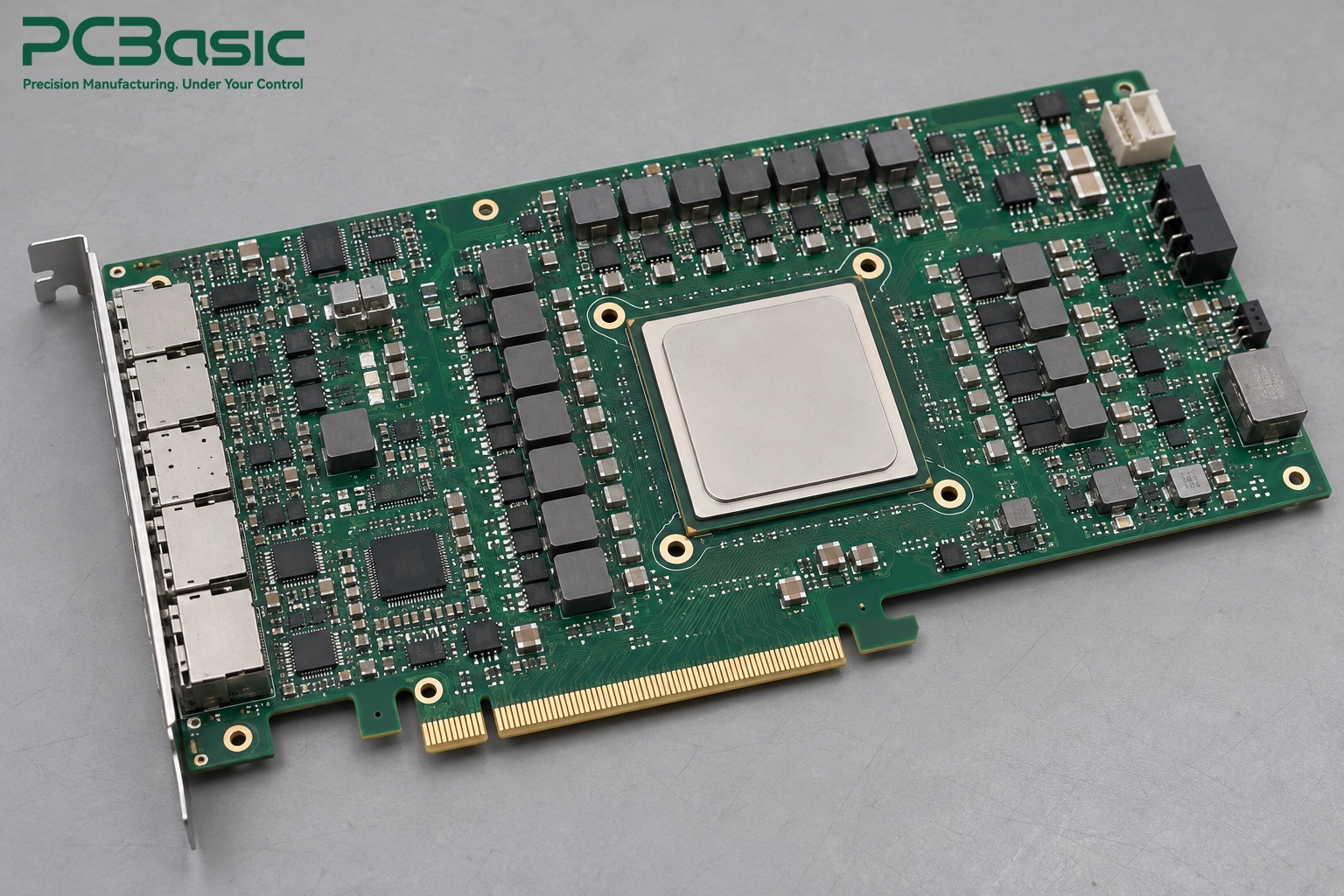
The process of assembling an AI accelerator PCB usually begins with getting the components ready, then applying solder paste, placing the components, soldering them in place using reflow, and finally checking them for quality. Boards that have components inserted through holes or press-fit connectors need to be soldered or pressed fit properly.
After soldering, some projects need firmware programming, heatsink attachment, and testing of the AI accelerator PCBA. We should check with the customer before starting to make sure we know which software version to use, how to put the heatsink on, and what test conditions and results mean that everything is okay.
On an AI accelerator PCB board, there are usually large processors, fine-pitch components, power circuits, and connectors. They require different amounts of solder paste and have different heating rates during soldering. To ensure that all these components are soldered properly, it is necessary to take into account the conditions of different areas on the board.
For AI accelerator PCB assembly, accurate placement is only part of the work. We also need to consider package warping, hidden solder joints, and the stress generated when installing cooling hardware.
|
Main difficulties |
Possible problems |
What needs to be controlled |
|
Fine-pitch components |
Solder bridges or open joints |
Amount of solder paste and placement accuracy |
|
Large BGAs |
Warpage and hidden soldering defects |
Reflow soldering control for specific packaging and X-ray inspection |
|
Uneven heating |
Part of the solder joints are not heated sufficiently while other components may overheat |
Measure the reflow soldering temperature curve on the actual assembly board |
|
Cooling hardware |
Poor thermal contact or excessive force on the board |
Thermal pad thickness, installation sequence and screw torque |
We cannot simply copy the process parameters of another board. If the copper distribution and package size change, the reflow soldering temperature curve needs to be reconfirmed, and the AI accelerator PCB assembly process also needs to be adjusted according to the actual design. If the AI accelerator PCBA requires heatsinks or stiffeners, we also need to arrange the inspection sequence in advance and leave space for rework to avoid discovering that key positions are blocked after installation.
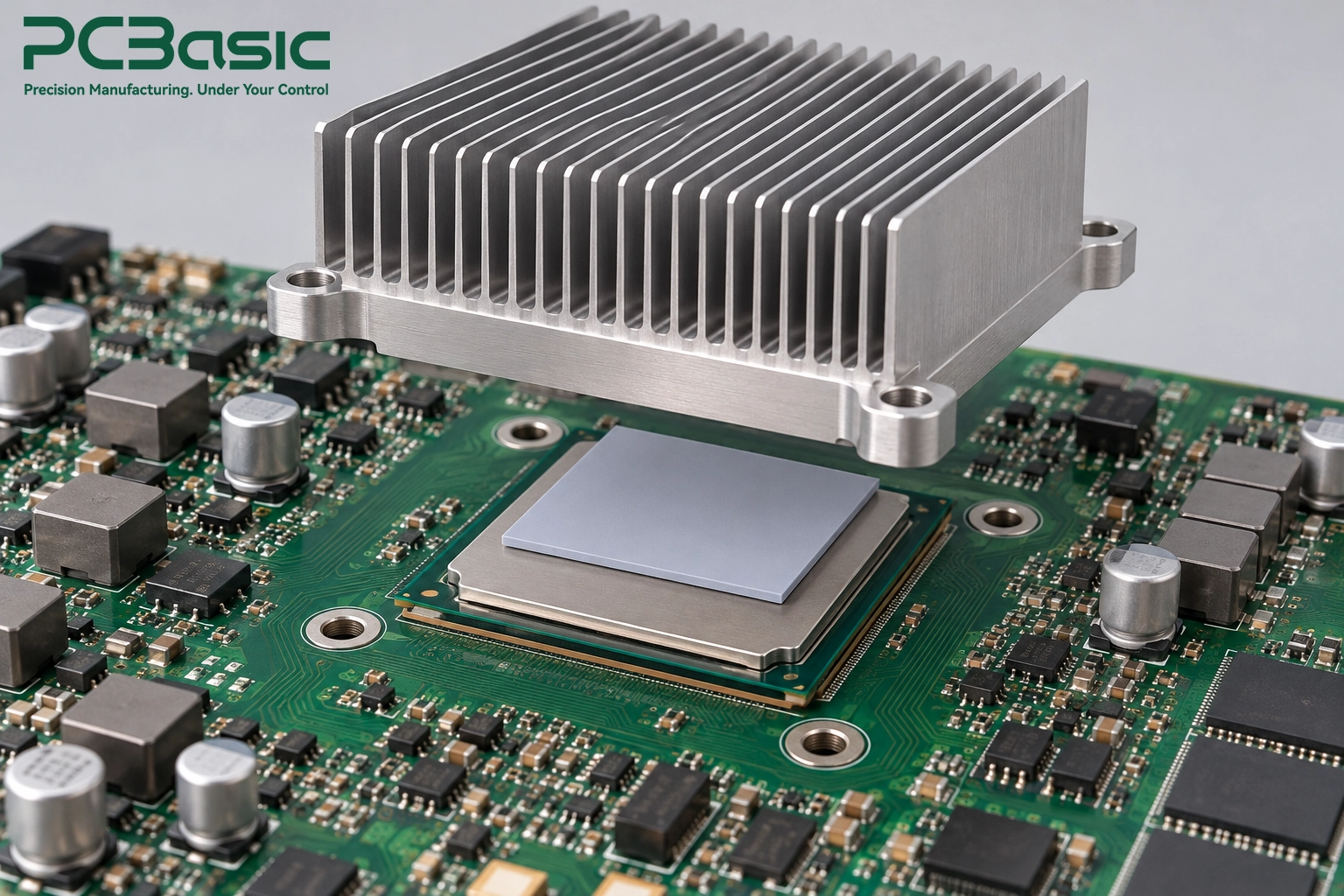
For AI accelerator PCB assembly, we not only need to look at what equipment the suppliers have, but also need to understand how they will handle the specific issues of this board. From file checks before production to the inspections and change management during the build, all these arrangements are related to whether the delivered boards meet the agreed standards.
Suppliers should verify the BOM, PCB version, placement data, and assembly drawings. If there are unclear component directions, missing operation requirements, or the need to use substitute materials, it is necessary to confirm with the customer first to avoid starting production with doubts.
For AI accelerator PCBs and components, we also need to understand how the suppliers inspect incoming materials, manage moisture-sensitive components, and record material batches. This information can help us confirm whether the materials actually put into production meet the requirements.
The AI accelerator PCB assembly process should be arranged for inspection according to the specific design. During sourcing, the following points can be focused on:
• Solder paste printing: Whether SPI inspection is used to check the amount of solder paste at key positions and the printing deviation.
• Placement: Does first-article inspection check component part number, orientations and positions.
• Reflow soldering: Whether the temperature curve is measured on the actual assembled board and verified against the requirements of the solder paste and components.
• Post-solder inspection: Which positions are inspected by AOI and X-ray, and what acceptance criteria are adopted.
The inspection arrangement for each board may not be the same, but the supplier should be able to explain why these inspections are suitable for the current project. If similar defects occur repeatedly, they also need to identify the reason and confirm that corrective action works.

When changing materials or adjusting processes during production, which situations must be approved by the customer? Both parties should clearly define this in advance, especially any changes that may affect product performance, reliability, or delivery requirements. How defective products should be isolated, reworked, and retested also needs to be agreed upon.
For the delivered AI accelerator PCBA, we should also confirm which materials, inspection and test records the supplier will retain, and what materials will be provided at the time of delivery. These records should be able to correspond to the agreed production batch or board serial number, facilitating traceability in case of subsequent problems.
Even if an AI accelerator PCBA appears to be assembled correctly, it may still have hidden soldering defects or fail under load. When reviewing the supplier's testing plan, we need to understand what each method checks for and whether it covers the main risks of the board.
|
Method |
Inspection contents |
Main limitations |
|
SPI |
Amount, height, and offset of solder paste |
Does not assess the solder joints after soldering completion |
|
AOI |
Whether components exist, their positions, polarity, and visible solder joints |
Unable to directly inspect hidden solder joints |
|
X-ray |
Selected hidden solder joints under BGA and other packaging |
Unable to reliably identify all connection defects |
The inspection results should comply with the agreed acceptance standards. The BGA void rate alone cannot determine the reliability; for unclear inspection results, further investigation may be necessary.
For AI accelerator PCBA testing, ICT, flying probe, or boundary scan can detect specific faults, depending on the design and test accessibility. Functional testing checks the operational performance and may include:
• Power supply voltage, startup conditions, and firmware verification.
• Memory and communication interfaces, such as PCIe.
• Running under the specified load and monitoring errors and temperature.
PCBasic supports ICT, flying probe, and functional testing, and assesses the test coverage based on the circuit board design and available test access conditions. Before production, we will confirm with the customer the fixtures, software, test limits, and fault handling methods.
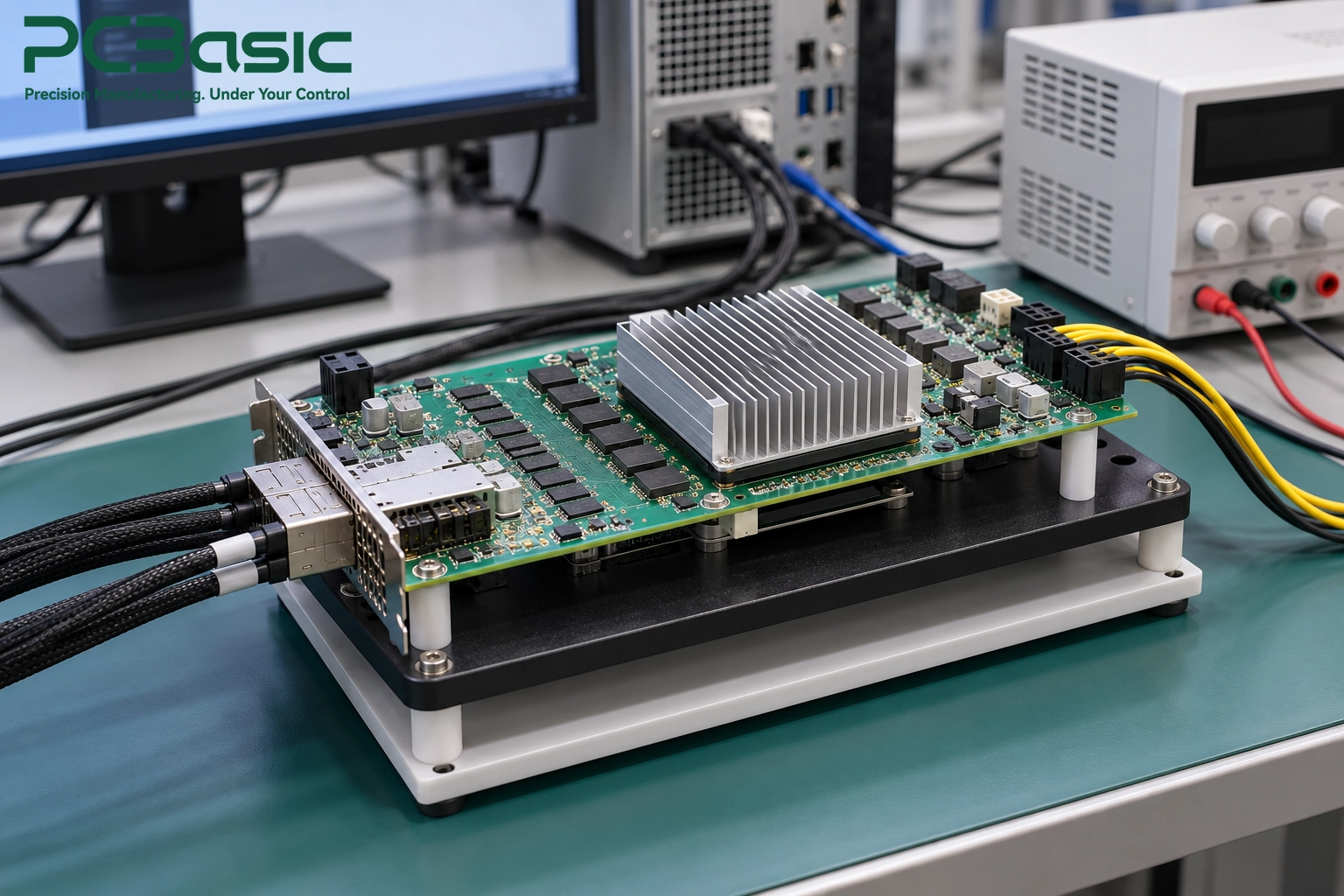
When an AI accelerator PCB is placed on an open workbench and installed inside the enclosure, its performance may vary. The workload, test duration, airflow conditions, and cooling hardware should be clearly defined to enable the test to be repeated.
Burn-in or environmental screening should follow the project requirements. Both parties should agree on which results will be provided at the time of delivery and how these results correspond to the serial number or production batch of the board.
When choosing AI accelerator PCB assembly services, we need to consider the specific board and verify whether the supplier can meet the requirements for component sourcing, BGA soldering, cooling hardware installation, and testing.
Understand how the supplier intends to handle the main assembly risks on the board. The quotation should clearly include:
• Materials: Sourcing responsibility, approved alternative materials, and material substitution rules.
• Production: Special handling and storage requirements, tooling, verification of reflow profile, and installation of cooling hardware.
• Inspection and testing: Coverage, acceptance criteria, and the reports that need to be provided.
• Delivery: When the delivery period starts, which records to retain, and what materials to provide will accompany delivery.
If the service includes bare board manufacturing, the specified stack-up, materials, and special processes should also be confirmed.

For AI accelerator PCB assembly, both parties need to agree on who will provide the programming files, test fixtures, software, and cooling components. For AI accelerator PCBA testing, it is also necessary to confirm the test limits and how to handle the boards that fail the test. Which changes and rework require customer approval should also be clearly defined in advance.
PCBasic will work with the customer to verify the BOM, assembly files, as well as the programming and testing requirements, and clarify the specific scope of services. For missing information or requirements that still need further evaluation, both parties can confirm item by item before production.
Reliable AI accelerator PCB assembly requires more than accurate placement and a successful startup. Soldering, cooling hardware installation, and testing all need to suit the actual board. Before production, agree with the supplier on approved materials, inspection coverage, test conditions, and acceptance criteria.
If you are looking for AI accelerator PCB assembly services, contact PCBasic with your BOM, PCB files, assembly drawings, and testing requirements. Our team can review your project, clarify the assembly and test scope, and identify any details that need confirmation before production.
Q1: Does every AI accelerator PCB require a high layer count or HDI?
No. The requirements depend on routing density, component pitch, interfaces, and power distribution. A module carrier board may have different needs from a board carrying the accelerator chip directly.
Q2: Is X-ray inspection enough for an AI accelerator PCBA?
No. X-ray examines selected hidden solder joints but cannot detect every defect. It should be combined with suitable optical inspection and electrical or functional testing.
Q3: What should AI accelerator PCBA testing include?
Depending on the design, testing may include power checks, firmware verification, memory and interface checks, and workload testing. The customer and supplier should agree on test conditions and measurable acceptance limits.
Q4: What files are needed for AI accelerator PCB assembly services?
Provide the BOM, PCB fabrication data, placement files, and assembly drawings. Include relevant mechanical drawings, approved alternatives, programming files, and test requirements where applicable.

Assembly Enquiry
Instant Quote
Phone contact

+86-755-27218592
In addition, we've prepared a Help Center. We recommend checking it before reaching out, as your question and its answer may already be clearly explained there.
Wechat Support

In addition, we've prepared a Help Center. We recommend checking it before reaching out, as your question and its answer may already be clearly explained there.
WhatsApp Support

In addition, we've prepared a Help Center. We recommend checking it before reaching out, as your question and its answer may already be clearly explained there.
