
Global high-mix volume high-speed PCBA manufacturer
9:00 -18:00, Mon. - Fri. (GMT+8)
9:00 -12:00, Sat. (GMT+8)
(Except Chinese public holidays)





HomePage > Blog > Knowledge Base > PCBA Services for OEM Projects: The Advantages of One-Stop Assembly
Table of Contents
1. What Changes When One Supplier Owns the Whole PCBA Build?
2. Where Do the Advantages Show Up in an OEM Project?
3. Turnkey, Consigned or Hybrid: Which PCBA Model Fits Your Project?
4. How Should an OEM Evaluate One-Stop PCBA Manufacturing Services?
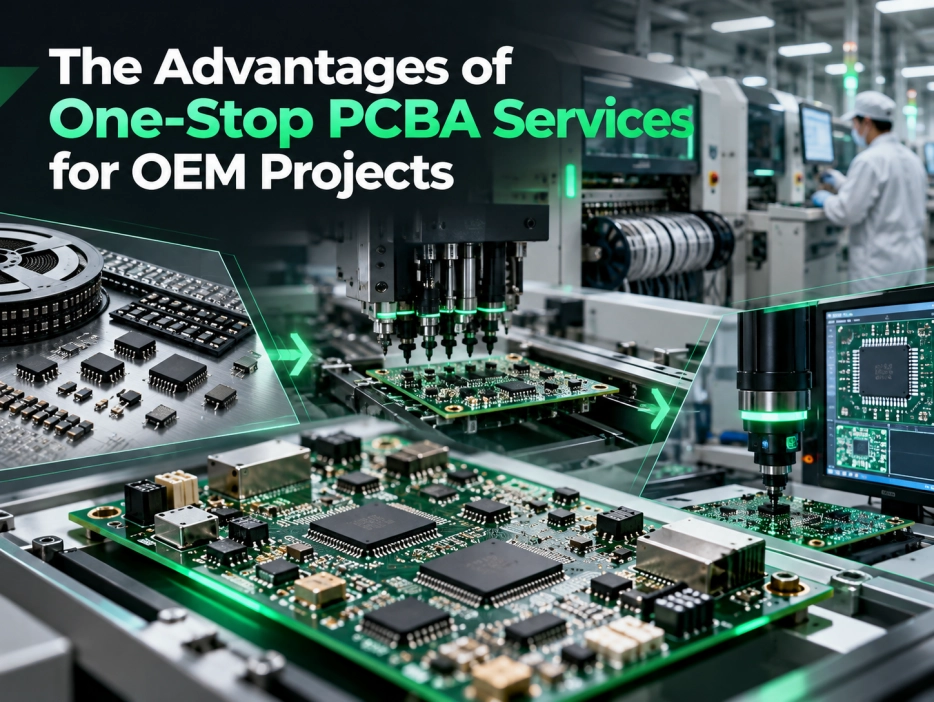
PCBA services have to hold one sequence together. The cover shows it: purchased parts, placement, inspection, and the finished board. A motor-controller board can pass a basic power-on check and still fail incoming inspection on the 3.3 V rail under load when a board shop, a parts broker and an assembler each own one step. Each of them can show a clean record for that step. On the failed boards, the regulators may use a package that was never on the approved BOM.
One-stop PCBA services keep that sequence under one supplier’s management. The same team buys the parts, places them, inspects the solder joints and runs the agreed tests, and the records stay with the job.
Check three handoffs before you split a build: the BOM line and the purchased reel, the bare board and the placed board, and the placed board and the tested board. A miss at any one of them can lead to scrap or a late shipment. With one supplier coordinating all three, the incoming-inspection record, the placement record and the test result belong to the same job.
Split the job three ways and your own team become the integrator. Gerbers go to a fabrication shop, parts come from a distributor, and both are shipped to an assembler. Someone on your side then writes a test procedure for a line that never quoted the test.
Each transfer may need its own purchase order and its own shipment. A Rev C bare board can be kitted there against a Rev B BOM, and the mismatch may only be found after the boards are built.
Buy the PCBA as one package and those transfers stay under one supplier’s control. We check the BOM against the Gerber and centroid files, purchase the parts, assemble the boards, inspect them and run the agreed tests before anything is packed. If a board is returned, the job is checked against that build record. Your quality lead has one thread to work from.
The design stays with your engineers. They choose the manufacturer part numbers. They also decide which BOM lines may take an alternate, which lines may not, where the test limits sit, and which parts stay frozen because a certificate depends on them.
If the polymer capacitor on the 12 V input has a 20-week lead time, our buyers can propose two or three candidates and send the datasheet figures that matter on that rail: capacitance, voltage rating, ESR and ripple current rating, along with temperature, lifetime, and package specifications. Your engineer still makes the choice.
Write the approval rules on one page before the first purchase order. Three columns are enough: the BOM line, whether an alternate is allowed, and whose signature is required. Use that page when a part goes on allocation, so the alternate is approved before use.
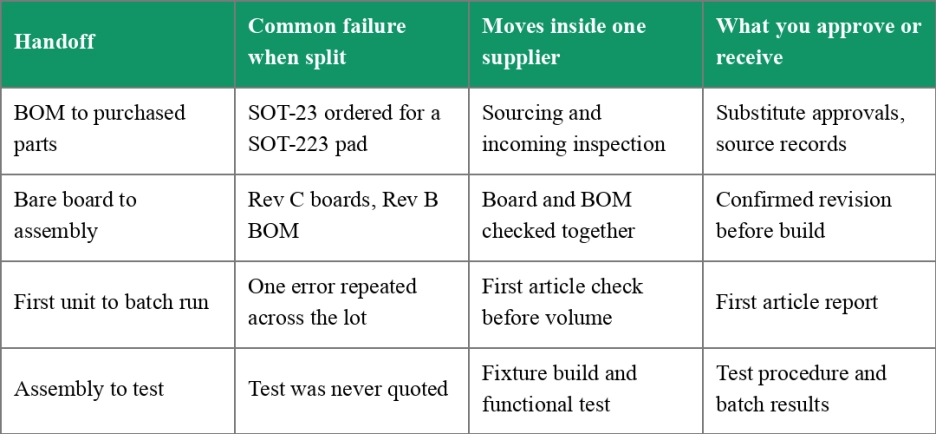
Four handoffs decide whether a split build stays under control. The table lists the usual failure when three companies share the job, what moves inside one supplier, and what you approve or receive.
A wrong part or a short reel stops a build before a solder defect does. If a broker or your own buyer purchases the parts, the assembler sees the wrong footprint, or a reel that is 300 pieces short, only when the carton is already on the dock. Give the PCBA component sourcing to the assembler, and the team that orders the part is the team that has to place it.
We buy from original manufacturers and authorized first-tier distributors. Commonly used parts are held in our own stock, so a ten-board prototype can be built without buying a full reel. Incoming lots go through our IQC inspection system, and a BOM error-checking system compares the parts list before material is loaded onto the feeders. A substitute is sent to you, with the reason, before it is placed on a board.
A reversed diode on one board is a rework task. The same diode reversed across 500 boards is a quarantined lot. Placement programs are generated using our SMT programming system, and the first assembled unit of a new job stays on the bench until it matches your BOM and assembly drawing.
The check uses our first article inspection system and testers built in-house. Volume starts after that first article passes. SPI measures the solder paste before placement. After reflow, AOI inspects each board, and X-ray is used under BGA and QFN bodies. Inspection results and process steps are kept in our self-developed MES, so a returned board can be traced to the batch and the process step.
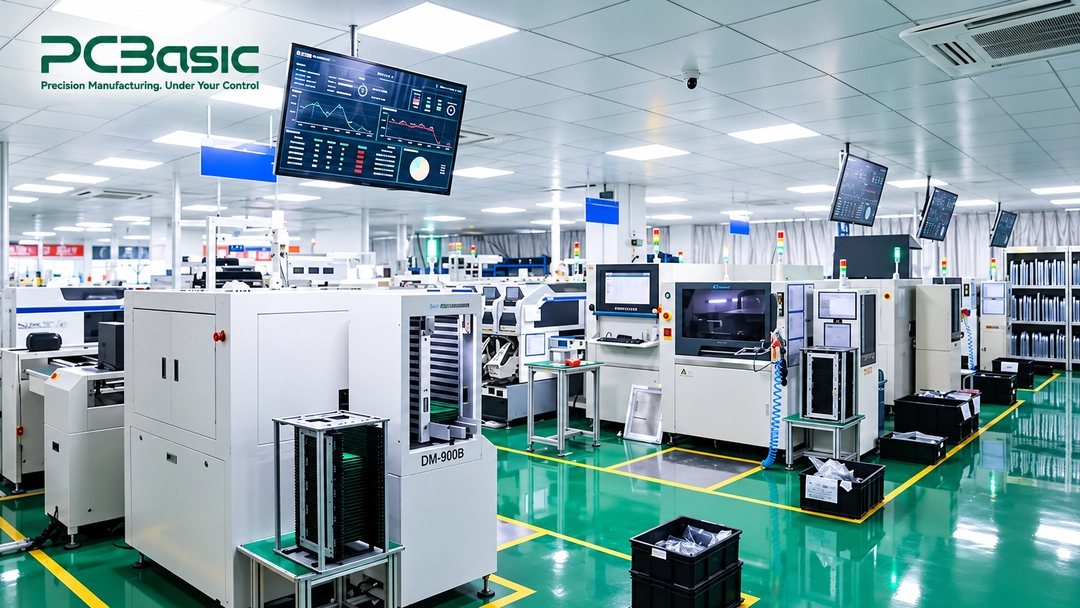
Ask for the first article report on every new revision, and release volume only after you have it. The line above shows the production setting: placement and inspection on one floor, with the production screens showing the job while it runs. File the report with the revision. You will need it if a board fails in the field.
On a split order, functional testing may be missing from the quote. The assembler did not price a fixture, and your own bench may be in another plant. A board that only powers up can then be shipped, and the functional fault shows up at your customer.
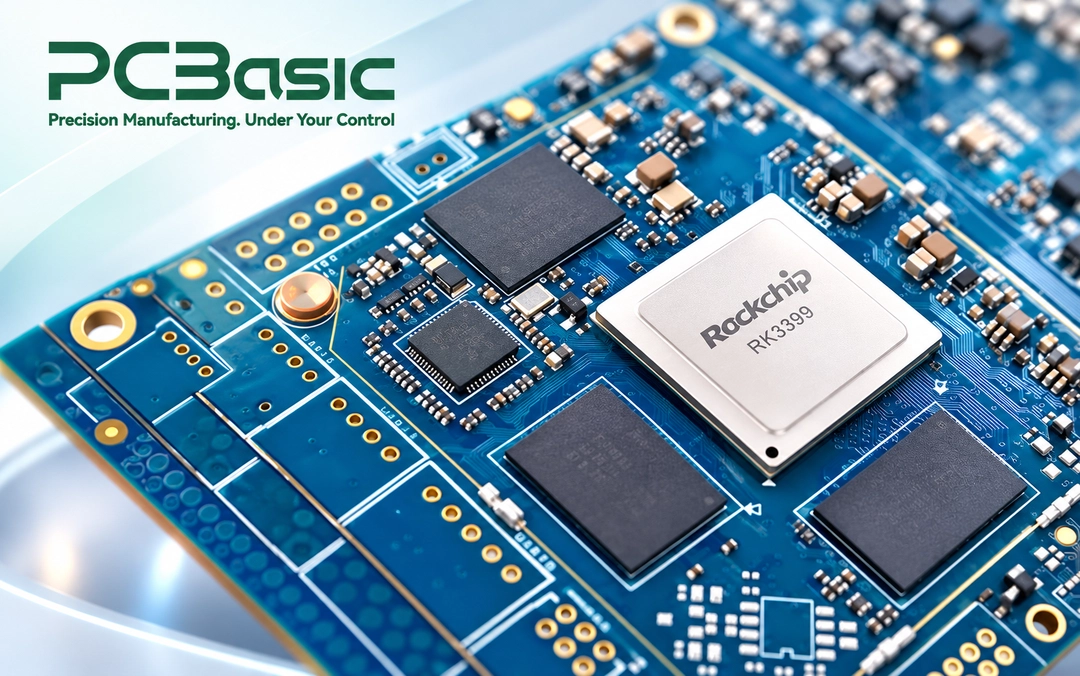
When one supplier builds the boards and the fixture, the test procedure stays in the build package with the BOM. We make our own test fixtures and run the agreed functional tests before the boards are packed. On a populated board like the one below, with a large processor, memory devices and gold-plated holes along the edge, write the acceptance criteria clearly: the voltage range at TP3, the required firmware build, the idle current window, and a successful CAN or UART communication test. Our PCBA functional testing options list the test types that can go into that procedure.
Rev A may not go through the first pilot without a change. Send one ECO to three suppliers and the replies come back on three schedules: the fabricator may have to scrap panels, the broker may be unable to cancel reels, and the assembler needs a new stencil. Your planner then needs a spreadsheet to see which material each supplier is holding.
One supplier means one point of coordination for the ECO and affected orders. We update the BOM, list the reels and finished boards the change affects, and agree with you which boards the change starts on. A field fix and a cost reduction both move on that order.
Full turnkey PCBA means we purchase every required part on the approved BOM and manage PCB fabrication, assembly, inspection and agreed testing. For most OEM programs moving from prototype into repeat builds, that is the right starting model, especially when the parts are mainstream and nobody on your staff is assigned to chase reels. Our turnkey PCB assembly service asks for the BOM, Gerbers, quantity, board specifications and test documents at quotation. The turnkey price is built from those files.
A repeat build can stay with the same supplier. PCBA production for samples, small batches and volume runs on separate lines. The Shenzhen factory is the small-batch site. The Huizhou factory is the large-batch site.
Full turnkey is the usual starting point. Consign a component when you have already secured a year’s supply of FPGAs under a framework agreement, or when your customer requires the LTE module to come from its own approved stock. In the hybrid that covers most of the remaining cases, you ship the two or three controlled parts and our buyers source the rest of the BOM.
The hybrid agreement needs a shortage rule. If a consigned tray arrives 40 pieces short, we record the shortage at incoming inspection and report it to you before that part holds the line. Responsibility for supplying the missing quantity stays with you. Without the rule, the line waits while the two purchasing teams each expect the other to move.
A complete file package is what produces a quote you can use. Send the Gerbers and the drill files. Send the BOM with manufacturer part numbers, and put approved alternates in their own column. Add the pick-and-place file, the assembly drawing with polarity marked, the quantity for each build, and the functional test procedure if you have one. Attach the approval page. If a supplier prices PCBA manufacturing services without asking how the boards will be tested, the quote is for a different job.
Use the first delivery to see whether the records exist. Ask for the first article report and the AOI results. On boards with BGAs or QFNs, ask for the X-ray images as well. Ask for the functional test results, and for a list of every substituted part with your approval on it.
For a medical or automotive program, also ask for the quality-system certificates. We hold ISO 9001, IATF 16949 and ISO 13485. These certificates cover our quality system. Product approval stays with you, and it can use the MES traceability and the functional test records from your build. If those records are missing on a 50-board pilot, they may also be missing on a 5,000-board run.
The wider sequence, from the design files and component sourcing through assembly and test, is set out in our PCBA OEM services guide.
One-stop PCBA services show their value at the four handoffs in the table. A wrong part can be caught at incoming inspection. A placement error can be caught at the first article stage. A test failure sits with the supplier who built the fixture. An engineering change is processed against the affected orders. You keep the authority over substitutes and test limits, and you ask for the records after each build.
Our team at PCBasic runs this flow from prototype through volume. Send your Gerbers, BOM, quantities and test criteria for a manufacturing review through our one-stop PCBA services page.
Q1: Does a one-stop PCBA supplier cost more than buying boards and parts separately?
A1: The price per board can be a little higher, because sourcing, incoming inspection and test sit inside the same quote. Against that, count the freight between three sites, the replacement reels sent by air, and the boards scrapped because two revisions were mixed. Compare the cost per good board that ships.
Q2: Can I keep my own approved component suppliers in a one-stop arrangement?
A2: Yes. Name the BOM lines you will consign, or the distributors we must use for a given part, and we source the remaining lines. Also name who replaces a consigned part that arrives short.
Q3: At what stage of an OEM project should we move to one-stop PCBA services?
A3: Consider moving before the first pilot while the design is being finalized. Build that pilot on the same sourcing, inspection and test flow you intend to use in production, so the first article report and the test data carry forward. A later increase is a change to the order quantity that may also require adjustments to that same flow.

Assembly Enquiry
Instant Quote

Phone contact

+86-755-27218592
In addition, we've prepared a Help Center. We recommend checking it before reaching out, as your question and its answer may already be clearly explained there.
Wechat Support

In addition, we've prepared a Help Center. We recommend checking it before reaching out, as your question and its answer may already be clearly explained there.
WhatsApp Support

In addition, we've prepared a Help Center. We recommend checking it before reaching out, as your question and its answer may already be clearly explained there.
