
Global high-mix volume high-speed PCBA manufacturer
9:00 -18:00, Mon. - Fri. (GMT+8)
9:00 -12:00, Sat. (GMT+8)
(Except Chinese public holidays)





HomePage > Blog > Knowledge Base > An Overview of Solder Paste
In current electronic manufacturing, solder paste is a critical material in good soldering quality and reliable connections. Whether it is for PCB prototyping or mass production, understanding what solder paste is and how to choose the appropriate solder paste is important. This article will provide a comprehensive overview of solder paste from aspects such as composition, types, storage, and usage methods, which help engineers, technicians, or electronic enthusiasts to perform PCB assembly more smoothly and achieve more stable results.
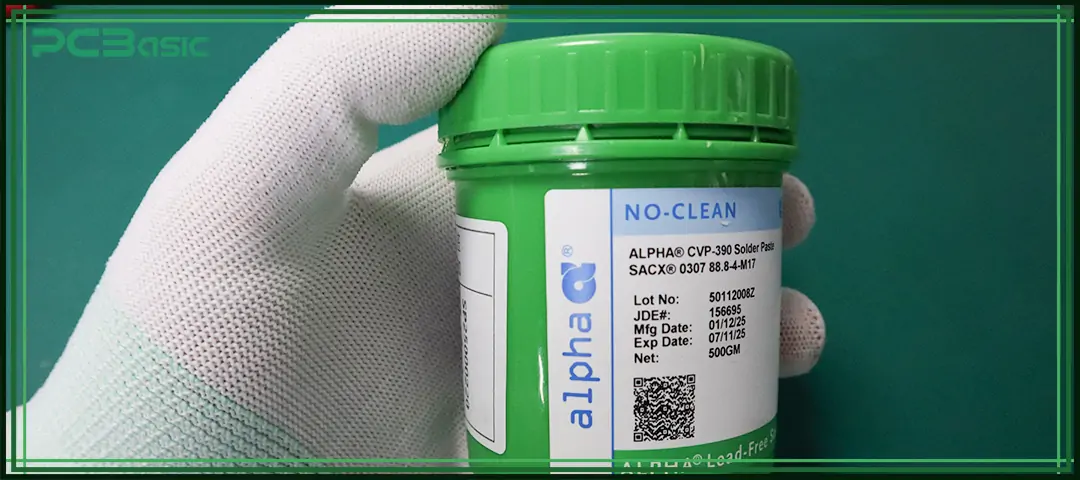
Solder paste is a material that consists of very fine metal powder with flux. It is used to firmly attach electronic components to the PCB pads, ensuring both conductivity and stability. Unlike traditional solder wires, solder paste is semi-solid and much more convenient for precise application on the circuit board, making it suitable for those complex-structured or densely packed PCBs.
What is solder paste used for? In simple words, it is mainly used in the SMT (Surface Mount Technology) assembly process. It is used to "stick" the components onto the PCB to keep the components from shifting position before the reflow soldering. Whether it is for factory production or for individuals working on electronic projects, everyone uses solder paste for electronics to make sure the solder joints more accurate and reliable.
The effectiveness of solder paste is primarily based on its formulation. It is generally composed of two parts: solder and flux.
The solder particles in solder paste are usually made of alloys, most of which are tin, and can contain lead or be lead-free. Leaded solder paste is a tin-lead alloy, while RoHS-compliant solder paste is lead-free. In special cases, high-temperature solder paste or low-temperature solder paste will be used, such as high-temperature circuits or low-temperature soldering.
Silver solder paste is another kind, mainly used to improve conductivity and reliability, especially suitable for those precision electronic products.
Solder paste flux is a chemical material used to clean metal surfaces, facilitate the wetting of solder, and reduce oxidation during the process of soldering. It makes solder joints smoother and fewer issues. Common types of flux include rosin flux, water-soluble flux, and no-clean flux. The selection of flux not only influences the soldering results but also determines if cleaning is necessary after soldering.

To select the right type of solder paste, one must first understand its classification. Generally speaking, they can be differentiated based on the particle size, type of flux, or material composition.
The particle size of the solder in the solder paste directly affects the accuracy of the printing and the effectiveness of reflow soldering. Generally, there are some standard classifications:
|
Type |
Particle Size (μm) |
|
Type 1 |
25–45 |
|
Type 2 |
20–38 |
|
Type 3 |
15–25 |
|
Type 4 |
20–38 (finer for high-density PCBs) |
|
Type 5 |
15–25 (ultra-fine for microelectronics) |
Solder paste with smaller particles is suitable for attaching components with small pitches, but it is more prone to oxidation.
The type of flux is also a key factor in determining the effectiveness of the solder paste. Rosin flux is a traditional type of soldering aid, suitable for use in general electronic products.
• Water-Soluble Solder Paste: There will be some residues that can be washed off with water after soldering. This type of solder paste is suitable for situations when high reliability of the circuit board is required.
• No-Clean Flux: After soldering, there is almost no residue left, so no further cleaning is required.

Time is money in your projects – and PCBasic gets it. PCBasic is a PCB assembly company that delivers fast, flawless results every time. Our comprehensive PCB assembly services include expert engineering support at every step, ensuring top quality in every board. As a leading PCB assembly manufacturer, we provide a one-stop solution that streamlines your supply chain. Partner with our advanced PCB prototype factory for quick turnarounds and superior results you can trust.
There are also some special formulations, such as the low-temperature solder paste used for thermally sensitive components, and the high-temperature solder paste for industrial applications.
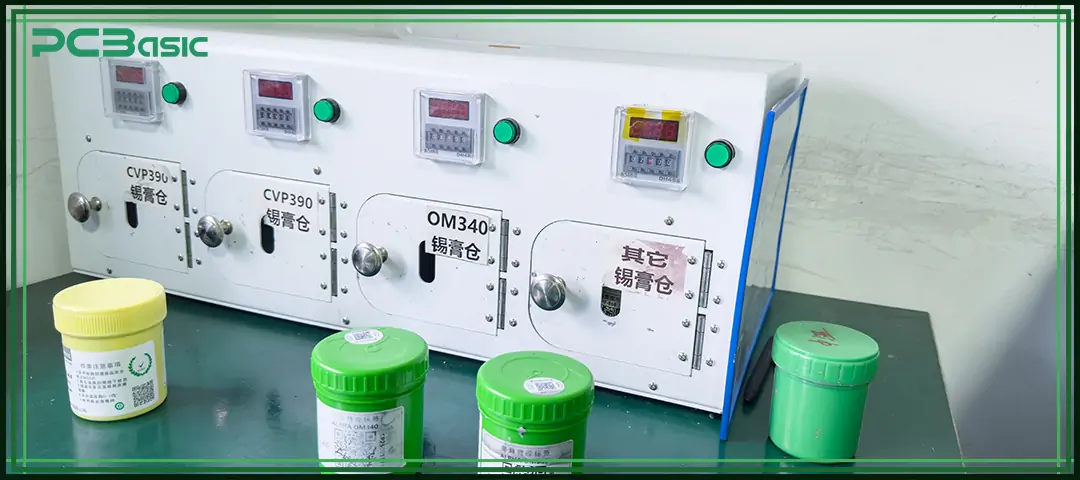
Select the appropriate solder paste for electronics. The following aspects should be considered:
1. Component Type: For fine-pitch ICs, use solder paste with small particles.
2. PCB Material: The sensitive boards may require low-temperature solder paste.
3. Environmental Compliance Requirements: According to the RoHS regulations, lead-free solder paste is usually required.
4. Flux Compatibility: It depends on whether water-soluble flux or no-clean flux is more suitable.
5. Reflow Soldering Curve (Reflow Profile): Use the reflow solder paste that matches the soldering furnace.
Choosing the right solder paste could guarantee more reliable solder joints, better conductivity, and fewer problems.
Correctly mastering "how to use solder paste" can reduce the occurrence of welding problems and make PCB assembly more efficient. The operation steps are very simple:
1. Preparation: First, clean the surface of the PCB completely to remove any oxidation.
2. Dispensing: Using a steel mesh or a dispensing machine to precisely apply the solder paste onto the solder pads.
3. Component Placement: Place the components on the board while the solder paste is still tacky.
4. Reflow: Heat the circuit board according to the reflow temperature curve of the solder paste.
Remember, what solder paste is used for is not only to fix the components, but also to ensure reliable power conduction of the circuit and well heat resistance.
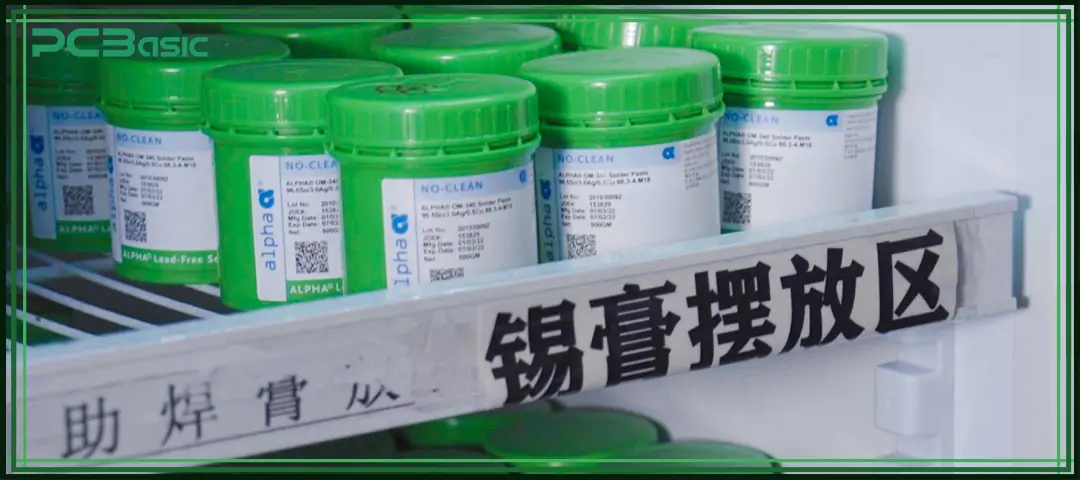
To ensure the quality of solder paste, proper storage is crucial. Please note the following points:
Store it in a refrigerator set at 0–10°C (32–50°F).
Store in a sealed container to prevent moisture absorption.
• Use within the recommended period by the manufacturer.
• Before use, allow the solder paste to return to room temperature and gently stir until it is evenly mixed.
If not stored properly, the solder paste flux will deteriorate, and the welding performance will also decline.

Using a syringe or scraper for manual application is suited for small batches or prototyping. Although the method is simple, it must be done very carefully, as otherwise, excess solder paste can easily cause short circuits or bridging at the solder joints.
Steel mesh printing is the most commonly used method in mass production. An appropriate amount of solder paste can be precisely printed onto each PCB pad by applying reflow solder paste onto the steel mesh, ensuring consistency of each solder joint and facilitating automated SMT production.
Solder paste dispensing enables the precise application of solder paste to the required locations, making it particularly suitable for circuit boards with numerous components and complicated structures.
This not only reduces the waste of solder paste but also ensures the accuracy of solder joints on high-density PCBs.
Solder paste dispensing enables the precise application of solder paste to the required locations, making it particularly suitable for circuit boards with numerous components and complex structures. This could reduce the waste of solder paste and ensure the accuracy of solder joints on high-density PCBs at the same time.
For those who use electronic solder paste, mastering these basic principles can make PCB welding more reliable and durable. Whether it is using solder paste flux to enhance wetting properties or using reflow solder paste, understanding the fundamental principles is the key to success.

Assembly Enquiry
Instant Quote





Phone contact

+86-755-27218592
In addition, we've prepared a Help Center. We recommend checking it before reaching out, as your question and its answer may already be clearly explained there.
Wechat Support

In addition, we've prepared a Help Center. We recommend checking it before reaching out, as your question and its answer may already be clearly explained there.
WhatsApp Support

In addition, we've prepared a Help Center. We recommend checking it before reaching out, as your question and its answer may already be clearly explained there.
