
Global high-mix volume high-speed PCBA manufacturer
9:00 -18:00, Mon. - Fri. (GMT+8)
9:00 -12:00, Sat. (GMT+8)
(Except Chinese public holidays)





HomePage > Blog > Knowledge Base > An Overview of PCB Inspection
In this era of rapid updates in electronic products, the reliability of products is becoming more important than before. Whether it is mobile phones, Internet of Things devices, automobiles or medical equipment, PCB circuit boards are indispensable inside them. However, as PCBs become smaller and more complex, the probability of problems occurring during production and assembly is also increasing.
At this moment, PCB inspection plays a crucial role. Performing a complete PCB inspection can help find out issues at early stage, preventing subsequent rework and the associated waste of time and cost. It also guarantees the final product is stable and reliable. Even a single poor solder joint or a slightly misaligned component could lead to the product does not work properly and affect customers' trust in the brand if PCB inspection is not carried out well.
This article will help you understand PCB inspection completely, including why it is necessary, common methods, potential problems, and practical applications. Meanwhile, it will also introduce how PCB testing, PCBs test, and visual inspection work together to guarantee the products quality.
PCB inspection is essentially a process of inspecting the circuit board to see if there are any issues during the production, assembly, and welding stages. It is a vital step in quality control and is usually not conducted just once but is carried out at multiple production stages.
The importance of PCB inspection can mainly be seen from the following aspects:
By conducting thorough PCB inspection, issues such as solder defects, missing components, and circuit damage can be identified before the product moves to the next stage of production. This not only reduces waste but also prevents big problems from arising later on, saving a considerable amount of cost.
Some companies think that PCB testing and PCB inspection are increasing their costs, but in fact, they are saving money. Because there is no need for rework later if problems are detected earlier, and it can also avoid bigger losses such as financial losses and product recalls.
In industries such as automotive and medical, if there is a problem with PCBs, the consequences could be quite serious. Conducting PCB inspections properly can guarantee that the products are more stable and safer to use.
You will be able to identify which problems keep recurring by performing several PCB inspections. In this way, engineers can focus on optimizing the welding, assembly and design, and solve these problems at their source.
As long as you keep conducting PCB tests and inspections properly, you can ensure that customers receive more stable and reliable products. This will also make it easier for them to trust your brand and be willing to cooperate with you in the long term.
When conducting PCB inspection, there are numerous methods available, each with its own advantages and disadvantages. In actual production, it is not common to use just one method; instead, multiple inspection methods are usually employed together, which is more reliable.
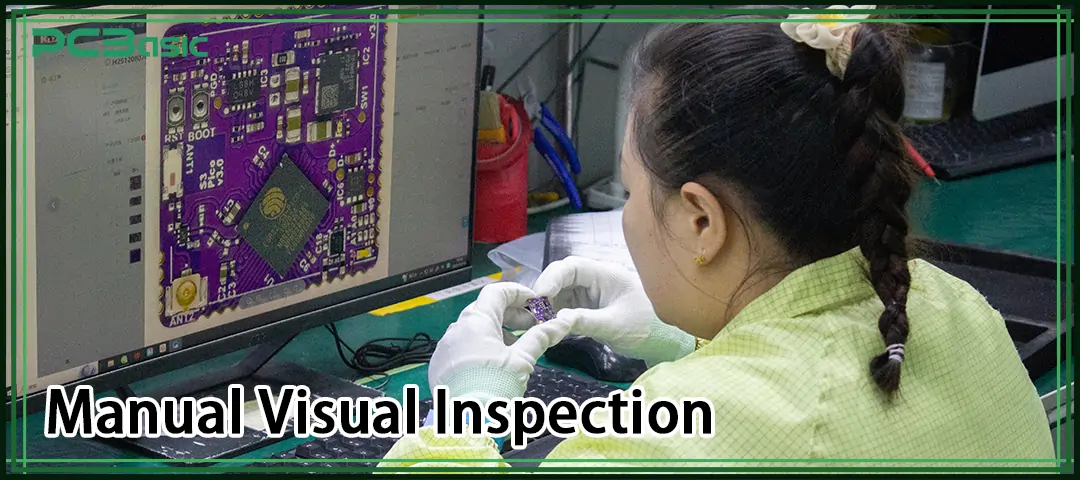
Manual visual PCB inspection is the most basic and commonly used method. Inspectors can directly use their naked eyes, or with the help of a PCB inspection microscope to check the circuit board.
This method can generally reveal:
• Are there any issues with the solder joints?
• Are there any missing or misaligned components?
• Is there any scratching or damage on the surface?
• Are there any dirt or residues?
If a PCB inspection microscope is used, it will be much easier to spot some very small cracks or minor welding issues, and the inspection will be more accurate.
However, this kind of manual PCB inspection relies heavily on experience, and problems such as internal issues blocked by components cannot be detected through this method.
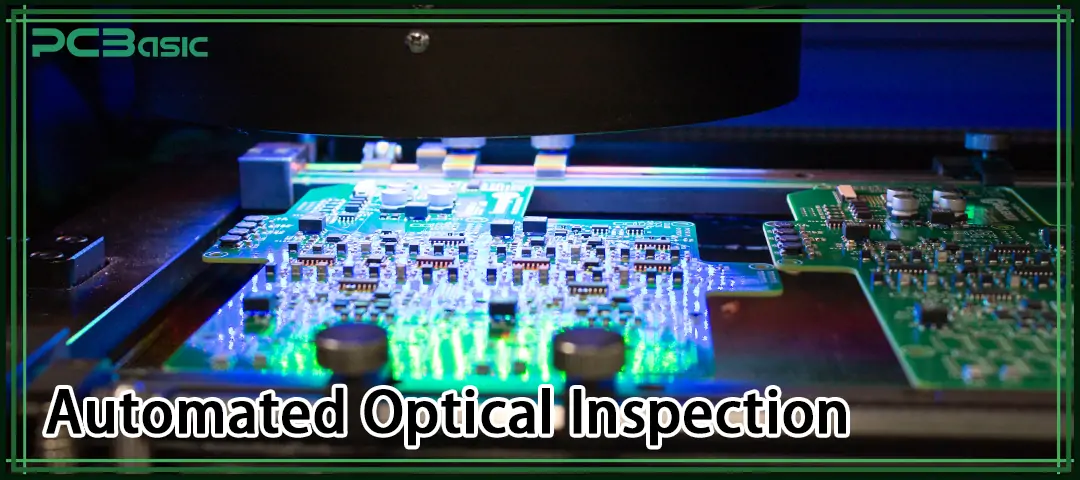
AOI is a more advanced PCB inspection method. It uses cameras to take pictures and then uses software to compare the image of the PCB with the standard design to check for any defects.
AOI can generally detect:
• Whether the solder joints are solder bridges
• Whether there are any missing components
• Whether the component orientation is reversed
• Whether the circuits are disconnected
Compared with manual PCB inspection, AOI is faster, more stable, and more suitable for mass production. However, areas like the ones covered below the BGA cannot be detected by it.
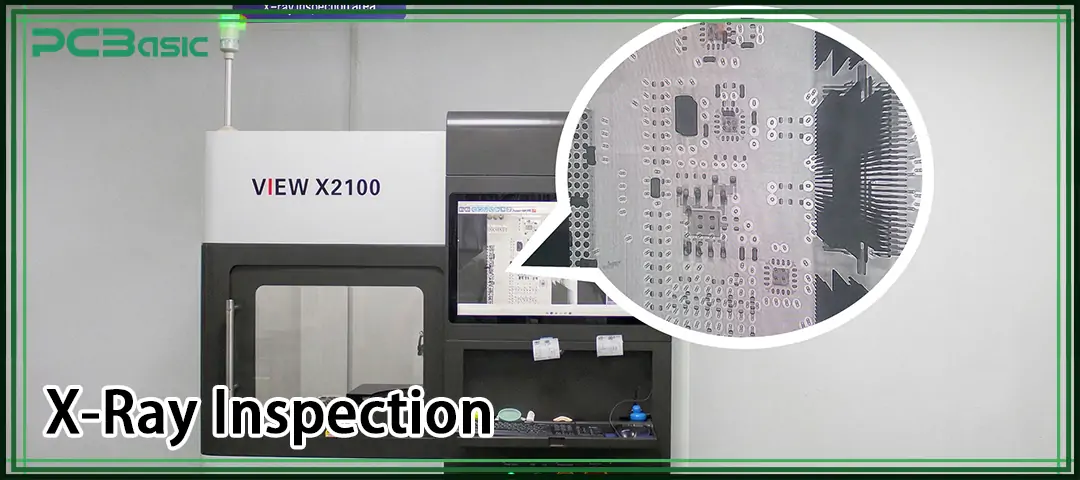
X-ray PCB inspection is mainly carried out to verify areas that are invisible to the naked eye, and it is especially suitable for circuit boards with densely packed components and complex structures.
It can perform the following checks:
• Inspect the solder joints beneath the BGAs
• Check for bubbles within the solder joints
• Verify if there are any connection issues within the circuit
Unlike ordinary optical methods, X-ray PCB inspection can directly "see through" the interior of components, making it extremely important in today's electronic products with increasingly complex packaging.
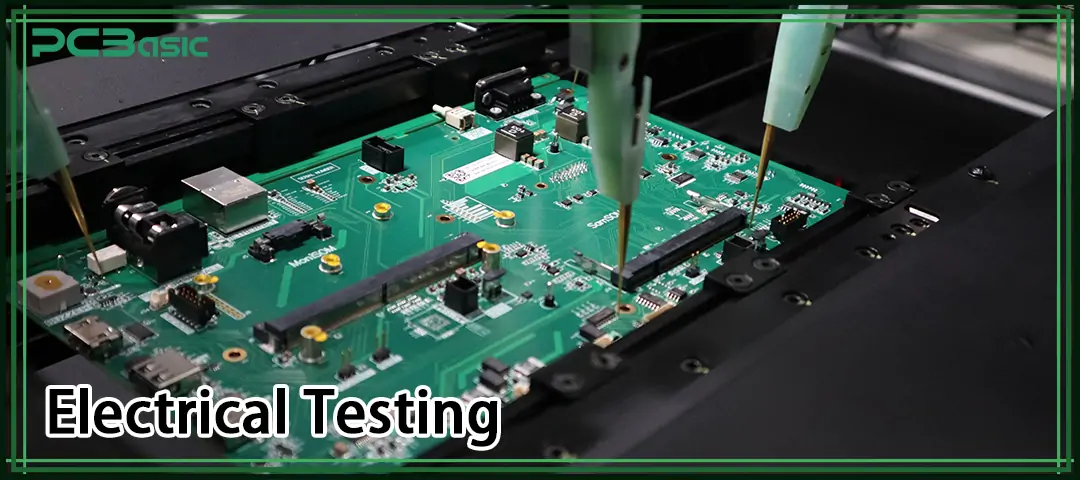
PCB inspection mainly focuses on checking for any issues with appearance and structure, while PCB testing is used to confirm whether the circuit is functioning properly and whether the electrical performance is normal.
• ICT (Online Test): Mainly checks whether the component values are correct and whether the circuits are properly connected.
• FCT (Functional Testing): This involves powering on the device and checking whether the board can operate properly.
These PCB testing methods can ensure that the PCBs not only appear to be in good condition but also function properly when in real use.
Doing PCB inspection properly can bring about many practical benefits:
Continuously conducting PCB inspection can help us to identify and resolve any issues before the products are delivered to the customers.
By identifying the problems early through PCB testing, one can avoid unnecessary detours and eliminate the repeated rework.
Although conducting PCB inspection requires some investment, in the long run, it can reduce the costs associated with product failures.
Carrying out PCB inspection properly will ensure that the product is more stable during actual use and less prone to issues.
Companies that prioritize PCB inspection tend to have better product quality and are more likely to win customers in the market.

Although PCB inspection is very important, there are still some challenges and difficulties that may arise when it is actually carried out:
Nowadays, PCBs have more layers and the components are arranged quite densely, which makes PCB inspection more challenging.
Internal problems cannot be detected by using the traditional PCB inspection method. Hence, more advanced equipment such as X-ray is needed for inspection.
Advanced PCB testing equipment like AOI and AXI are generally quite expensive.
When conducting PCB inspection manually, if the person is tired or lacks sufficient experience, they are prone to miss some issues, and the results will also be less stable.
The production pace is getting faster and faster, so it becomes increasingly hard to ensure that every step of the PCB testing process is carried out comprehensively and meticulously.
Which type of PCB inspection method to choose is not something that can be decided at will. It depends on many specific circumstances to make the decision.
A simple board can be inspected using manual PCB inspection; however, if the board is more complex, more advanced methods such as AOI and X-ray should be employed for the inspection.
An automated PCB testing system would be more suitable and more efficient for mass prodction.
The cost of conducting PCB inspection manually is relatively low. However, if more advanced equipment is used, the inspection will be more accurate and less prone to errors.
In industries such as aviation and medical, the requirements for PCB inspection are even higher and more stringent.
It is necessary to use more advanced PCB inspection methods for examination if there are any hidden internal problems
Visual PCB inspection is essentially the most fundamental step in quality control. Here is a relatively clear and easy-to-follow inspection process for you:
When conducting the inspection, there should be sufficient lighting. Additionally, a microscope for PCB inspection should be applied to ensure a clearer and more detailed view.
First, quickly go through the board to check if there are any obvious issues, such as whether there are missing components, if there are any burnt marks or dirtiness.
Pay special attention to the solder joints. Check for any cases of cold soldering, solder bridging (where the solder is connected together), insufficient solder, or any signs of cracking.
Check to see if the components are properly aligned, if the orientation is correctly installed, and if the positions are correct.
Check to see if the wiring is disconnected, if the holes are not aligned properly, and if the surface coating is not done well.
Check if there are any residual soldering flux, dust or other impurities on board.
Record the identified problems so that the process can be optimized later and PCB testing can be conducted more conveniently in the future. Using the PCB inspection microscope during the inspection process, which will enable a clearer view and more accurate inspection.
Time is money in your projects – and PCBasic gets it. PCBasic is a PCB assembly company that delivers fast, flawless results every time. Our comprehensive PCB assembly services include expert engineering support at every step, ensuring top quality in every board. As a leading PCB assembly manufacturer, we provide a one-stop solution that streamlines your supply chain. Partner with our advanced PCB prototype factory for quick turnarounds and superior results you can trust.
Future PCB inspection will mainly depend on the development of new technologies to continuously improve:
Using an AI system for PCB inspection can not only provide more accurate results but also reduce the occurrence of false judgments.
The current PCB inspection systems are increasingly being integrated with MES systems, allowing for real-time monitoring of production conditions.
Nowadays, PCBs are getting smaller and more complex, more advanced PCB testing technologies have become increasingly important.
Automated PCB inspection will increasingly replace manual inspection in mass production
PCB inspection is a necessary procedure for manufacturing electronic products nowadays. It can ensure product quality, reduce costs, and make the products more stable and reliable. From manual inspection using microscopes for PCB inspection to more advanced PCB testing methods like AOI and X-ray, each method has its own merit.
In actual production, the best approach is not to use only one method. Instead, based on the complexity of the product, the production volume, and industry requirements, various PCB inspections and PCB tests should be combined and used together.
In the end, doing a good job in PCB inspection is not only for finding problems, but also to make the product more stable, make customers more at ease, and make the product more competitive in the market.

PCB inspection is the process of checking the circuit board to see if there are any issues during the production and assembly process.
PCB inspection mainly checks whether there are any problems with the appearance and structure of the board, while PCB testing is used to confirm whether the circuit can operate properly.
Using a PCB inspection microscope, many small issues that are invisible to the naked eye can be detected.
When inspecting some components with very small spacing or very subtle issues, it is better to use a microscope for PCB inspection to observe them, because it will be clearer.
No, to check out all the issues completely, both PCB inspection and PCB testing need to be used together. Using just one method is not enough.

Assembly Enquiry
Instant Quote
Phone contact

+86-755-27218592
In addition, we've prepared a Help Center. We recommend checking it before reaching out, as your question and its answer may already be clearly explained there.
Wechat Support

In addition, we've prepared a Help Center. We recommend checking it before reaching out, as your question and its answer may already be clearly explained there.
WhatsApp Support

In addition, we've prepared a Help Center. We recommend checking it before reaching out, as your question and its answer may already be clearly explained there.
