
Global high-mix volume high-speed PCBA manufacturer
9:00 -18:00, Mon. - Fri. (GMT+8)
9:00 -12:00, Sat. (GMT+8)
(Except Chinese public holidays)





HomePage > Blog > Knowledge Base > Steps in PCB Assembly Process
The stability of a device's operation largely relies on the quality of PCB assembly in modern electronic products. Whether it is a smartphone, industrial control equipment, automotive electronic systems, or medical devices, all of them need a well-controlled and stable PCB assembly process to make sure operation properly.
The PCB assembly process is the entire procedure of mounting and soldering various electronic components onto a printed circuit board(PCB). Through this process, a bare PCB without any components transforms into a functional electronic module.
Nowadays, many manufacturers use automated equipment, advanced inspection systems, and efficient PCB assembly lines to elevate production efficiency and ensure product reliability. Professional printed circuit board assembly(PCBA) services not only place components but also carry out inspection and testing to guarantee the quality of each circuit board.
In this piece, we will explain the meaning of PCB assembly, introduce the PCB assembly process in detail, describe the relationship between PCB design and assembly, and share some practical tips for achieving reliable electronic PCB assembly.

It is necessary for us to understand what PCB assembly is before introducing the detailed PCB assembly process (PCB Assembly Process).
PCB assembly (PCB assembly process) refers to the process of installing and soldering electronic components onto a printed circuit board. Through circuit board assembly, a bare PCB board, which initially had no components, will be transformed into a functioning electronic circuit.
Simply, PCB assembly (PCB assembly process) is the process of installing electronic components on a circuit board, for example:
Resistors: Resistors (resistance) are one of the most fundamental and common components in electronic circuits. Their main functions are to limit current, distribute voltage, and protect other components within the circuit.
Capacitors: Capacitors (electrical capacitors) are a very common component in electronic circuits. Their main functions are to keep the electrical energy, stabilize the voltage, and filter noise in the circuit. In many electronic devices, almost every circuit board uses multiple capacitors.
Integrated Circuits (ICs): Integrated Circuits (abbreviated as IC) are a kind of electronic component that integrates a large number of electronic components (such as transistors, resistors, capacitors) onto a small chip. They are one of the most key and complex components in modern electronic devices.
Connectors: Connectors (also known as connectors) are electronic components used to connect circuits, devices, or cables. They enable electrical connections between different circuit boards, modules, or external devices, and facilitate disassembly and maintenance well.
Inductors: Inductors (electronic components) are devices used to store magnetic energy and control changes in current. In electronic circuits, inductors are usually employed in power circuits, filtering circuits, and signal processing circuits.
Diodes and transistors: Diodes and Transistors (Diodes and Transistors) are very important semiconductor components in electronic circuits, and are widely used in various electronic devices such as power supplies, circuit control, and signal processing.
When these components are installed and soldered onto the circuit board, a PCBA (PCB manufacturing) is formed, which means the completed assembly is ready to be used as a circuit board.
Unlike PCB fabrication (which only produces bare boards), PCB manufacturing and assembly not only contain the production of circuit boards, but also involve component installation and soldering. Therefore, PCB assembly (assembly of PCB) is a very crucial step in the electronic manufacturing process.
Today, many professional printed circuit board assembly (PCBA) services usually include:
SMT assembly: SMT assembly (Surface Mount Technology assembly) refers to a type of PCB assembly method that uses Surface Mount Technology (SMT) to directly install and solder surface mount components (SMD components) onto the surface of a PCB.
Through-hole assembly: Through-hole assembly (also known as plug-in assembly) is a traditional PCB assembly approach. In this process, the leads of electronic components are inserted into the pre-drilled holes on the PCB, and then the components are fixed on the circuit board through soldering.
Mixed technology assembly: Mixed technology assembly (also known as mixed-process assembly) refers to the process of assembling a PCB (Printed Circuit Board) using both SMT assembly (surface mount technology assembly) and through-hole assembly (plug-in assembly) on the same PCB.
Inspection and testing: Inspection and testing are a crucial step in the PCB assembly process. Through inspection and testing, it is possible to check whether the components on the circuit board are installed correctly, whether the soldering is reliable, and whether the circuit can function properly.
Functional verification: Functional verification is a critical step in the PCB assembly process. Its goal is to confirm whether the circuit board can operate normally as per the design requirements under actual working conditions.
These steps finally form the complete PCB assembly process together.
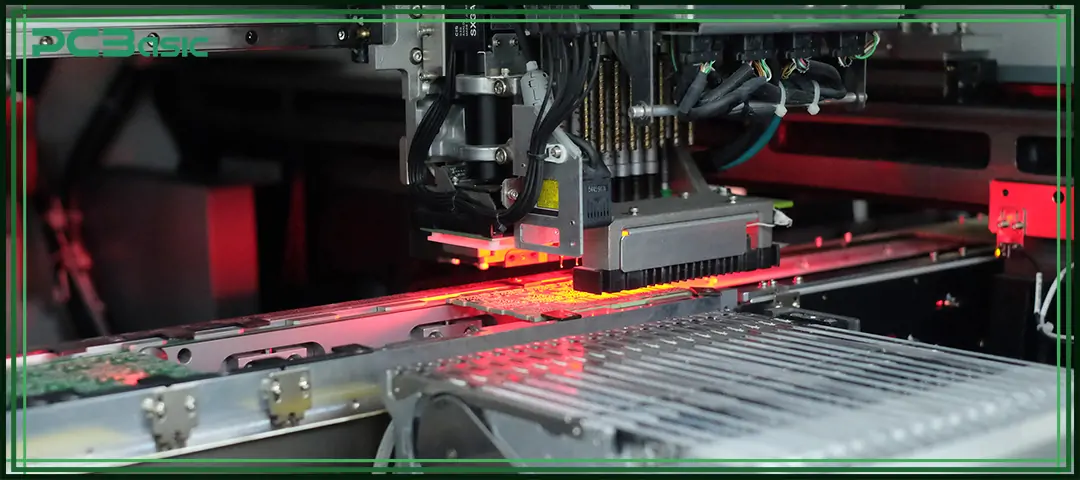
The PCB assembly process (PCB Assembly Process) consists of multiple stages. Each step on the PCB assembly line (PCB assembly line) must be strictly controlled to ensure reliable electronic PCB assembly.
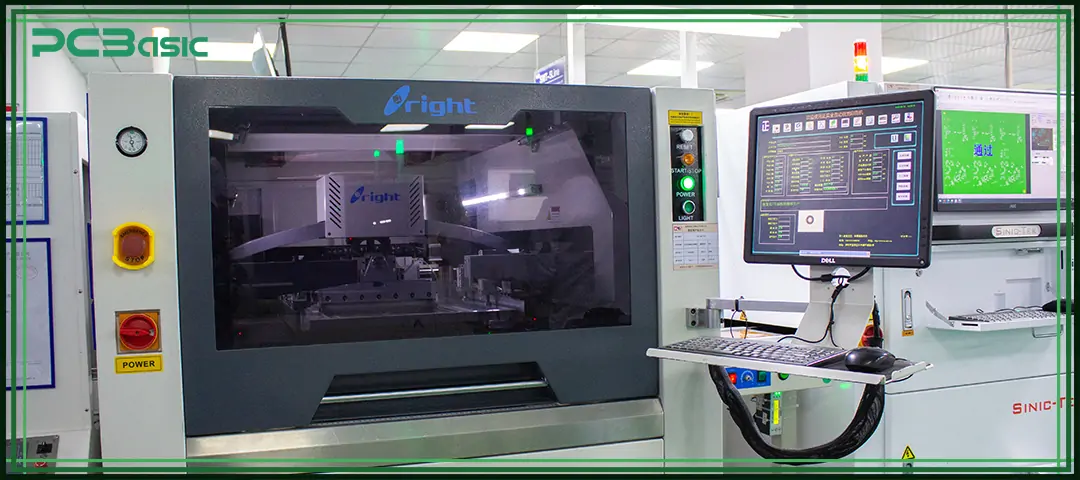
The first step in the PCB Assembly Process (PCB Assembly Process) is solder paste printing.
In this step, the solder paste (solder paste) is printed onto the pads of the PCB through a stencil. The stencil ensures that the solder paste is printed at the correct position and in the right quantity.
This step is very important for PCB assembly (PCB assembly) because either too much or too little solder paste may lead to soldering problems during the PCB assembly process.
In modern PCB assembly lines, automatic solder paste printing machines are usually used to ensure the stable quality of circuit board assembly.
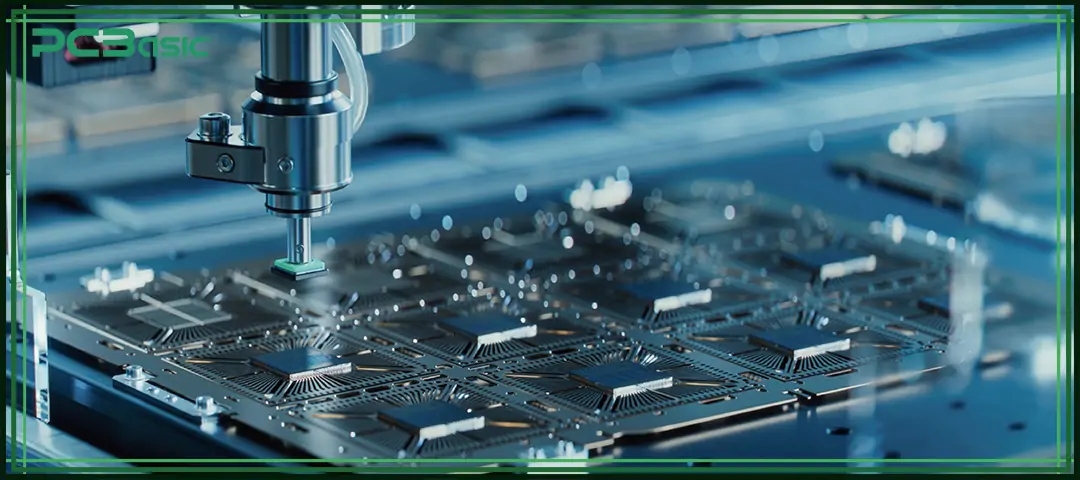
After the solder paste printing is completed, the PCB will enter the surface mount stage of the PCB Assembly Process.
High-speed surface mount machines can automatically install components onto the PCB, which is known as assembling electronic parts. These devices can place thousands of components per hour, and the positions are extremely precise.
During this electronic PCB assembly stage, the machine will identify the component orientation using a visual system and then accurately install the components at the designated positions.
This is a very vital step in PCB manufacturing and assembly, as if the component positions are wrong, problems may increase in the subsequent PCB assembly process.
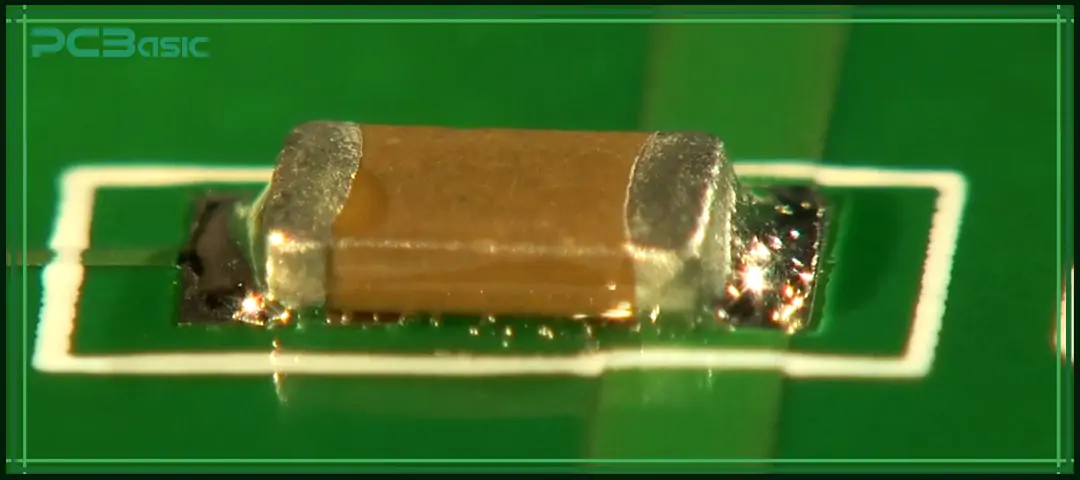
After the solder paste printing is completed, the PCB will enter the reflow oven of the PCB Assembly Process.
Reflow soldering is a critical step in the PCB assembly process. During this process, the solder paste is heated to melt, firmly attaching the components to the PCB pads to form an electrical connection.
The temperature curve of the reflow soldering furnace needs to be strictly controlled. If the temperature setting is inappropriate, problems such as cold solder joints or tombstoning may occur during the PCB assembly process.
A stable reflow soldering process can guarantee the quality of circuit board assembly.
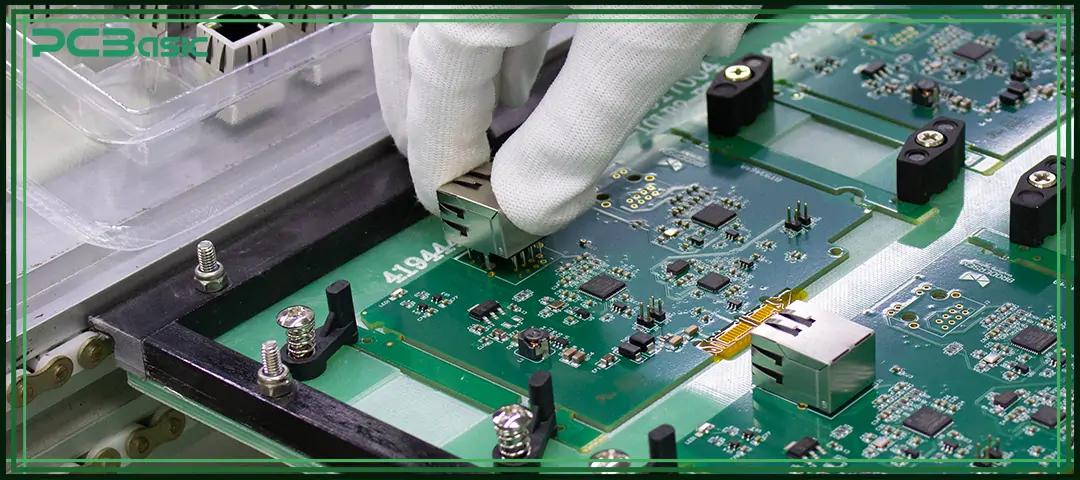
Not all components can be installed using surface mount technology.
Some components, such as connectors or larger-sized components, need to be inserted into the holes of the PCB.
In such cases, operators or automated equipment will insert these components into the circuit board during the through-hole stage of the PCB assembly process.
This step allows for the installation of components requiring higher mechanical strength, that is, the assembly of electronic parts.
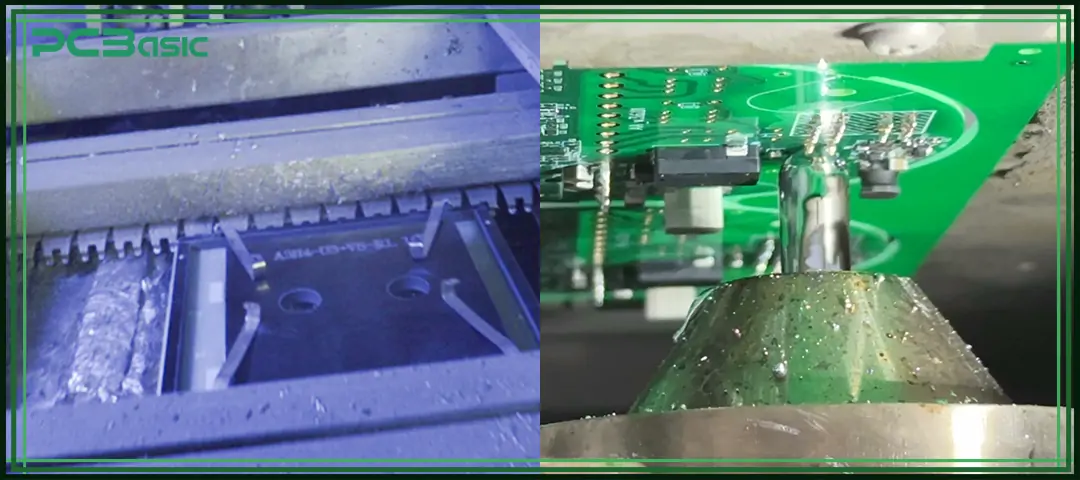
After the installation of the through-hole components is completed, the PCB usually undergoes wave soldering or selective soldering.
Wave soldering involves passing the entire circuit board through a layer of molten solder to complete the welding in one step. This technique is used for large-scale PCB manufacturing and assembly.
While selective soldering only solders the positions on the PCB that need to be welded, and is typically used for PCB assemblies(PCBA) that contain both surface mount and through-hole components (PCB assembly).
These welding methods ensure reliable solder joints during the PCB assembly process.
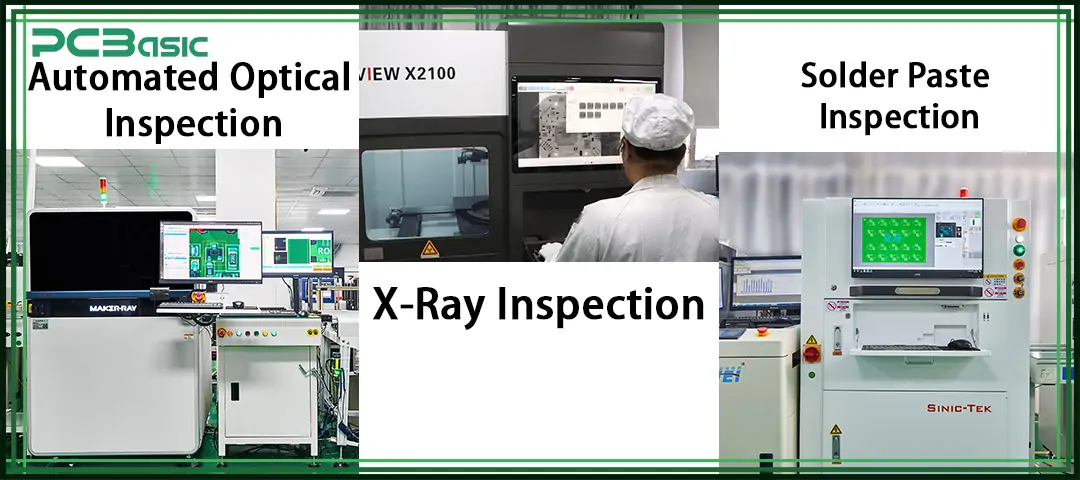
Inspection is a very important stage in the PCB assembly process.
Manufacturers typically employ automated inspection systems, such as:
AOI (Automated Optical Inspection): AOI (Automated Optical Inspection) is a commonly used inspection technology in the PCB assembly production process. It uses high-resolution cameras and image recognition software to perform automatic inspections of components and solder joints on the circuit board.
X-ray inspection: X-ray inspection (X-ray testing) is a commonly used inspection technique in the PCB assembly process, mainly used to identify issues with hidden solder joints or the internal structure of the PCB.
SPI (Solder Paste Inspection): SPI (Solder Paste Inspection) is an inspection technique used in the early stage of the PCB assembly process. It is mainly used to check the quality of solder paste printing.
These inspection systems can identify the following defects:
Missing components
Misaligned components
Insufficient solder
Solder bridges
The inspection can make sure the reliability of the electronic PCB assembly before the product proceeds to the next step of circuit board assembly.
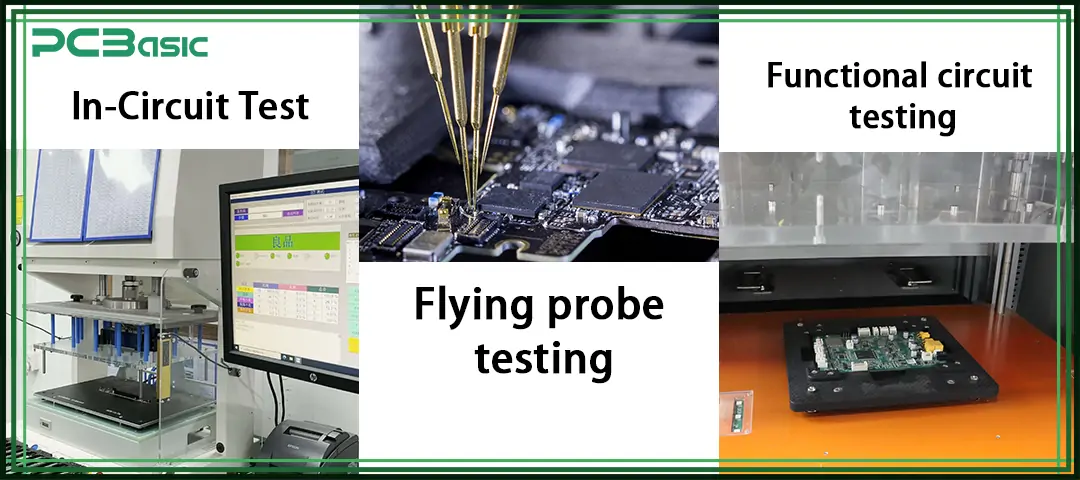
The final step of the PCB assembly process is testing.
Through testing, it can be verified whether the completed PCB assembly circuit board can operate normally as per the design requirements.
Common testing methods include:
ICT, In-Circuit Test
Flying probe testing
Functional circuit testing
These tests are used to confirm if all the components installed during PCB assembly (PCB assembly process) can function properly.
For professional printed circuit board assembly(PCBA)services, functional testing is of extreme importance, especially in industries with high reliability requirements such as automotive electronics, aerospace, and medical electronics.
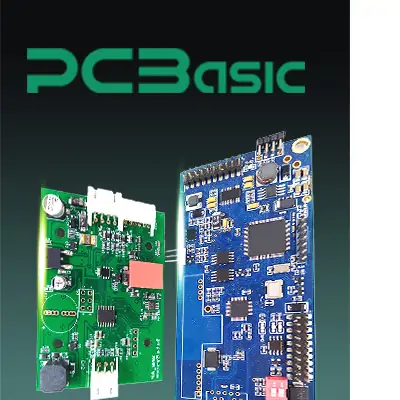
Time is money in your projects – and PCBasic gets it. PCBasic is a PCB assembly company that delivers fast, flawless results every time. Our comprehensive PCB assembly services include expert engineering support at every step, ensuring top quality in every board. As a leading PCB assembly manufacturer, we provide a one-stop solution that streamlines your supply chain. Partner with our advanced PCB prototype factory for quick turnarounds and superior results you can trust.
The relationship between PCB design and assembly is of great importance.
If the PCB design is not reasonable, it will make the PCB assembly process more complicated and increase the likelihood of some production issues.
Several design factors will directly affect PCB assembly, such as:
If the spacing between components is too small or the layout is unreasonable, it may lead to difficulties in mounting during electronic PCB assembly. A reasonable layout can allow the placement machine to run more smoothly on the PCB assembly line.
If the pad size is not designed properly, soldering issues may occur during the assembly of the PCB. A reasonable pad design can make the solder joints more stable.
As for components with higher power, it is necessary to consider heat dissipation during the design process, such as adding heat dissipation copper sheets or heat dissipation structures. This can prevent overheating problems during PCB manufacturing and assembly.
Applying DFM (Design for Manufacturing) principles during the PCB design and assembly stage can make the production and assembly of circuit boards easier.
Well-coordination between PCB design and assembly can elevate production yield, reduce production costs, and make the PCB assembly process smoother.
In order to make PCB assembly more reliable, engineers and manufacturers usually need to focus on the following aspects:
Selecting components suitable for automated production can better adapt to the PCB assembly line, making the PCB assembly process smoother.
A proper PCB layout can make the circuit board assembly process simpler and reduce assembly problems during production.
Stable solder paste quality is of extreme importance for ensuring the soldering quality in electronic PCB assembly.
Professional printed circuit board assembly(PCBA) services usually possess advanced equipment and rich experience, enabling them to better complete complex PCB manufacturing and assembly projects.
Testing is a crucial step in the PCB assembly process (PCB Assembly Process), which ensures that the product functions properly and has reliable quality before it is delivered and enters the market.
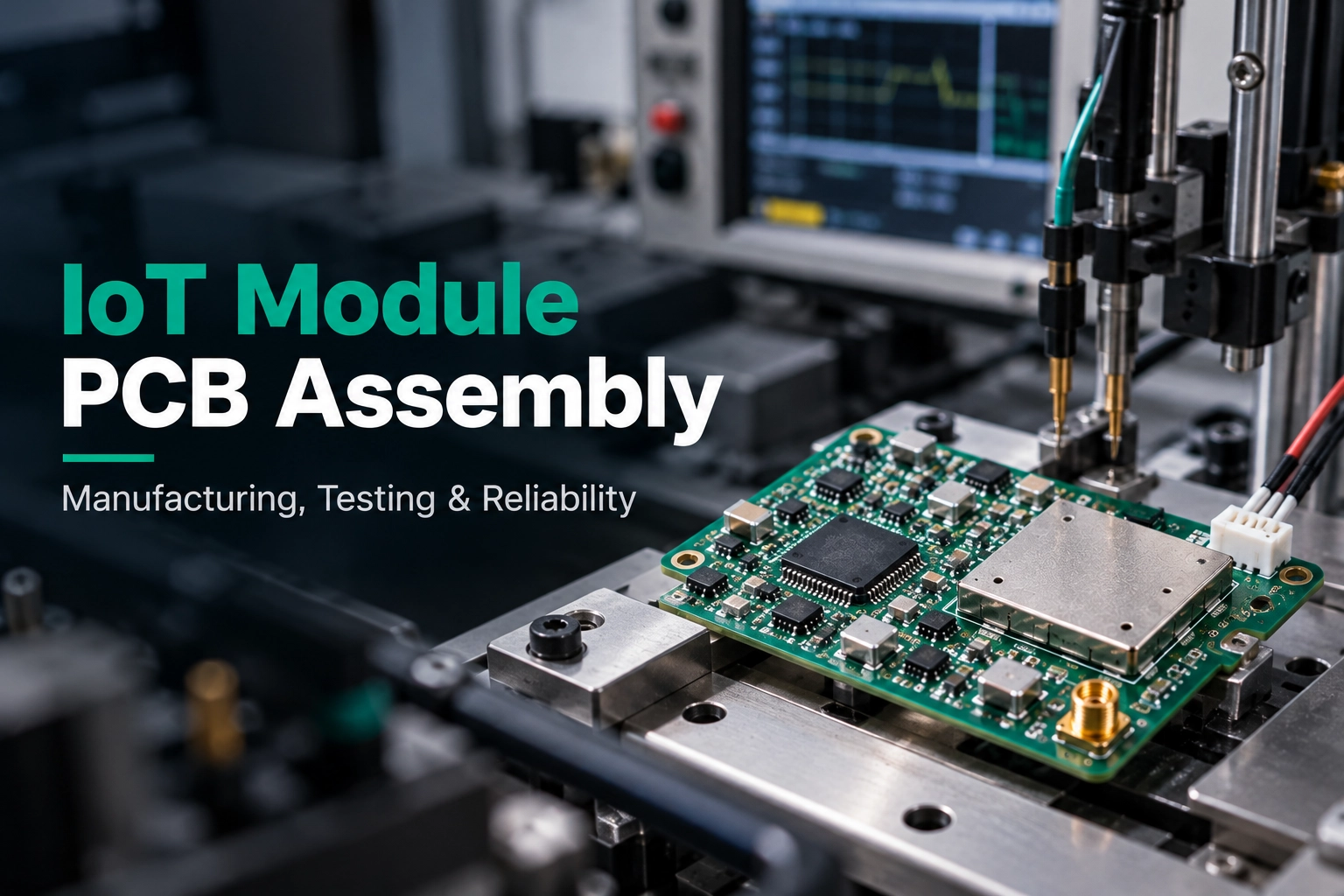
PCBasic has modern PCB assembly lines, which are equipped with automatic solder paste printing equipment, high-speed pick-and-place machines, reflow soldering, AOI inspection, and X-ray inspection. These devices can make sure stable and high-quality electronic PCB assembly.
Throughout the PCB Assembly Process, PCBasic will perform multiple tests, such as SPI testing (SPI), AOI testing (AOI), ICT testing (ICT) or flying probe testing, as well as functional testing, to ensure that every circuit board assembly can function properly.
PCBasic has established a complete quality management system that covers the entire PCB manufacturing and assembly process. From material inspection to final testing, quality checks are performed at every step to ensure the stability and reliability of PCB assembly.
PCBasic is manufactured in accordance with international standards, including ISO 9001 (ISO 9001), ISO 13485 (ISO 13485), IATF 16949 (IATF 16949), and IPC standards (IPC standards). These standards help make sure the reliability of PCB assembly (PCB assembly) and are applicable to industries such as automotive electronics, medical devices, and industrial electronics.
Whether it is small-scale prototype PCB assembly or large-scale PCBA manufacturing, PCBasic can provide stable printed circuit board assembly services to meet the needs of multiple projects.

The PCB assembly process (PCB Assembly Process) is of great significance in modern electronic manufacturing. From solder paste printing to the final testing, every step of PCB assembly needs to be controlled properly in order to ensure the reliability and performance of the circuit board.
Understanding what PCB assembly is and how the PCB Assembly Process performs can help engineers design circuit boards that are more suitable for production, and also help manufacturers improve production efficiency.
As electronic products become smaller, faster and more complex in terms of functionality, the demand for high-quality PCB manufacturing and assembly will also continue to increase.
Through outstanding PCB design and assembly, advanced production equipment, and professional printed circuit board assembly(PCBA) services, manufacturers can achieve stable and efficient electronic PCB assembly.
PCB assembly (PCB assembly process) contains installing and soldering electronic components onto a printed circuit board(PCB), hence transforming the board into a functional electronic circuit.
PCB manufacturing (PCB fabrication) refers to the process of producing bare PCBs, while PCB assembly (PCB assembly) involves installing electronic components onto the circuit boards within the PCB assembly process.
In PCB assembly lines, common equipment includes solder paste printers, pick-and-place machines, reflow ovens, AOI inspection systems, and various testing devices.
A well-designed and assembled PCB (PCB design and assembly) can make the production process smoother, reduce issues, and strengthen the reliability of the final circuit board assembly.
Assembly Enquiry
Instant Quote
Phone contact

+86-755-27218592
In addition, we've prepared a Help Center. We recommend checking it before reaching out, as your question and its answer may already be clearly explained there.
Wechat Support

In addition, we've prepared a Help Center. We recommend checking it before reaching out, as your question and its answer may already be clearly explained there.
WhatsApp Support

In addition, we've prepared a Help Center. We recommend checking it before reaching out, as your question and its answer may already be clearly explained there.
