
Global high-mix volume high-speed PCBA manufacturer
9:00 -18:00, Mon. - Fri. (GMT+8)
9:00 -12:00, Sat. (GMT+8)
(Except Chinese public holidays)





HomePage > Blog > Knowledge Base > A Comprehensive Guide to the HDI Board
As electronic devices become smaller, faster, and more powerful, traditional PCB structures are no longer sufficient. Smartphones, wearable devices, automotive control modules, medical electronics and other products all require a small size with diversified functions. This is why the HDI board is designed.
By utilizing microvias, blind vias, buried vias, and sequential lamination, an HDI printed circuit board (High-density Interconnect PCB) makes it possible to lay high-density wiring on a limited unit area. Therefore, engineers can design more compact, high-performance products on the basis of high-density interconnect PCBs.
In this comprehensive guide, we will explore everything you need to know about HDI PCB technology, including types, stackups, layout principles, fabrication processes, and how to choose the right HDI PCB manufacturer.
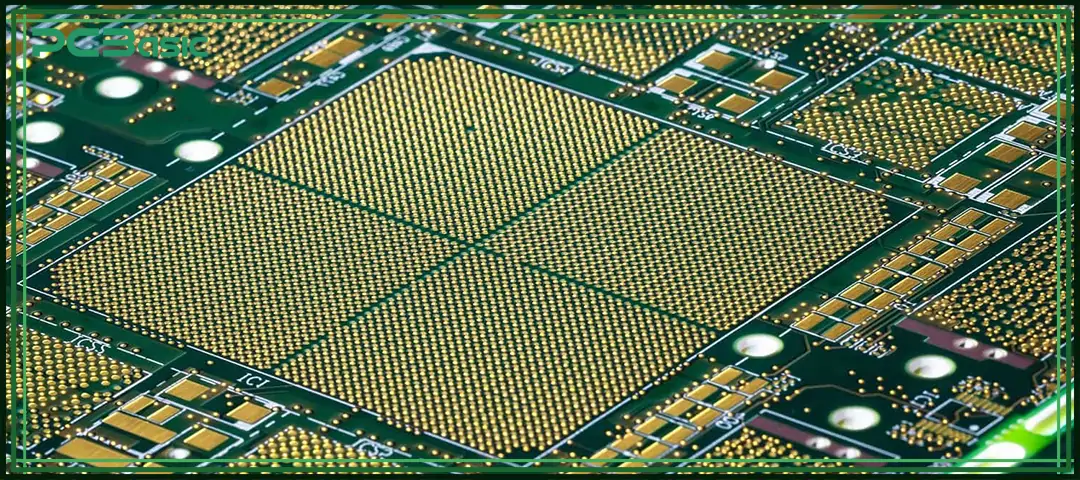
An HDI board is a type of printed circuit board. Its full name is High-density Interconnect Printed Circuit Board. Compared to traditional PCBs, it has higher wiring density, smaller vias, and finer traces. The main goal of a high-density interconnect PCB is to realize electrical connections as much as possible while minimizing board size.
Compared to standard multilayer boards, a multilayer HDI circuit board has the following features:
· Microvias (laser-drilled vias)
· Blind and buried vias
· Sequential lamination
· Fine trace width and spacing
· Thinner dielectric layers
In short, an HDI board allows more connections in less space.

Modern IC packages such as BGA, CSP, and QFN have extremely small pitch spacing, which means the pins are placed closely to each other. As a result, routing traces between these pins becomes much more difficult. Without HDI PCB technology, engineers would need to add many more PCB layers in order to route all the signals of these components. This will no doubt make the board thicker and larger and increase the cost inevitably.
Therefore, it’s a huge advance that HDI PCB technology makes it possible to route signals efficiently in a limited space.
By using an optimized HDI PCB stackup and advanced HDI layout, designers can:
· Reduce board size
· Improve signal integrity
· Enhance thermal performance
· Support high-speed and high-frequency applications
There are roughly three types of HDI boards according to the number of sequential lamination cycles. They are mainly divided into three structures:
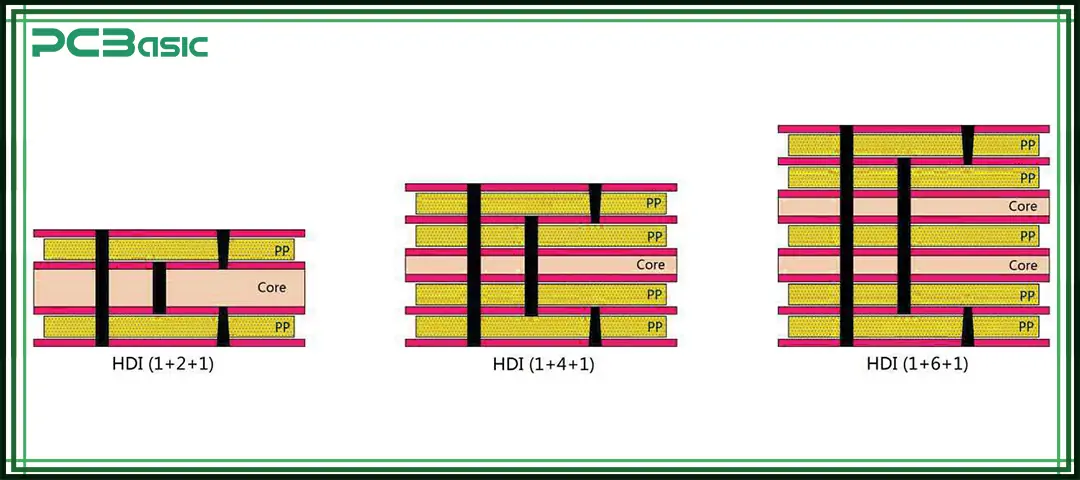
This is the entry-level HDI printed circuit board; it has the simplest structure:
· One build-up layer on each side of the core
· Laser-drilled microvias connecting outer layers to inner layers
This kind of structure is widely used in smartphones, wearable devices, tablets, and other compact consumer electronics. It is easy to produce and can provide enough routing density while controlling costs.
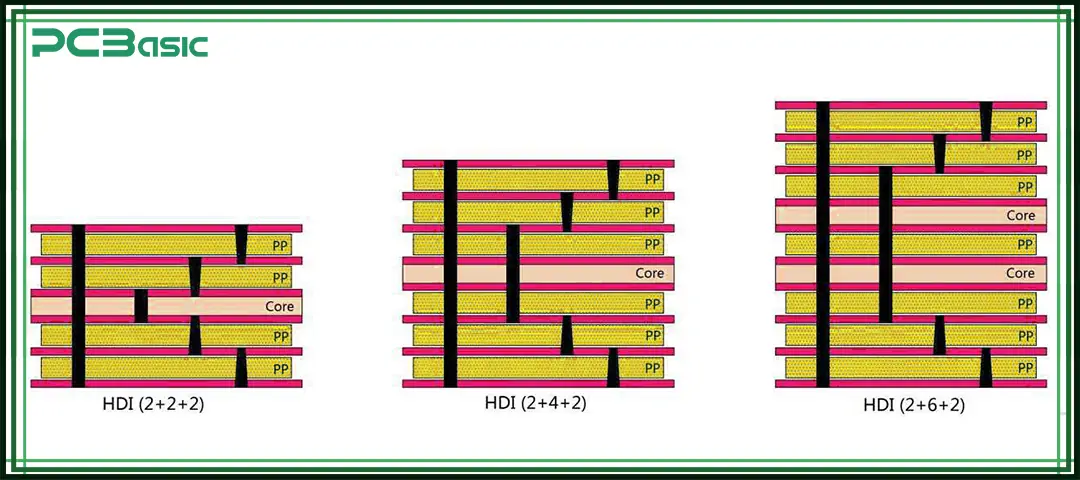
This is a more advanced multilayer HDI circuit board with two sequential lamination layers on each side.
· Stacked microvias
· Higher routing density
· Suitable for high-end processors and complex designs
This kind of structure is more complex. It has an additional build-up layer compared to the simplest one, which can hold a higher routing density. It can be applied to applications that require high signal density and performance. For example, it is common in computing modules, automotive control systems, and communication equipment. These devices demand more routing channels within a limited board area for the work of large BGAs and high-speed signals. Also, it can be found in multifunctional smartphones.
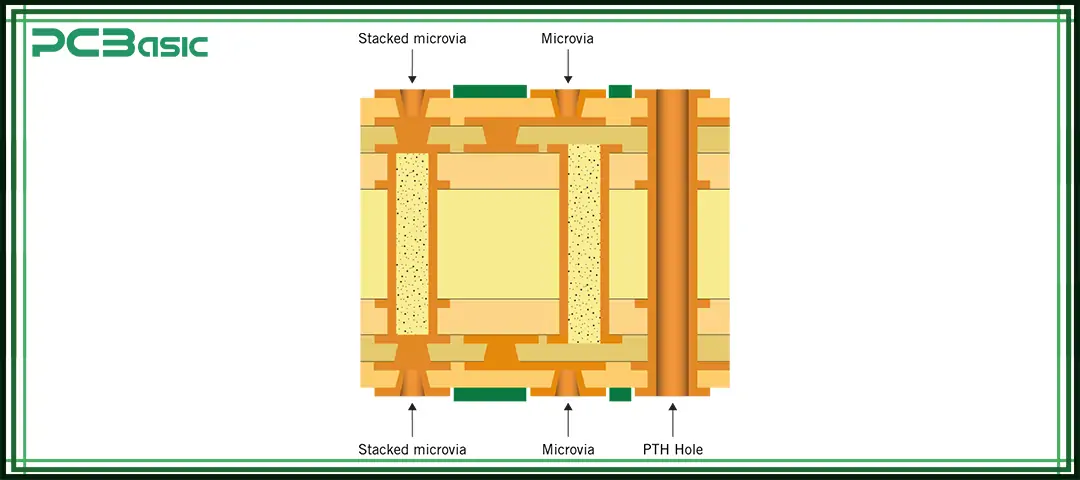
In this structure, microvias can connect any adjacent layer without being limited to the build-up layers. This design breaks the traditional restriction to press the boards sequentially and increases the flexibility of interconnection between the boards.
This type of high-density interconnect PCB offers maximum freedom for routing, and it will help to optimize signal paths, reduce via stubs, and improve overall electrical performance.
This kind of HDI board is usually used in ultra-compact and high-performance applications such as flagship smartphones, advanced computing modules, and high-speed communication equipment.
However, making this structure requires excellent HDI PCB fabrication capability, including strict process control and professional technique knowledge.
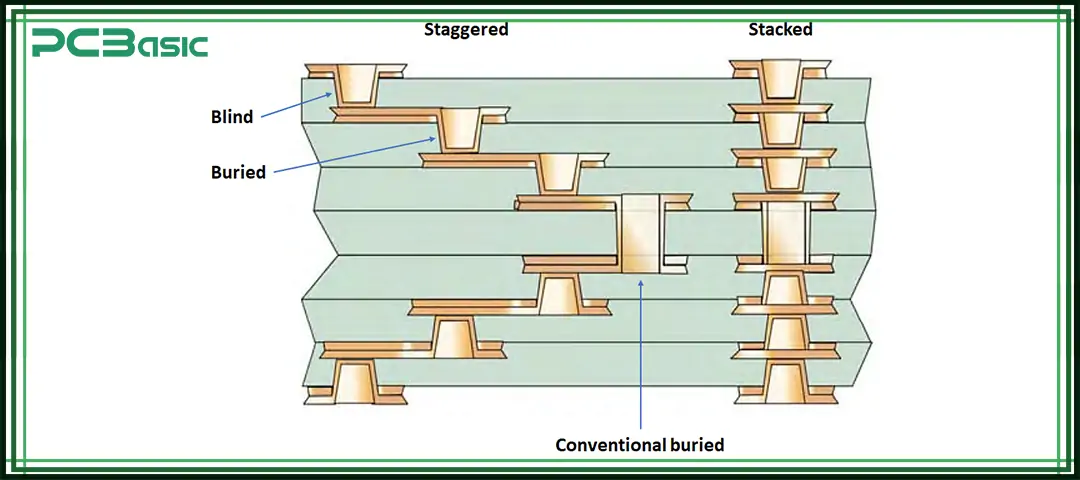
HDI PCB stackup is the foundation of the electrical performance, and a well-structured HDI board stackup can greatly reduce fabrication cost while maintaining signal integrity and optimizing power distribution.
· L1: Signal
· L2: Ground
· L3: Signal
· L4: Signal
· L5: Power
· L6: Signal
This HDI PCB stackup has microvias between L1-L2 and L6-L5, making it possible for dense routing on outer layers while keeping a stable reference plane.
A multilayer HDI will add additional build-up layers, microvias and routing layers each time during the lamination process
A good HDI PCB stackup must consider:
· Controlled impedance
· Return current paths
· Thermal expansion
· Via reliability
The success of this stage needs a close collaboration between designers and the HDI PCB manufacturer. Only if they work closely can they avoid layout adjustments, production delays, and unnecessary cost increases.
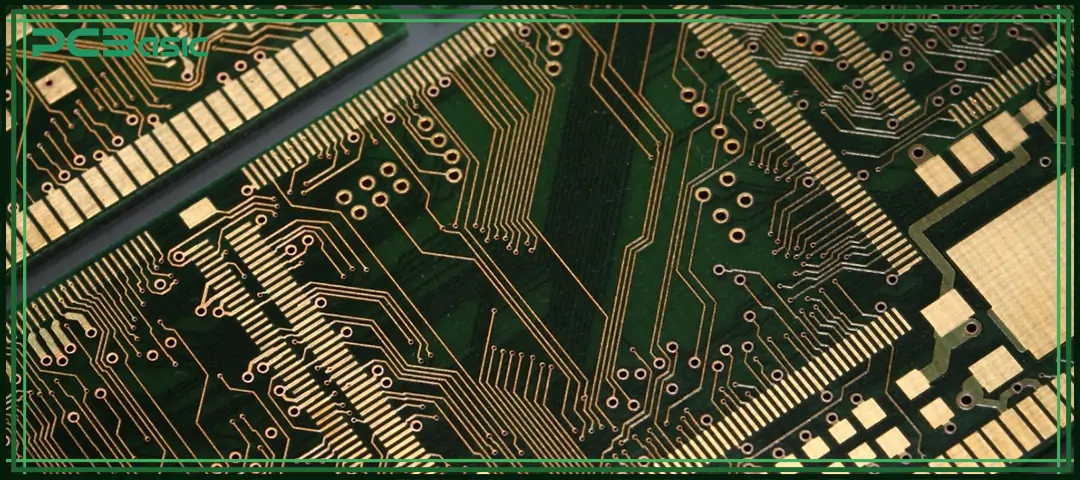
The quality of the HDI layout is an important aspect that can't be ignored, and it significantly influences the quality of the final HDI board.
A well-deployed HDI layout may have the following features:
Stacked and staggered microvia structures are common in a multilayer HDI circuit board. The microvias are often laser-drilled and have smaller diameters than mechanical vias. In HDI PCB technology, microvias can typically help in the following three aspects:
· Reduce pad size
· Save routing space
· Shorten signal paths
A high-density interconnect PCB often has fine traces and spacing, sometimes down to 3/3 mil or even smaller. This characteristic offers extra room to route signals from fine-pitch BGAs.
In an advanced HDI layout, via-in-pad is often used. The via is placed directly inside the BGA pad. This allows signals to go straight from the BGA pads to the inner layers. A shorter signal path can improve performance, finally.
However, this method requires a very precise HDI PCB fabrication control technique. The drilling, plating, and filling processes must be accurate enough to ensure the reliability of the HDI layout.
HDI PCB technology is commonly used in high-speed systems, so designers must pay attention to the following tips:
· Control impedance
· Minimize crosstalk
· Optimize return paths
· Reduce stub length
Proper HDI layout ensures stable electrical performance. It helps control impedance, reduce signal interference, and maintain clean return paths. Therefore, a well-designed HDI layout will definitely improve signal integrity and overall reliability of the final board.
Time is money in your projects – and PCBasic gets it. PCBasic is a PCB assembly company that delivers fast, flawless results every time. Our comprehensive PCB assembly services include expert engineering support at every step, ensuring top quality in every board. As a leading PCB assembly manufacturer, we provide a one-stop solution that streamlines your supply chain. Partner with our advanced PCB prototype factory for quick turnarounds and superior results you can trust.
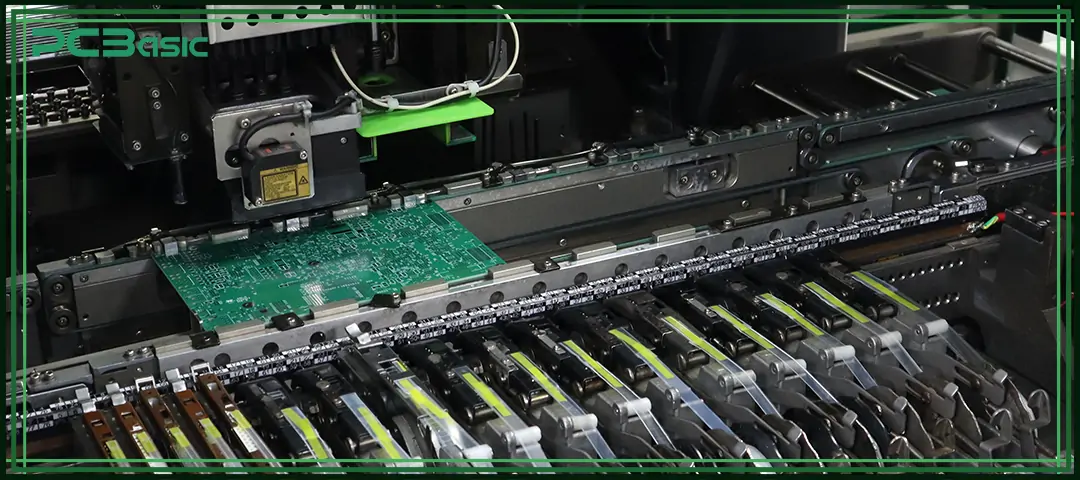
The manufacturing of an HDI board is more complex than that of a standard PCB. The HDI PCB fabrication process typically includes:
The first step of the fabrication of an HDI printed circuit board is similar to that of a traditional printed circuit board. That is, manufacturing the inner core of it.
The second key step in HDI PCB technology is to form microvias. This step will use laser drilling technology.
After drilling, microvias will be cleaned and plated with a layer of copper to ensure reliable conductivity.
In this step, additional dielectric and copper layers are laminated onto the core layer. Each lamination cycle increases the complexity of the multilayer HDI circuit board.
This step will use advanced imaging systems to form fine trace circuits. Only the advanced equipment used in this step can produce a result that meets the tight HDI layout requirements.
In this final step, final surface treatments such as ENIG or OSP are applied. And then electrical testing is applied, which can ensure the HDI board meets design specifications.
The process is very complex, so if you want to ensure the yield and reliability of HDI PCB manufacture, choosing a capable and responsible HDI PCB manufacturer is the most important thing.
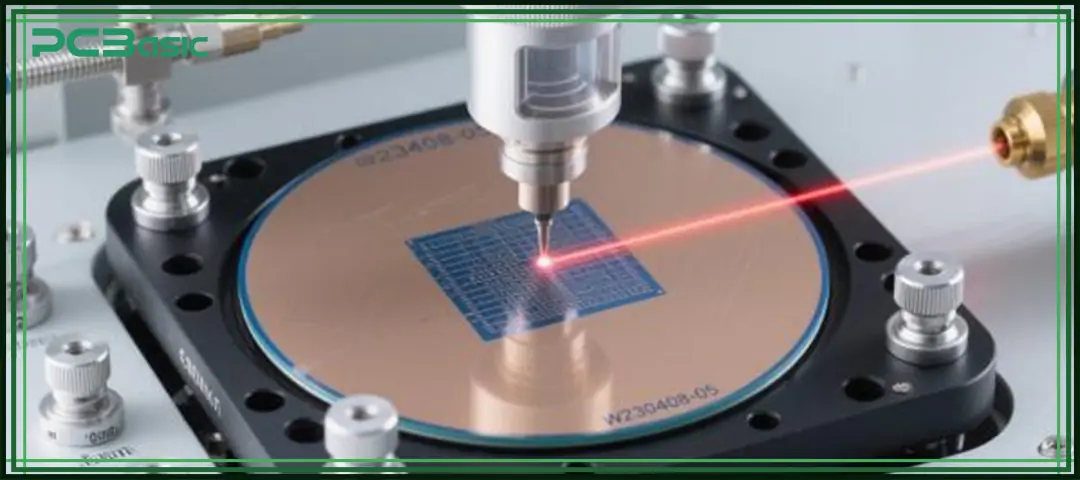
To fabricate an HDI board and ensure its performance, some key advanced technologies should be applied during the whole process.
Laser drilling makes it possible to form extremely small vias with high positional accuracy. This is a fundamental HDI PCB technology.
SBU is the backbone of HDI PCB fabrication. This is a kind of technology used to enable layer-by-layer construction of a high-density interconnect PCB.
HDI PCBs usually use thin dielectric materials and high-performance laminates. These materials can significantly improve signal integrity and thermal reliability in a multilayer HDI circuit board.
Advanced direct imaging systems are key systems used during HDI PCB fabrication to help achieve fine traces.
Not all PCB factories are capable of producing a reliable HDI board. So, to ensure the quality of the HDI board, you'd better spend some time finding a responsible HDI PCB manufacturer.
When selecting an HDI PCB manufacturer, consider the following factors:
A trustworthy manufacturer must have some technical support:
· Laser drilling precision
· Microvia reliability testing
· Experience with complex HDI PCB stackup
· Proven HDI PCB technology
A strong HDI PCB manufacturer should be capable of assisting with:
· Stackup optimization
· DFM review
· HDI PCB prototype development
Look for manufacturers that are experienced in quality control:
· IPC compliance
· Electrical testing capability
· Microsection analysis
A reliable supplier can be competent enough to support both HDI PCB prototype builds and high-volume HDI PCB fabrication.
A proper partner can help you get twice the result with half the effort. Choosing the right HDI PCB manufacturer is worth consideration, because it will definitely impact product performance, cost, and time-to-market.
The HDI printed circuit board offers unmatched advantages in routing density and performance. And because of the increasing demand for compact and high-speed devices, the HDI board is gradually emerging with its superiorities in modern electronic design.
However, the fabrication of an HDI board is not an easy thing. From HDI layout strategies to engineered HDI PCB stackup structures, the successful implementation of HDI PCB technology requires close collaboration between designers and the HDI PCB manufacturer.
Whether you are developing a smartphone, automotive controller, or medical device, selecting the right partner and investing in proper HDI PCB fabrication for your HDI PCB prototype can improve the reliability and competitiveness of your products significantly.
All in all, as technology continues to move forward, the role of the multilayer HDI circuit board will become more important, and the high-density interconnect PCB solutions will be applied to a broader field in next-generation electronics.

An HDI board uses microvias, fine traces, and sequential lamination technology, while a standard PCB relies on mechanical drilling and has larger trace spacing.
Yes. Because HDI PCB fabrication involves laser drilling and multiple lamination cycles, it definitely adds extra costs compared to traditional PCBs.
Consumer electronics, automotive systems, medical devices, aerospace, and high-speed communication equipment frequently use HDI PCB technology.
Evaluate the manufacturer on technical capability, experience with complex HDI PCB stackup, support for HDI PCB prototype, and overall quality control systems.
Assembly Enquiry
Instant Quote

Phone contact

+86-755-27218592
In addition, we've prepared a Help Center. We recommend checking it before reaching out, as your question and its answer may already be clearly explained there.
Wechat Support

In addition, we've prepared a Help Center. We recommend checking it before reaching out, as your question and its answer may already be clearly explained there.
WhatsApp Support

In addition, we've prepared a Help Center. We recommend checking it before reaching out, as your question and its answer may already be clearly explained there.
