
Global high-mix volume high-speed PCBA manufacturer
9:00 -18:00, Mon. - Fri. (GMT+8)
9:00 -12:00, Sat. (GMT+8)
(Except Chinese public holidays)





HomePage > Blog > Knowledge Base > A Detailed Guide to SMT Assembly
In the modern electronics manufacturing field, surface mount technology (SMT) assembly has become the most common production method for printed circuit boards (PCBs). From smartphones, medical devices, to automotive electronics and industrial control equipment, most electronic products rely on SMT technology to achieve smaller sizes, higher reliability, and more efficient mass production. It not only allows for more components to be placed on the circuit board but also enhances the production efficiency of SMT production lines.
SMT production lines have achieved highly automated production capabilities. A complete production line usually comes equipped with various SMT equipment, as well as automatic detection systems and precise control technologies. Modern SMT production lines can place tens of thousands of SMD components with extremely high precision per hour.
In this article, we will introduce SMT assembly in an easy-to-understand way. This includes the working principle of SMT technology, common SMT equipment, the role of SMD components in production, and the differences between SMT and SMD.
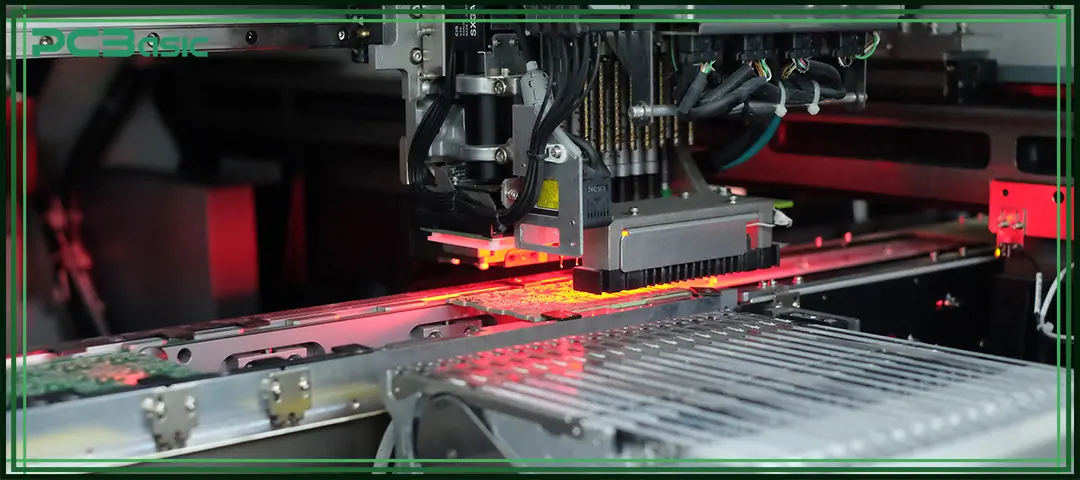
Today, the production of most electronic products depends on efficient and exact manufacturing methods. Among them, surface mount technology (SMT) assembly is currently the most common and popular method, which is widely used in the assembly of printed circuit boards(PCBs) and printed circuits. From consumer electronics to automotive electronic systems, SMT technology helps manufacturers produce smaller and more superior electronic products.
Before understanding how SMT assembly operates, it is helpful to first comprehend SMT technology, PCB assembly, and their interrelationships, as this will enable us to better understand the entire production process.

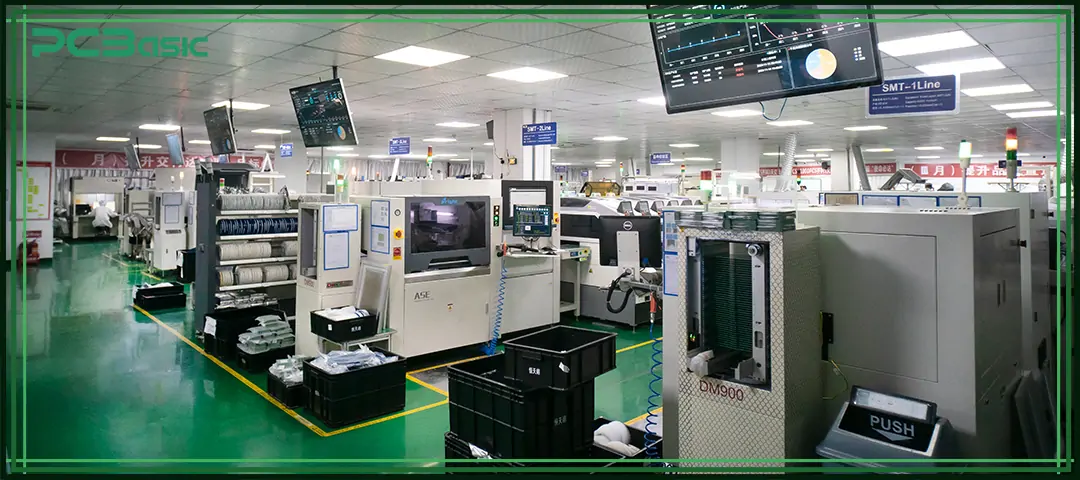
SMT (Surface Mount Technology) is an electronic manufacturing technology characterized by directly mounting electronic components on the surface of PCBs ( Printed Circuit Boards).
In the surface mount technology (SMT) process, the automated SMT equipment precisely places Surface Mount Devices (SMDs) on the pads of the Printed Circuit Board (PCB). Later, the circuit board is placed in a reflow soldering oven, where it is heated to permanently fix these devices.
These steps are usually carried out on highly automated Surface Mount Technology (SMT) production lines.
It is the most widely used in the manufacturing of modern electronic products because the Surface Mount Technology (SMT) can use smaller components and place more of them on the circuit board.
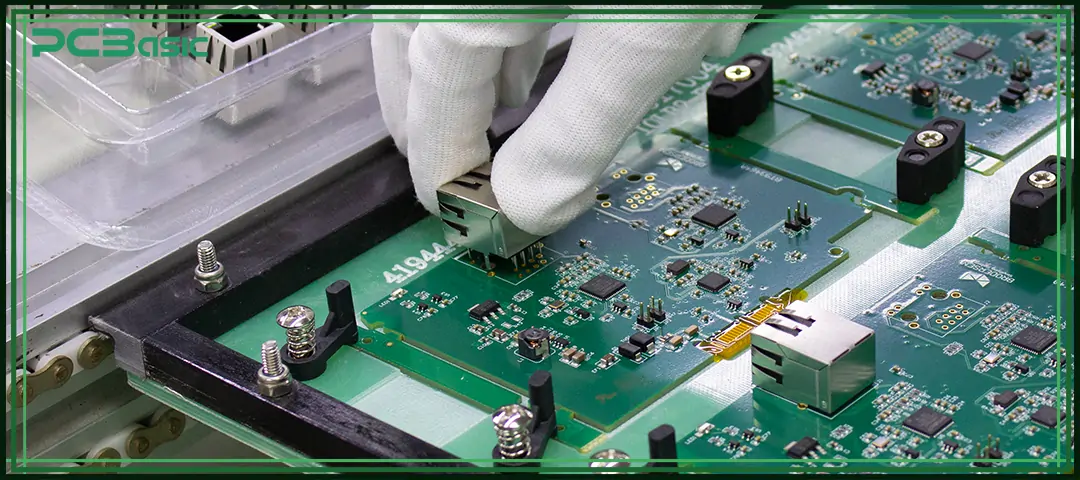
PCB assembly refers to the manufacturing procedure where various electronic components are mounted onto a printed circuit board so that the circuit can do its job.
A completed printed circuit assembly not only consists of the unprocessed PCB board, but also all the electronic components installed and soldered onto it. For example: resistors, capacitors, chips, connectors and so on.
PCB assembly usually involves multiple processes, such as SMT assembly, through-hole assembly, and subsequent functional testing.
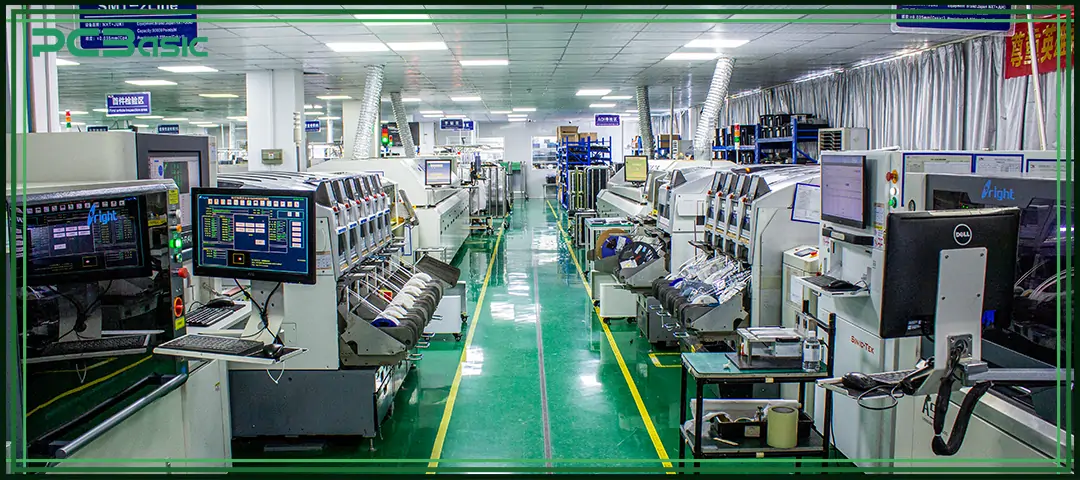
SMT assembly (SMT assembly process) is a kind of PCB assembly (PCB assembly process) that uses SMT technology to directly mount the SMD components onto the surface of the circuit board.
A complete SMT process usually consists of several steps: solder paste printing, automated component placement, reflow soldering, and inspection.
These steps will be carried out by professional SMT equipment on an automated SMT production line.
Compared with the traditional assembly method, SMT assembly (SMT assembly) brings a faster production speed, higher precision, and can accommodate more SMD components on smaller circuit boards. Thus, it has become the most popular manufacturing method in modern printed circuit assembly.
A typical SMT production line is made up of various SMT equipment that work in coordination to complete the entire SMT assembly process step by step.
On the SMT production line, each equipment has its own task, the main purpose of which is to make sure that SMD components can be accurately placed and the reliability of the printed circuit assembly.
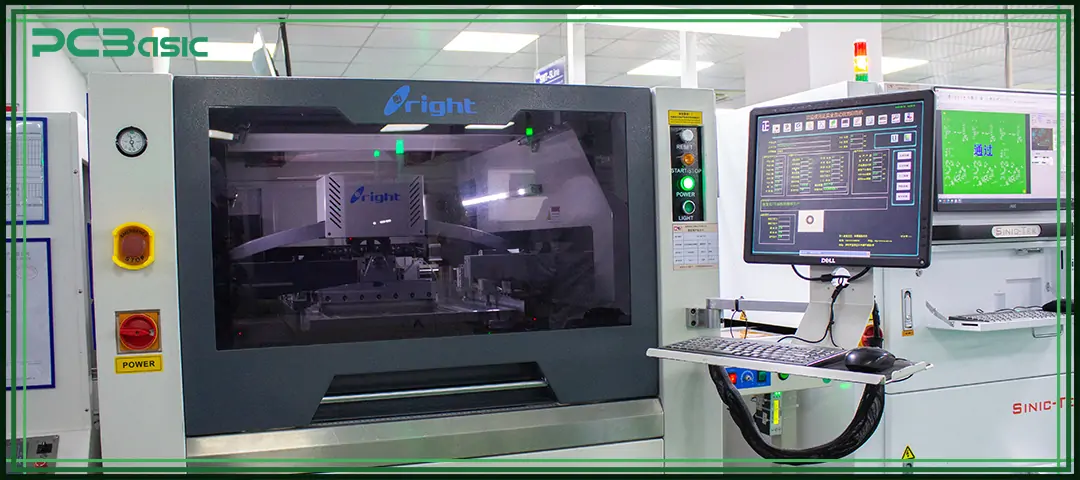
The solder paste printer is the first important SMT equipment in the SMT process. Its function is to print solder paste onto PCB pads by using a stencil precisely.
This step is especially crucial in SMT assembly because the quantity and placement of the solder paste directly influence the quality of the solder joints. If the solder paste printing is inaccurate, defects such as solder bridging, insufficient solder, or tombstoning may occur during the PCB assembly.
Therefore, an ultra-precision solder paste printer is an indispensable equipment for ensuring the stable operation of the SMT production line.
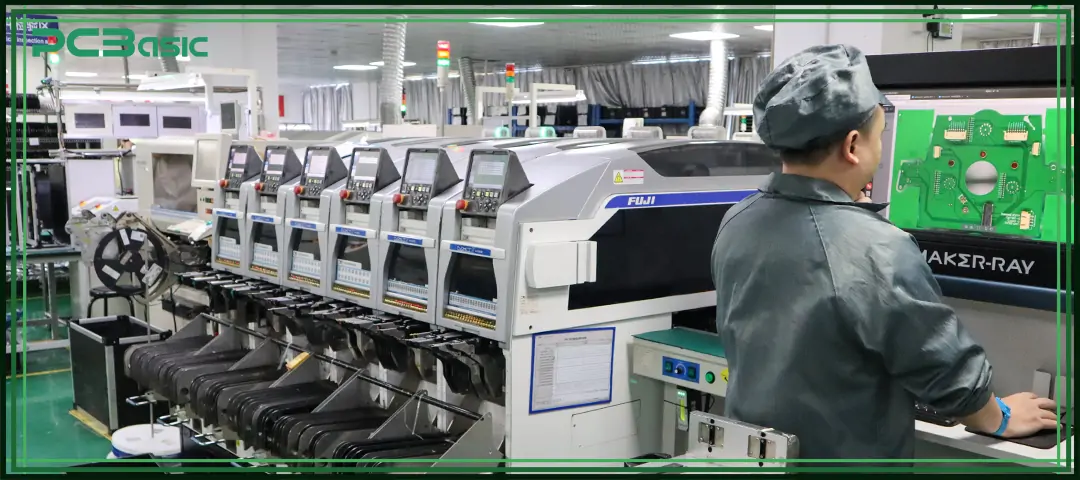
The pick-and-place machine is one of the most important SMT equipment used in the SMT assembly process.
This equipment can automatically attach SMD components onto the PCB at high speed and high precision. Modern pick-and-place machines can attach tens of thousands of SMD components per hour.
In advanced SMT technology (SMT technology), vision systems are typically employed to identify the orientation of components and ensure the accuracy of the mounting placement during the SMT process.
This stage is extremely crucial in both PCB assembly and printed circuit assembly. If the SMD component placement is wrong, it may cause electrical failures.
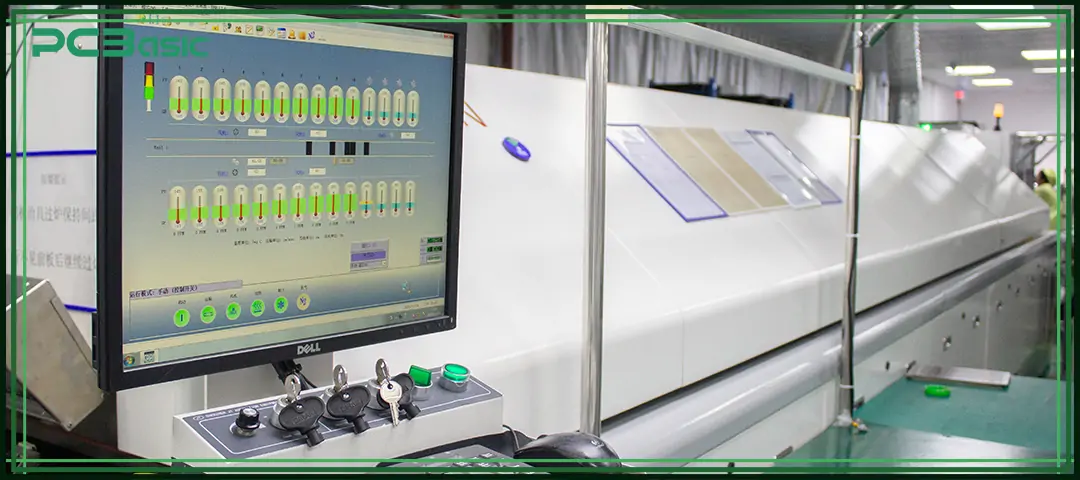
After the SMD components are attached to the PCB, the circuit board will enter the reflow soldering oven for soldering.
The reflow oven is a very crucial type of SMT equipment in the SMT production line. During this process, the previously printed solder paste is heated to a molten state. Later, solder joints are formed between the SMD components and the PCB.
In the SMT process, temperature control is of the utmost critical importance. If the reflow profile is not set well, it may cause solder defects, which will affect the quality of the printed circuit assembly.
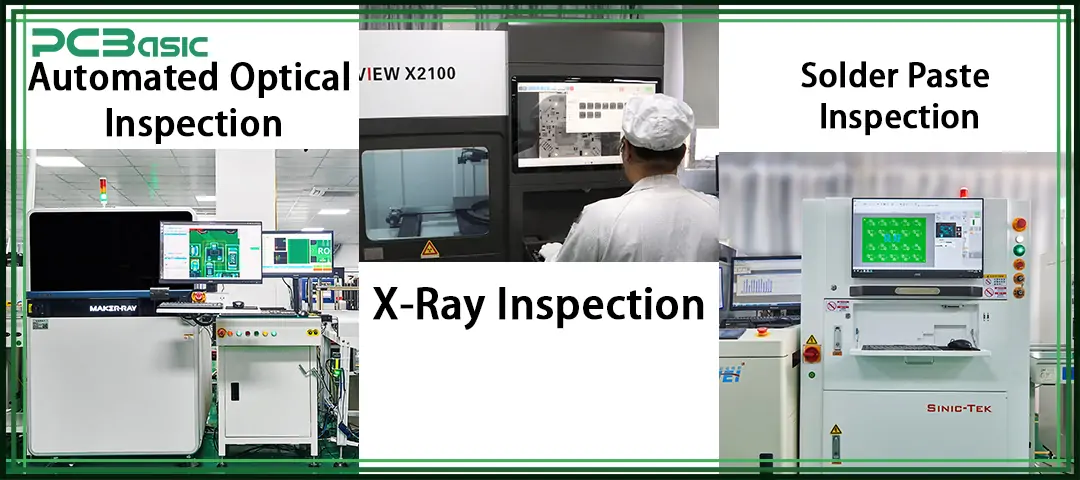
Inspection equipment is a crucial part of the modern SMT production line. Common inspection systems include:
1. Automated Optical Inspection
AOI is a common detection equipment used in PCB assembly and SMT production lines. It captures images of the circuit board surface through an industrial camera and then analyzes them with software to detect whether there are any problems with the components and solder joints on the circuit board.
2. X-ray inspection
X-ray testing is also a commonly used testing method in PCB assembly and SMT assembly. It utilizes X-rays to penetrate the circuit board and components, allowing it to observe the internal structure and condition of the solder joints of the circuit board.
3. Solder Paste Inspection
SPI is a device used to detect quality issues in solder paste printing. It is commonly used in an SMT production line. It is usually installed behind the solder paste printer and is used to check whether the solder paste has been printed correctly on the PCB.
These inspection devices can help check the quality of SMT assembly (SMT assembly process), ensuring that SMD components (SMD components) are correctly mounted and soldered in the SMT process.
In highly reliable PCB assembly, inspection plays a quite key role, especially in industries such as automotive electronics and medical devices.
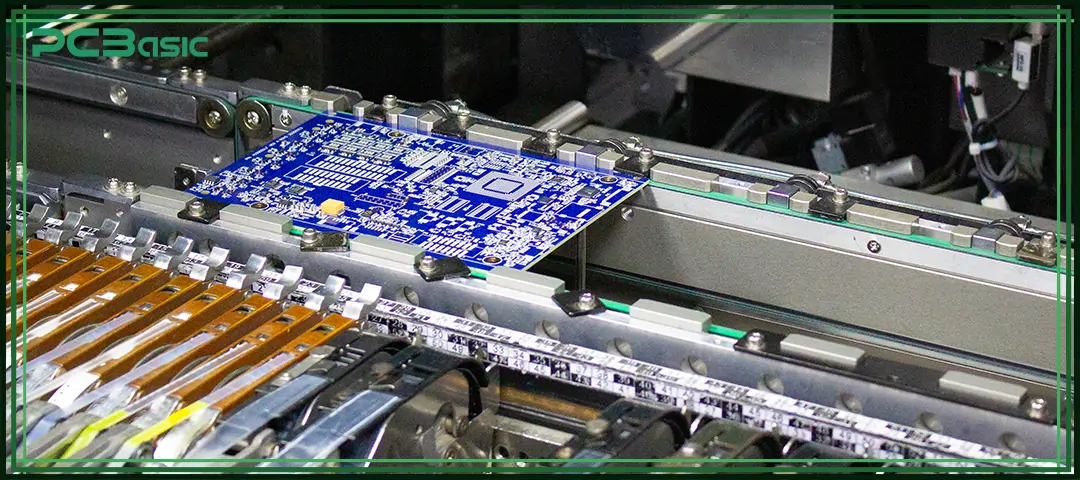
The SMT process (SMT process) usually follows several fixed steps in a modern SMT production line (SMT production line). Familiarizing oneself with the SMT assembly workflow not only helps engineers improve the production efficiency of PCB assembly, but also enhances the reliability of the products.
Firstly, the unprocessed PCB (PCB) will be sent to the SMT production line to prepare for the next solder paste printing process.
Subsequently, the solder paste (solder paste) will be printed onto the PCB pads through the stencil. This step is extremely vital as it ensures that each SMD component (SMD components) has the appropriate solder when carrying out SMD assembly.
Then, the pick-and-place machine will attach a large number of SMD components onto the PCB.
This is a quite crucial step in SMT assembly, as it ensures that the components are placed in the correct positions, hence guaranteeing the quality of the printed circuit assembly.
After that, the PCB enters the reflow oven. During the heating process, the solder paste will melt and connect the PCB and the SMD components. This step completes the electrical connection in the PCB assembly.
After reflow soldering, the SMT assembly needs to be inspected.
For example:
Automated Optical Inspection (AOI) is used to check if the component positions are correct.
X-ray inspection is used to inspect hidden solder joints, such as those beneath BGA packages.
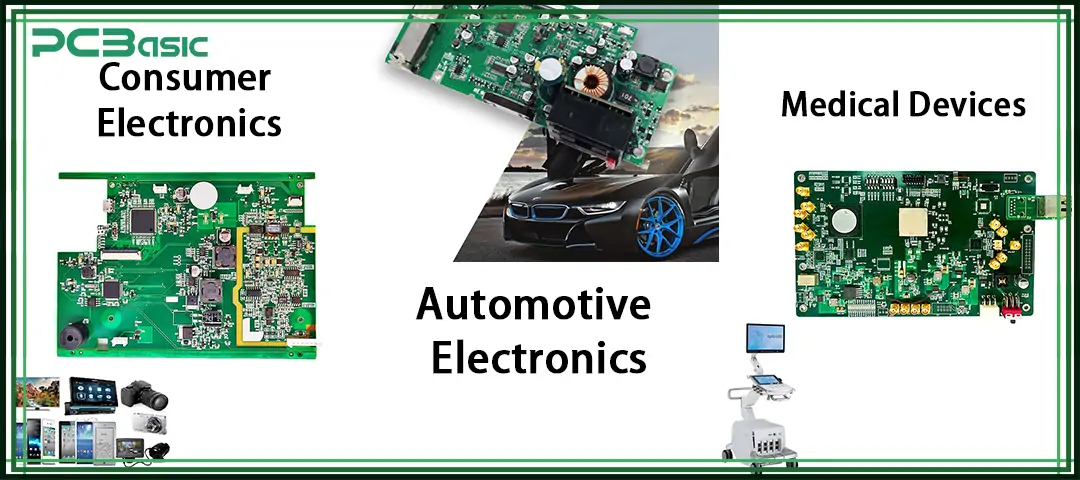
Today, SMT assembly is applied in almost all electronic industries. Because SMT technology enables electronic devices to be made smaller and allows for the placement of more components on the circuit board, it has become a crucial manufacturing method in modern printed circuit assembly.
Common applications of SMT assembly (SMT assembly) include:
Products such as smartphones, tablets, laptops, and smart home devices extensively use SMT assembly (SMT assembly) and SMD components (SMD components).
There are many electronic control units (ECUs) in modern vehicles. By using SMT technology (SMT technology) for reliable PCB assembly (PCB assembly), these electronic systems can operate stably in complex environments such as high temperatures and vibration.
Medical devices require an extremely high standard for quality and stability. Thus, strict SMT process control (SMT process control) and inspection equipment are usually used in printed circuit assembly (printed circuit assembly).
Industrial controllers, robot equipment, and Internet of Thing (IoT) all depend on high-quality SMT assembly (SMT assembly) to ensure stable operation of the equipment.
Although SMT assembly has many advantages, it also has certain limitations. Understanding these factors can help manufacturers choose the appropriate PCB assembly method for their products.
Time is money in your projects – and PCBasic gets it. PCBasic is a PCB assembly company that delivers fast, flawless results every time. Our comprehensive PCB assembly services include expert engineering support at every step, ensuring top quality in every board. As a leading PCB assembly manufacturer, we provide a one-stop solution that streamlines your supply chain. Partner with our advanced PCB prototype factory for quick turnarounds and superior results you can trust.
As SMD components are directly attached to the surface of the circuit board, when using SMT technology, more components can be placed on the same circuit board.
Compared with the traditional through-hole assembly, this method enables the circuit board to be made smaller, making it highly suitable for compact electronic products.
Nowadays, a mature SMT production line combined with advanced SMT equipment can produce at a high speed.
This can significantly improve the production efficiency of printed circuit assembly.
In SMT assembly, most of the work is completed by automated machines, thus reducing labor costs.
When conducting PCB assembly in large quantities, not only is the efficiency higher, but also the product quality is more stable.
Because the distance between SMD components is shorter, the circuit connection is shorter. This reduces interference during signal transmission, resulting in better performance.
For this reason, SMT technology is usually used in many high-speed electronic circuits.
Because SMD components are usually very small, if manual repair is required in SMT assembly, it will be more challenging than traditional PCB assembly.
In some high-power equipment, the through-hole components are more secure, so in terms of mechanical strength, they are usually more reliable than SMD assembly.
Due to the fact that SMT technology can install more components on the circuit board, in some printed circuit assembly designs, if the components are too densely arranged, it may create thermal management challenges.
In the electronics manufacturing industry, the terms SMT (Surface Mount Technology) and SMD (Surface Mount Device) are often used interchangeably.
However, when discussing PCB assembly (PCB assembly), it is very important to understand the difference between SMT and SMD (SMT vs SMD).
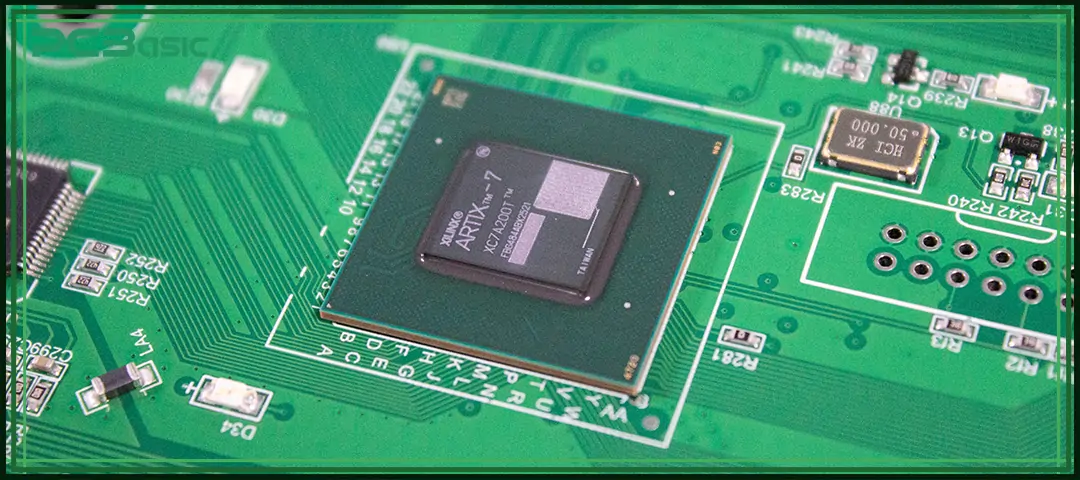
To understand the meaning of SMD, we need to first answer a common question: What does SMD stand for?
SMD (Surface Mount Device) refers to electronic components specifically designed for SMT assembly.
Common SMD components include:
1. Resistors: A resistor (resistor) is an electronic component used to limit current or regulate voltage in the flow of electricity in a circuit.
2. Capacitors: A capacitor (electrical capacitor) is an electronic component used for storing and releasing electrical energy. It can temporarily store electric charge in the circuit and release it when needed.
3. Integrated circuits: Integrated circuits (ICs) are electronic devices that integrate a large number of electronic components (such as transistors, diodes, resistors, capacitors, etc.) onto a very small semiconductor chip.
4. Diodes: A diode is an electronic component that allows current to flow in only one direction.
5. Transistors: A transistor is an electronic component used for amplifying signals or controlling current switches, and is one of the very important basic components in electronic circuits.
Because SMD components are specifically designed for surface mounting, they are usually much smaller than traditional through-hole components.
In modern PCB assembly, most electronic components used for printed circuit assembly are SMD components.
The difference between SMT and SMD (SMT vs SMD) is actually quite simple.
SMT technology is a production process used in SMT assembly and SMD assembly.
SMD components are the electronic components used in this production process.
In a word:
SMT = manufacturing process
SMD = electronic component
In the SMT process, the automated SMT equipment will attach the SMD components onto the PCB, hence completing the PCB assembly.
Understanding the difference between the meaning of SMD (Surface Mount Device) and SMT (Surface Mount Technology) can help engineers and procurement personnel communicate more clearly in printed circuit assembly projects.

As electronic devices continue to become smaller, faster and more powerful, SMT assembly remains one of the most important technologies in modern PCB assembly (PCB assembly) and printed circuit assembly (printed circuit assembly).
By using advanced SMT equipment (SMT equipment), highly automated SMT production lines (SMT production line), and stable SMT processes (SMT process), manufacturers can produce complex-structured and highly reliable electronic products.
At the same time, understanding some basic concepts, such as the meaning of SMD (SMD meaning), what SMD stands for (what does SMD stand for), and the differences between SMT and SMD (SMT vs SMD), can help engineers communicate more clearly when designing and manufacturing electronic circuits.
From consumer electronics to automotive systems and industrial automation, SMT assembly (SMT assembly) and SMD assembly (SMD assembly) will continue to drive the development of the electronics industry.
Assembly Enquiry
Instant Quote
Phone contact

+86-755-27218592
In addition, we've prepared a Help Center. We recommend checking it before reaching out, as your question and its answer may already be clearly explained there.
Wechat Support

In addition, we've prepared a Help Center. We recommend checking it before reaching out, as your question and its answer may already be clearly explained there.
WhatsApp Support

In addition, we've prepared a Help Center. We recommend checking it before reaching out, as your question and its answer may already be clearly explained there.
