
Global high-mix volume high-speed PCBA manufacturer
9:00 -18:00, Mon. - Fri. (GMT+8)
9:00 -12:00, Sat. (GMT+8)
(Except Chinese public holidays)





HomePage > Blog > Knowledge Base > Low-Volume PCB Assembly: From Prototype Builds to Production
Have you ever had to manage a low-volume PCB assembly order? If you have, you probably know it is not just a scaled-down form of mass production. And that is exactly what you should know before arranging one. Should you look for a manufacturer that is more dedicated to production than one-off prototyping? If your answer is yes, you are already asking the right question.
In many prototype-style companies, you'll feel like starting over each time you click order. You always need to discuss with the counterpart on details and requirements. Which BOM version was used? Was a connector replaced? Did inspection find soldering problems? Did the test method change after the first build? It's getting people tired when these questions are asked again and again. So, we do want to see that production gets streamlined as issues are ironed out, which requires a good low-volume PCB assembly plan. Just like PCBasic, a full-service PCB and PCBA manufacturer, from which you can get a controlled production batch, because its work group will carefully follow the production records of the previous batch, feedback, the BOM change and test results. This can bring your prototype into batch production.
In the following contents, we'll go deep into how to assess your low-volume PCB assembly service from prototype builds to repeat PCBA manufacturing.
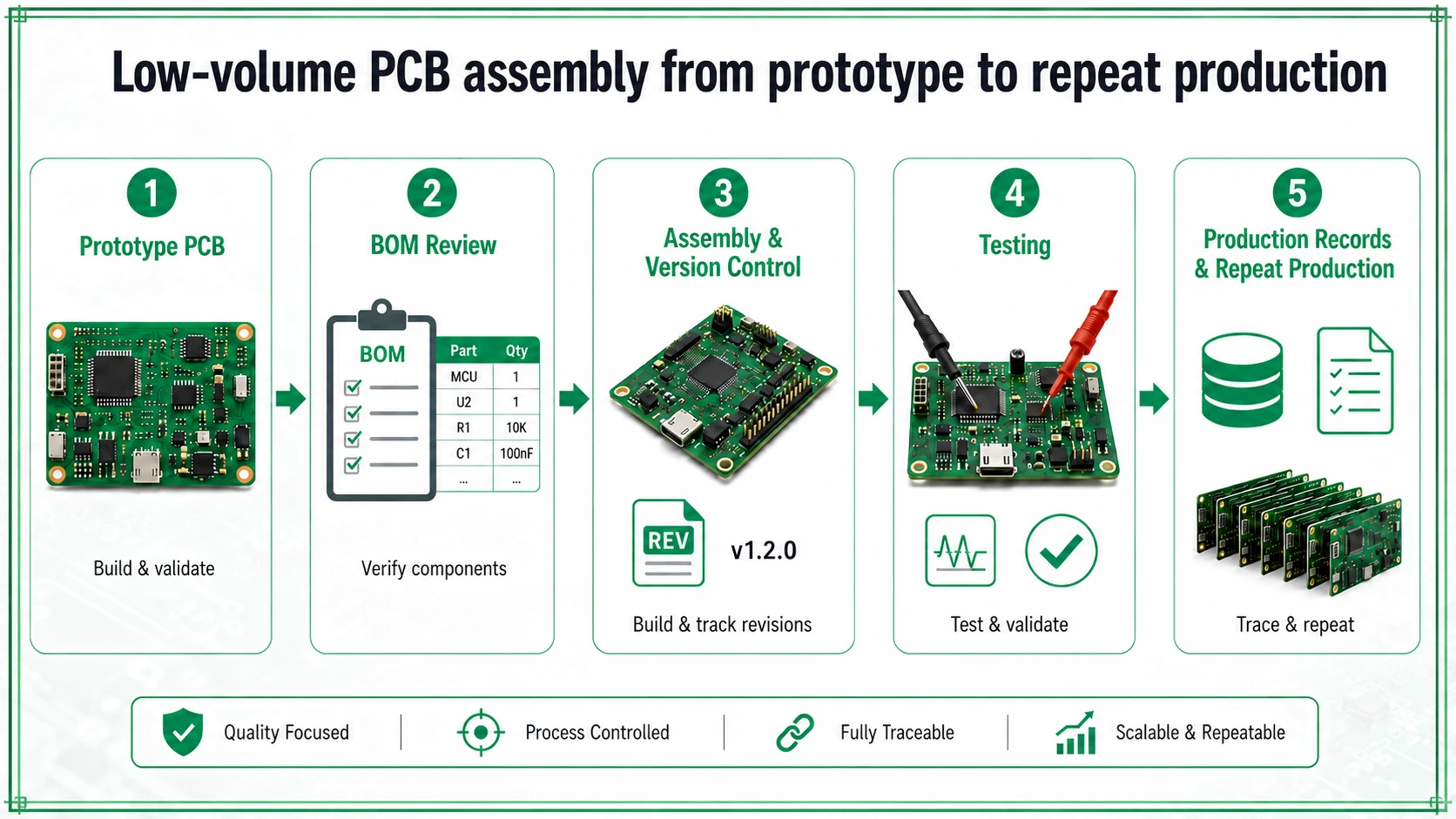
A one-off prototype shows that a circuit can work. Low-volume PCB assembly has a wider task. It needs to show that the board can be built again, checked in the same way, and adjusted without causing confusion in the next production batch. That is why supplier selection should go beyond a quick online quotation.
In early projects, engineering teams usually care first about whether the initial board powers on. Buyers need to look a little further. Will the same components still be available next month? Have alternates been approved? Does the supplier know which test results match which production batch? Can the latest board revision be kept separate from older stock? These questions start to matter when a bench sample becomes a customer-facing product.
Fast prototype work helps only when it does not make the next step messy. If the supplier treats every prototype as a one-time job, the buyer may get a working sample but miss the record behind it. Soldering conditions, component substitutions, test failures, and engineering changes can disappear into scattered notes. When repeat orders come in, the team may have to learn the same lessons again.
That is why buyers should ask how prototype PCB assembly services are documented. A useful supplier does more than populate the board. It reviews the BOM, points out long-lead parts, confirms assembly notes, keeps inspection results, and records approved changes that may affect the next order.
Low-volume projects can change quickly. A connector may be swapped, a resistor value may shift, or firmware may need another programming step. Those changes should not sit only in emails or chat messages. Each one should tie back to a drawing version, BOM version, test note, and production batch.
Clear revision control protects the buyer as well as the PCB assembly manufacturer. It helps the buyer avoid mixed versions in inventory. It also helps the supplier build the same product again without guessing which file is the latest one.
Buyers should compare suppliers by project risk, not just by line count or unit price. The table below offers a practical starting point for Request for Quotation (RFQ) preparation and supplier review.
|
Project point |
Possible risk |
What buyers should check |
|
BOM review |
One critical component delays the whole batch |
Long-lead parts, approved alternates, sourcing channel, and BOM version |
|
SMT process |
Fine-pitch parts create solder defects |
Solder paste control, SPI, AOI, X-ray needs, and First Article Inspection (FAI) |
|
PCBA testing |
The board passes visual inspection but fails in use |
Flying probe testing, functional testing, interface checks, and pass-fail records |
|
Small-batch repeat orders |
Old and new versions are mixed |
Revision control, production batch records, and traceability |
|
Final assembly needs |
Cable, label, or enclosure details are missed |
Connector access, programming method, label position, packing, and test access |
Table: PCBA Project Risks and Buyer Checklist
For many low-volume projects, the BOM decides the schedule before the first panel ever reaches the SMT line. A single MCU, isolated power module, terminal block, relay, sensor, or connector can hold up the whole order. For that reason, component sourcing belongs in the technical review. It should not be treated as a separate purchasing detail added after pricing.
The supplier should state whether components come from original manufacturer channels, authorized distributors, or approved stock. If an alternate part is suggested, the buyer should understand why it is acceptable and where that approval is recorded. If a part cannot change because of firmware compatibility, certification, mechanical fit, or field history, that limit should be clear before the order is confirmed.
The move from prototype to PCBA manufacturing is safer when the supplier separates three kinds of work: assembly inspection, electrical testing, and production record control. These areas connect with one another, but they do not serve the same purpose.
SMT PCB assembly inspection can include solder paste inspection (SPI), automated optical inspection (AOI), X-ray inspection for hidden solder joints, and First Article Inspection (FAI). These checks help control the assembly process before defects move further downstream.
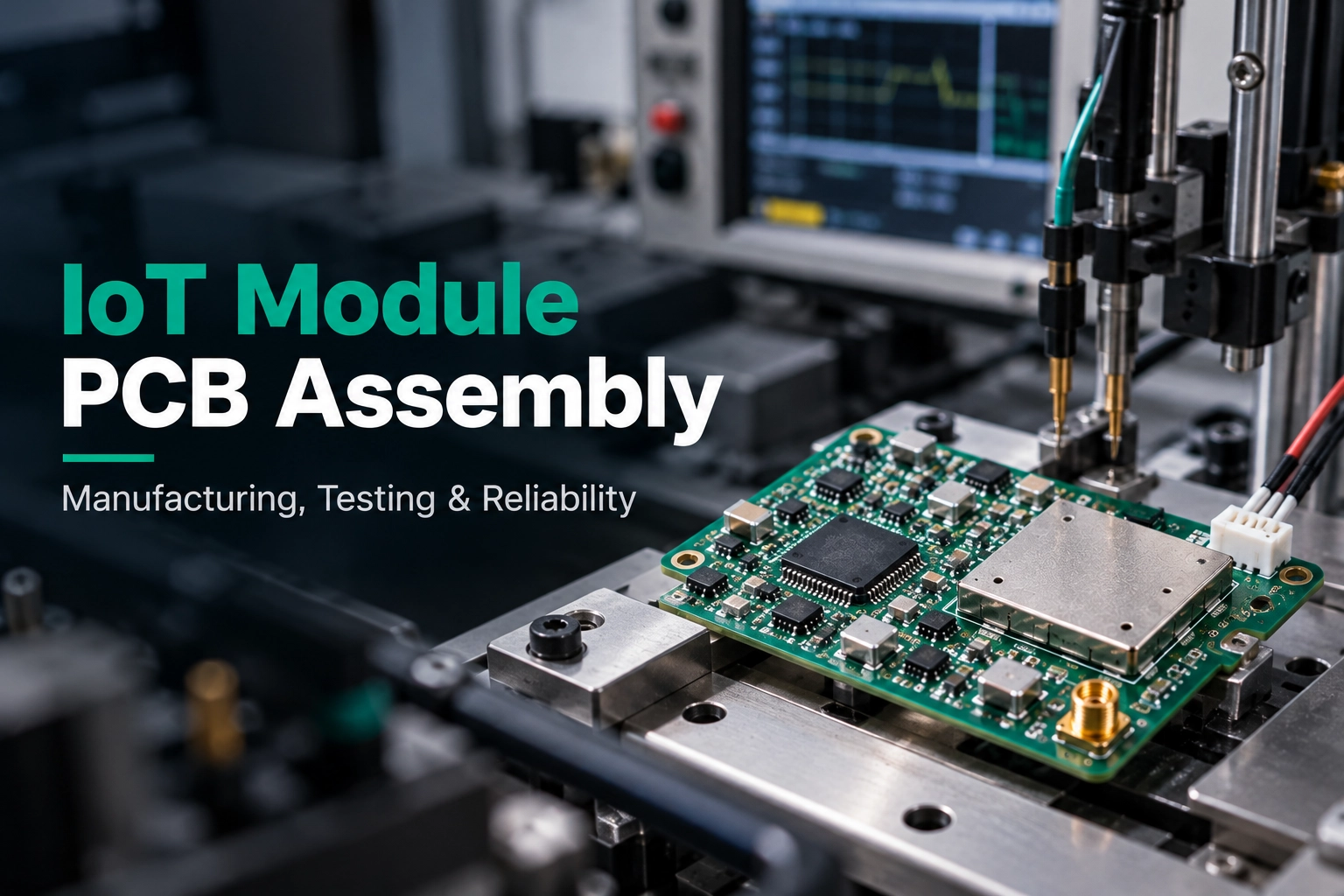
After assembly, PCBA electrical testing may include flying probe testing and PCBA functional testing. The test plan should confirm the behavior that matters for the application. That may include power-on status, communication interfaces, inputs and outputs, firmware version, or basic load response. A long test list is not as useful as a clear plan tied to product risk.

Design for Manufacturability (DFM) review is often described as a PCB layout check. For low-volume production, the view needs to be broader. The supplier should also look at component availability, assembly sequence, panelization, test point access, programming access, connector orientation, and any enclosure or cable detail that may affect the next build.
That broader review matters even more when the product may later need box build assembly or field-service access. A test pad that is easy to reach on a bare PCBA may be blocked after installation. A connector that looks fine in the layout may be hard to plug in once the board is fixed inside the device. Finding these details before the batch starts can reduce rework and schedule pressure.
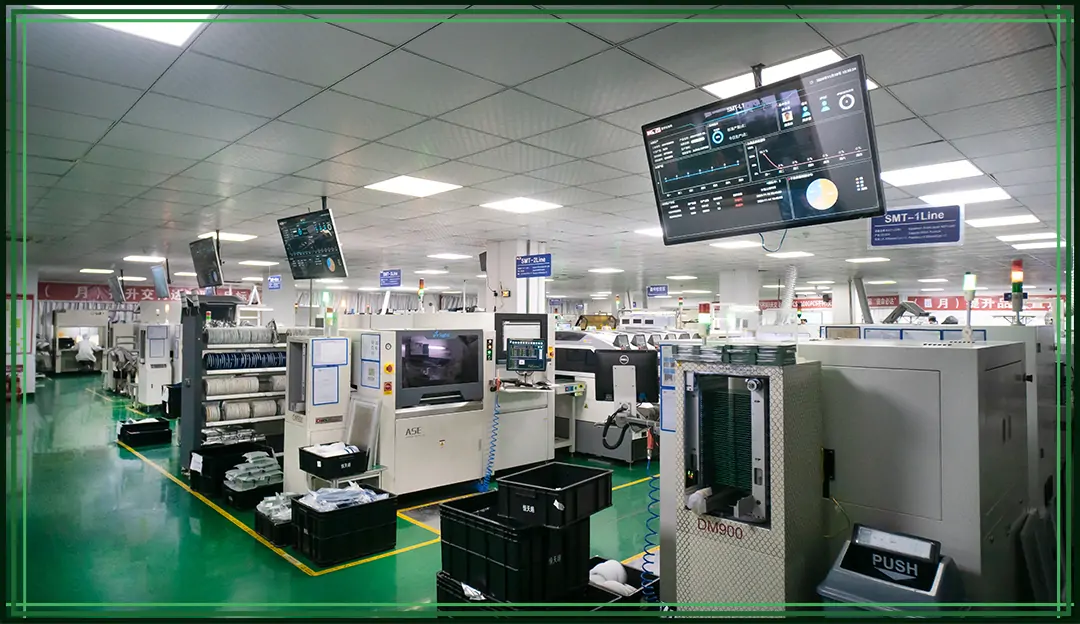
PCBasic is positioned around high-mix, low-volume and mid-to-high-end PCBA manufacturing. Its service coverage runs from PCB fabrication and component sourcing to SMT, DIP, testing, and final assembly. The company's knowledge base highlights self-developed MES, IQC incoming material inspection, First Article Inspection, digital production management, and multiple production sites for small-batch and larger-batch work.
For low-volume PCB assembly, digital management has value only when it shows what actually happened during production. Buyers can check several points:
• whether the team can trace a component lot;
• whether FAI records can be connected with a production batch;
• which inspection station found a defect;
• how a repair or engineering change was closed.
A practical traceability workflow gives buyers more confidence when repeat orders arrive. It also makes problem review easier. The team can compare the affected production batch with the BOM version, process records, inspection results, and approved changes, instead of working from memory.
Low-volume does not mean loose or informal. Small-batch work still needs controlled incoming inspection, assembly review, test planning, material storage, ESD control, and pre-shipment checks. The challenge is to stay flexible while keeping records clean enough for the next build.
For buyers who expect the product to grow, turnkey PCB assembly can help when the project needs more than board population. It can bring PCB fabrication, component sourcing, PCB assembly, testing, and assembly-related support into one managed path.
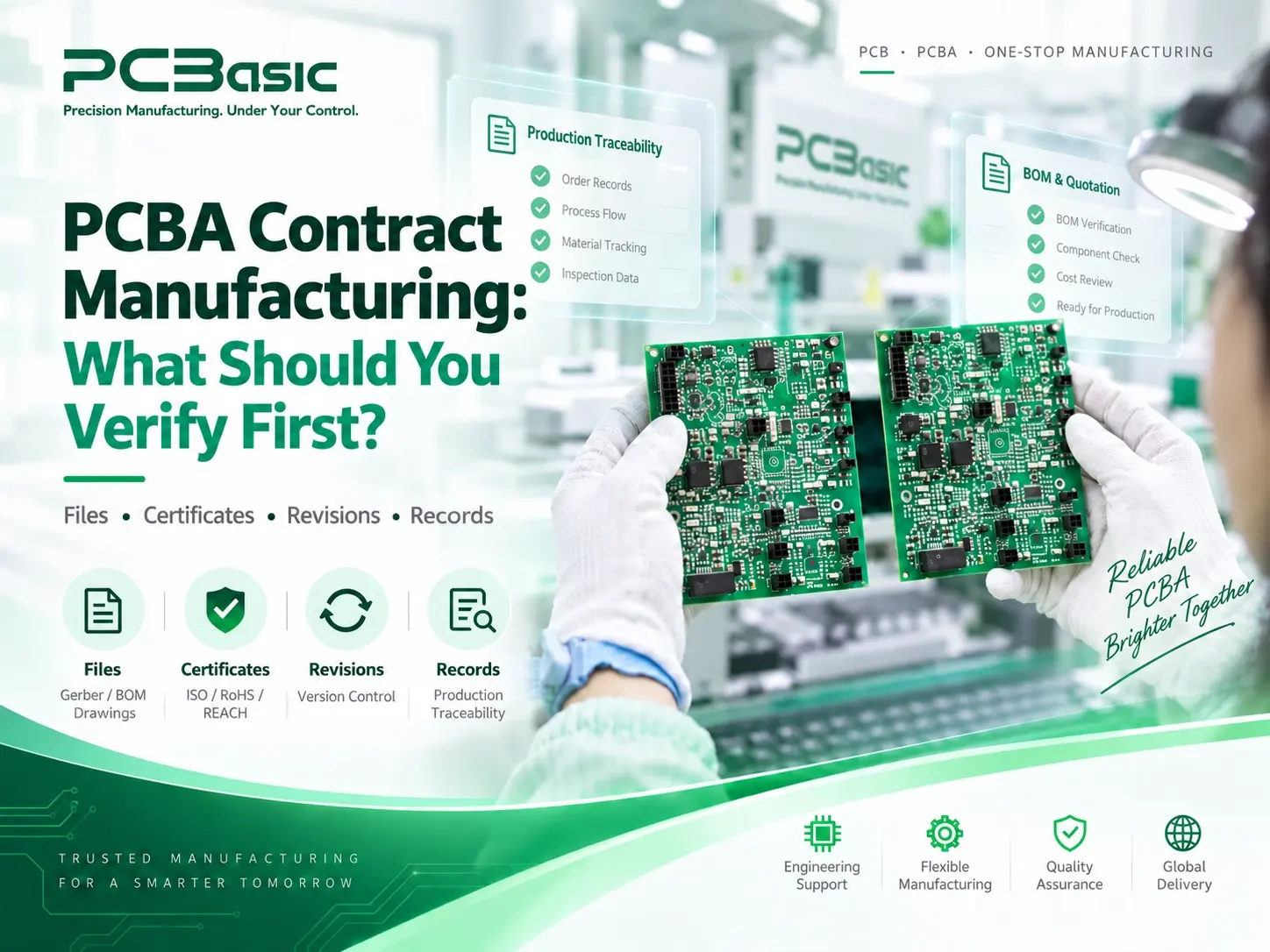
A stronger Request for Quotation (RFQ) gives the supplier enough context to quote the real job. Price still matters. But a low price based on incomplete files can lead to late questions, component changes, or rework after the order has already started.
A useful RFQ should include Gerber files, BOM, pick-and-place data, assembly drawings, expected quantity, target schedule, test requirements, and any special notes about firmware, labels, packing, or final assembly. If an enclosure or cable harness will affect the PCBA later, add that information early.
In many real projects, files come from several teams. Engineering provides the Gerbers, purchasing sends the BOM, mechanical design shares an enclosure drawing, and quality adds a test note. A capable supplier should turn those separate files into one build checklist before production starts.
Before placing the order, ask how the supplier will report BOM risks, DFM questions, First Article Inspection (FAI) results, inspection findings, failed-unit handling, schedule changes, and engineering change requests. If files are ready, buyers can send them through PCBasic's Contact Us form and mention the project stage in the message.
For a low-volume project, communication is part of quality control. The buyer should not have to ask one team about purchasing, another about SMT, and a third about testing just to understand one production batch. A coordinated PCBA manufacturing workflow makes the order easier to review from prototype through repeat production.

Low-volume PCB assembly sits between a working prototype and a repeatable product. Buyers should not judge it only by unit price or a delivery promise. A better question is whether the supplier can review the BOM, manage sourcing risk, inspect the assembly process, plan PCBA testing, record revisions, and keep production data usable for the next batch.
PCBasic fits the low-volume assembly topic because its service model connects PCB fabrication, component sourcing, PCB assembly, testing, and final assembly support under a digital management approach. For buyers moving from prototype builds to production, this connected process can remove many of the assumptions that often appear between engineering, purchasing, assembly, testing, and repeat orders.
Q1: What is low-volume PCB assembly?
A1: Low-volume PCB assembly means small-batch board production for prototypes, pilot runs, early product launches, and repeat orders that have not moved into high-volume manufacturing. It still needs BOM review, inspection, testing, and production records.
Q2: How is low-volume PCB assembly different from prototype PCB assembly services?
A2: Prototype PCB assembly services usually aim to build the first working boards quickly. Low-volume PCB assembly also looks at repeatability, sourcing risk, revision control, inspection records, and whether the same design can be produced again.
Q3: What should buyers ask a PCB assembly manufacturer before placing a small-batch order?
A3: Buyers should ask about BOM review, component sourcing channels, approved alternates, SMT inspection, PCBA electrical testing, First Article Inspection (FAI), revision control, traceability, and communication during ramp-up.

Assembly Enquiry
Instant Quote

Phone contact

+86-755-27218592
In addition, we've prepared a Help Center. We recommend checking it before reaching out, as your question and its answer may already be clearly explained there.
Wechat Support

In addition, we've prepared a Help Center. We recommend checking it before reaching out, as your question and its answer may already be clearly explained there.
WhatsApp Support

In addition, we've prepared a Help Center. We recommend checking it before reaching out, as your question and its answer may already be clearly explained there.
