
Global high-mix volume high-speed PCBA manufacturer
9:00 -18:00, Mon. - Fri. (GMT+8)
9:00 -12:00, Sat. (GMT+8)
(Except Chinese public holidays)





HomePage > Blog > Knowledge Base > Box Build Assembly Services for Your PCB: From PCBA to End Product Assembly
Table of Contents
1. What Are Box Build Assembly Services?
2. What Is Involved in a Full PCB Box Build Assembly?
3. PCB Box Build Assembly Process: From Prototype to Production
4. What Information Should You Provide for PCB Box Build Assembly?
5. Why Use a Turnkey Box Build Assembly Manufacturer?
By using box build assembly, a company combines PCB assembly and final assembly of the product in one manufacturing process instead of separating it into two different ones. Depending on the type of product being developed, this process might include mechanical assembly, assembly of cables and wires, mounting of displays and power supplies, firmware programming, labeling, functional testing, and visual inspection.
It is also important for product developers and OEMs to choose the right provider to avoid difficulties connected with managing various manufacturers of all necessary elements. In simple words, PCB assembly creates the electronic core of the product, and box build assembly puts it together with other parts.
Box build assembly is the process of integrating the tested PCBA with additional mechanical, electrical, and functional components in order to get the end product. Standard PCB assembly is the process of mounting and soldering components onto a bare PCB; box build assembly takes one more step forward. In box build assembly, the following can be performed:
• Mounting of PCBA in the housing;
• Wiring;
• Installation of power supplies and displays;
• Uploading of firmware;
• Functional testing;
• Packaging.
Thus, box build assembly is the stage of assembling the board into the product.
During the process of standard PCB assembly, a PCBA is created through mounting, soldering, testing, and inspection. The box build assembly process includes the integration of the tested board into the larger assembly, where the manufacturer can integrate components such as:
• Enclosures and mechanical parts.
• Cable and harness assemblies.
• Displays and interfaces.
• Power supplies and batteries.
• Fans, heat sinks and other cooling components.
• Switches, connectors and sensors.
• Firmware and configuration.
• Labels and packaging.
It results in a more complete product assembly that can proceed to final testing and, after approval, shipping.
Often, system integration and box build assembly terms are interchangeable. However, system integration may involve broader electrical, mechanical, firmware, configuration, and system-level testing requirements, depending on the project. Box build assembly can range from mounting a single PCBA in the housing with minimal cabling to assemblies with multiple PCBs, power supplies, display elements, communication modules, mechanical components, and testing.
The full box build process may include electronic, mechanical manufacturing, and firmware or software loading and configuration. Although the bill of materials varies between products, some of the common components may include:
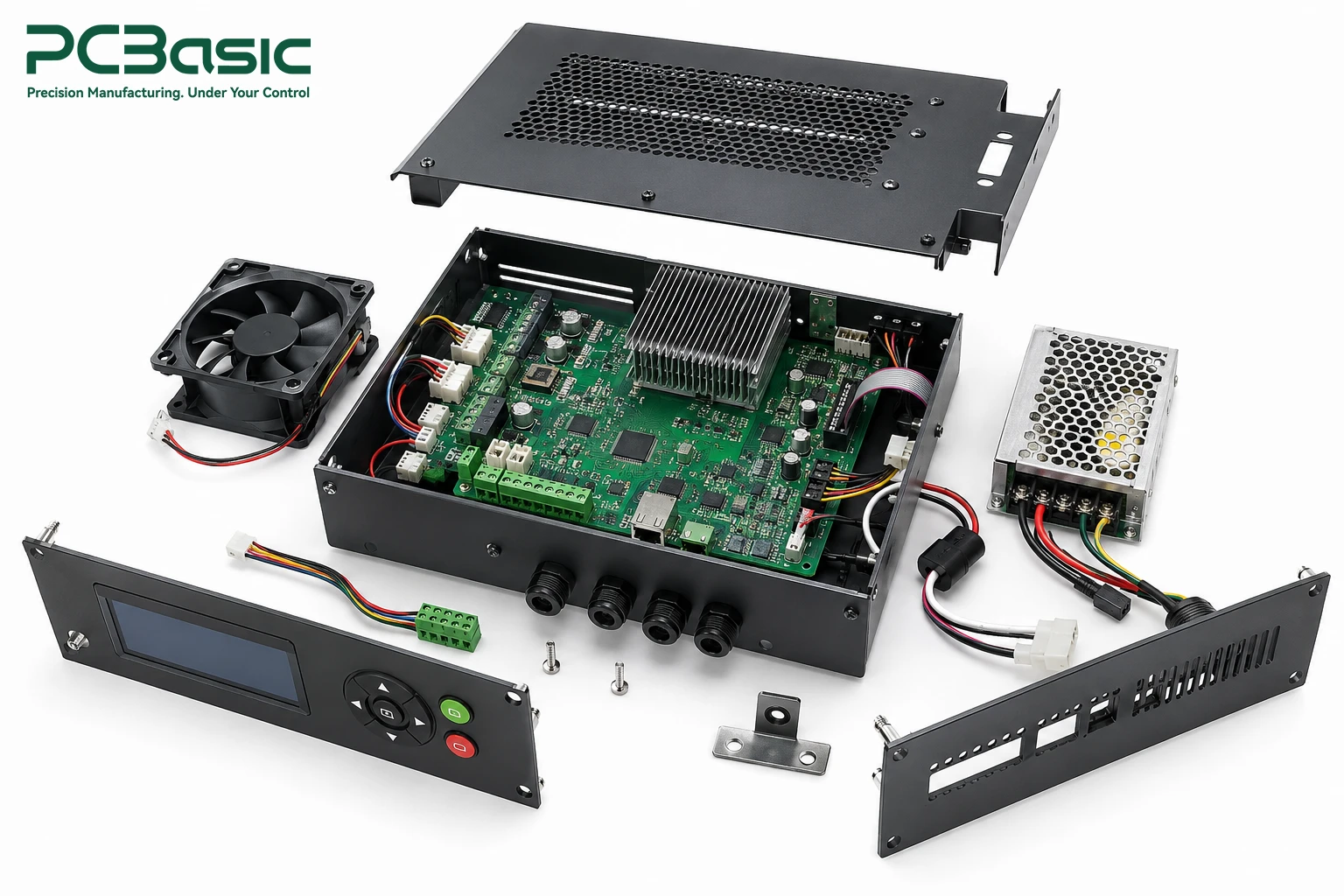
PCBA is the electronic heart of the box-build product. During the box build process, the board is mounted in the proper enclosure with appropriate screws, brackets, clips, spacers, and other hardware. Enclosures are made of diverse materials, such as plastic, sheet metal, or machined metal, depending on the mechanical requirements. Enclosure assembly is a crucial step of the manufacturing process.
Connectivity of circuit boards, power sources, displays, sensors, switches, and other interfaces requires the cable or harness assembly to be made specifically for the product. The professional harness assembly includes the following steps: cutting, stripping, crimping, termination, marking, routing, and electrical testing. Cable routing should also consider mechanical motion, bend radius, heat considerations, electromagnetic requirements, and serviceability.
The assembled product can include several PCBs and different modules like:
1. AC/DC or DC/DC power supply;
2. Battery or battery management unit;
3. Displays and touch screen;
4. Keypad or control panel;
5. Fan or cooling solution;
6. Motor or electromechanical component;
7. Sensors;
9. Secondary or daughterboard.
Both electrical and mechanical interactions are expected during the integration process, and all connections have to work cohesively.
In some cases, the process of firmware programming or configuration can be required before shipping. Box build service providers are able to perform the following actions: load or program the firmware, assign serial numbers, configure the parameters, and meet other customer requirements. The final product testing can include functional, electrical, communication, safety, or environmental testing. The manufacturer can apply labels or barcodes, protective coating to the assembly, and packaging of the product according to the customer's specification. Relevant IPC standards, such as IPC-A-630A for electronic box assemblies and IPC/WHMA-A-620 for cable and wire harness assemblies, may apply depending on the product and customer requirements.
A successful box build assembly process requires the coordination of the engineering, purchasing, electronics manufacturing, mechanical assembly, wiring, testing, and logistics departments.
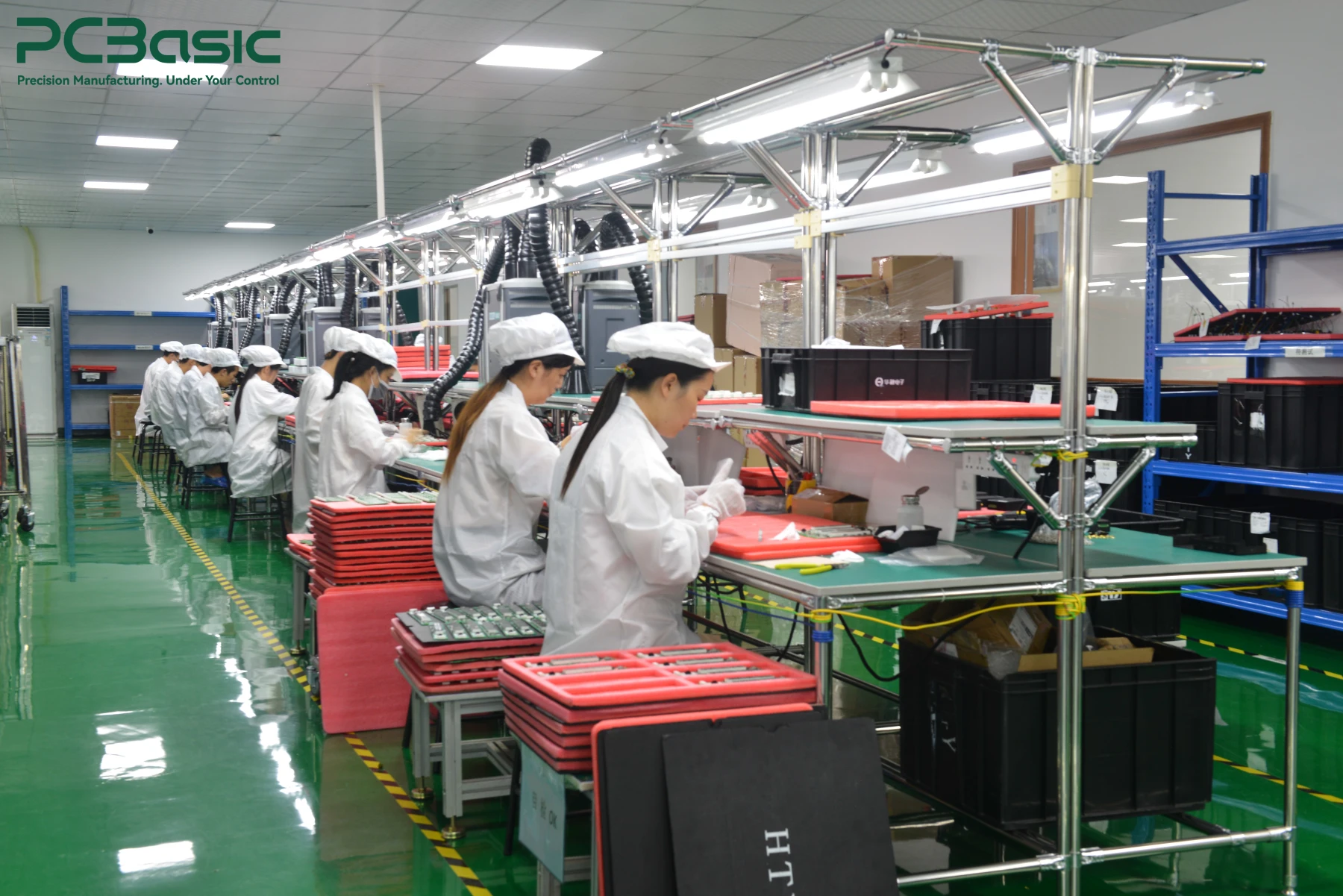
The process starts with the review of customer documentation, including BOM, PCB design, mechanical drawings, CAD models, assembly instructions, firmware, testing requirements, and others. The engineering department performs the risk assessment of manufacturing, including assembly difficulties, inadequate clearance, inaccessible fasteners, connector conflicts, cabling issues, test point access, and so on, using Design for Manufacturability (DFM) and Design for Assembly (DFA).
After the risk evaluation, the materials are procured and prepared. Common steps are: procurement of the components, incoming inspection, PCB fabrication, mounting and soldering of components, inspection and testing of the PCBA. PCBA inspection and testing can include AOI, X-ray inspection, functional testing, programming, and other methods, before starting the box build process.
Then the electronic and mechanical components are integrated. The PCBA is coupled with the power modules and other components, cabling is installed, wire harnessing are installed, displays and switches are mounted, and the enclosure assembly is done. Work instructions help to ensure consistent assembly from prototypes through production. The complex product assembly involves integration of multiple functional modules.
Testing goes beyond PCBA testing and aims at the final product validation. The box builds are tested in the following way: power-up testing, I/O testing, firmware testing, communication testing, and other functional tests. The final inspection includes checking the component mounting, labels, connectors, cabling, fasteners, appearance, and packaging, in order to comply with the approved specifications before shipping.
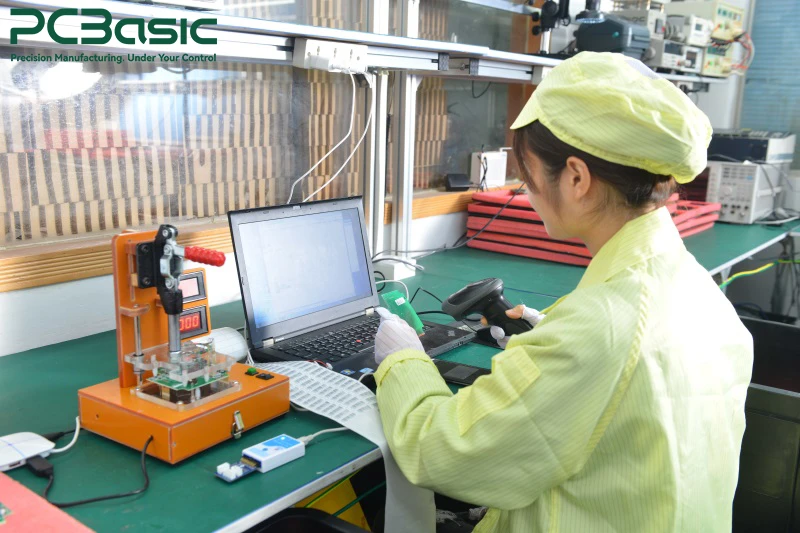
Manufacturing specifications ensure accurate estimation and consistent production.
You should provide a BOM with the information on part number, description, quantity, allowed substitutions, and other related data. Besides the BOM, you should provide the assembly drawings, instructions, schematics, PCB design files, testing requirements, and revision history, if necessary. This will reduce uncertainties and identify missing information in advance.
Mechanical information is crucial for box builds. You should provide drawings, dimensions, tolerances, 3D CAD models, mounting points, connector locations, and other mechanical information. If the product is available, you should provide samples to clarify the assembly process.
Define the final product functionality. The testing requirements can include electrical characteristics, interfaces, functions, firmware version, calibration requirements, environmental and other product-specific information. In the case of a programmable product, you should provide the firmware and installation instructions.
Provide serial numbers, barcodes, warning labels, regulatory symbols, and other customer-specific information. Packing requirements should be defined before manufacturing.

A turnkey approach to box build assembly allows the manufacturer to combine multiple manufacturing processes under one roof while reducing the need for the customer to coordinate various suppliers of PCB assembly, mechanical parts, wiring, assembly, testing, and packaging.
There are the following advantages of turnkey manufacturing:
• Increased manufacturing coordination;
• Increased process visibility;
• Fewer supplier-to-supplier handoffs;
• Consistent assembly documentation;
• More centralized quality management;
• Easier transition from prototype to volume production;
• Complete testing and final inspection.
The value is especially high for products with multiple PCBs, mechanical parts, cables, and functional units.
When choosing a box build assembly service provider, you should pay attention not only to of the manufacturer’s PCB assembly capabilities. It is important to evaluate the manufacturer's capabilities in:
1. PCB manufacturing and PCBA production
2. Component sourcing and material management
3. Mechanical and enclosure assembly
4. Cable and wire harness assembly
5. Electromechanical integration
6. Firmware programming and configuration
7. Testing
8. Quality control and traceability
9. Packaging and labeling
10. Transition from prototype to manufacturing
Also, you should evaluate the quality system and compliance with the industry standards. There are several IPC standards related to component assembly, soldering, cable and harness assembly, and electronic box assembly.
PCBasic provides an integrated solution that covers all processes from the PCB assembly up to the final assembly. PCBasic’s box build assembly services include mechanical assembly, cable and wire harness assembly, testing, labeling, packaging, box build, and other options. Such an approach can reduce the need to coordinate with multiple manufacturers. PCBasic can help with material sourcing, PCBA production, system integration, enclosure assembly, harnessing, firmware programming and configuration, testing, packaging, and logistics. The right partner matches the technical complexity, manufacturing scale, quality requirements, documentation, and delivery needs of the product. It can support a smoother transition from board-level manufacturing to final product manufacturing.

Box Build Assembly involves all the parts necessary for constructing a complete operational electronic product. In comparison with the standard PCB assembly that only considers the process of component construction on a circuit board, box build assembly considers the complete process of product integration.
The process may involve such procedures as PCB assembly, enclosure assembly, wiring and wire harnessing, connectors, power supply, firmware loading, functional testing, labeling, and packaging. Every part of the process requires proper coordination in order to ensure the correct operation of electrical and mechanical parts of an electronic product.
For prototype manufacturers and enterprises that need large-scale production of their products, cooperation with a skilled turnkey manufacturing company can make this process much simpler. By having a single partner coordinate the manufacturing processes, enterprises can reduce the need to work with multiple partners for different procedures.
Q1: What are PCB box build assembly services?
A1: Box build assembly service integrates your PCBA with the enclosures, cables, connectors, mechanical parts, power supplies, firmware, and other components in order to create the end product.
Q2: What is the difference between PCB assembly and box build assembly?
A2: The PCB assembly process is focused on assembling the circuit board; the box build assembly process integrates the assembled board with the other components in order to create the end product.
Q3: What is included in a typical box build assembly?
A3: PCBA assembly, enclosure assembly, harnessing, mechanical parts, power supply, firmware programming, functional testing, labeling, and packaging can be included in the box build assembly.
Q4: What is PCBA integration?
A4: PCBA integration is the process of incorporating one or more assembled circuit boards into the electronic or electromechanical system with mounting, wiring, configuration, and testing.
Q5: Why is wire harness assembly important in box build manufacturing?
A5: It ensures reliable connections of the boards, power supplies, sensors, displays, connectors, and other assemblies.
Assembly Enquiry
Instant Quote
Phone contact

+86-755-27218592
In addition, we've prepared a Help Center. We recommend checking it before reaching out, as your question and its answer may already be clearly explained there.
Wechat Support

In addition, we've prepared a Help Center. We recommend checking it before reaching out, as your question and its answer may already be clearly explained there.
WhatsApp Support

In addition, we've prepared a Help Center. We recommend checking it before reaching out, as your question and its answer may already be clearly explained there.
