
Global high-mix volume high-speed PCBA manufacturer
9:00 -18:00, Mon. - Fri. (GMT+8)
9:00 -12:00, Sat. (GMT+8)
(Except Chinese public holidays)





HomePage > Blog > Knowledge Base > From Relays to Wi-Fi: What Makes Smart Appliance PCB Assembly Different
1. Where Power Control and Smart Electronics Meet on a Smart Appliance PCB
2. Why Smart Appliance PCB Assembly Is Rarely Just SMT
3. Why a Well-Assembled Smart Appliance PCBA Can Still Fail Functional Testing
4. What Changes When Smart Appliance PCB Manufacturing Scales Up?
5. Different Appliances, Different PCBA Reliability Priorities
A washing machine that interfaces through an app. A fridge that sends
you a message if the door remains open. A temperature-controlled oven that
knows your dinner routine. Each and every one of those features requires a
circuit board that must control a relay and interface through a WiFi stack
simultaneously.
That is exactly why smart appliance PCB assembly has developed into an entirely separate field of manufacture. This same design challenge occurs in PCB assembly for smart homes, but many appliances feature mains-rated loads that low-power smart home devices do not have to deal with directly.
The connected appliance industry is continuously growing with an increase in sensor, display, and application connectivity technology in devices that earlier were running through one mechanical clock only. This creates a challenge for smart appliance PCB manufacturing because now the board is not only responsible for switching motors but needs to accommodate memory and wireless modules too.
In this article, you will be guided through what makes a smart appliance control board unique from regular consumer electronics, why assembly doesn't always end at SMT, why a board could pass all inspections yet fail functional tests, and how things become different when smart appliance PCB manufacturing goes from prototype to volume production.
Anyone evaluating a smart controller PCB assembly partner for a connected appliance program should walk away from this article with a clearer list of questions to ask before committing to a manufacturer.
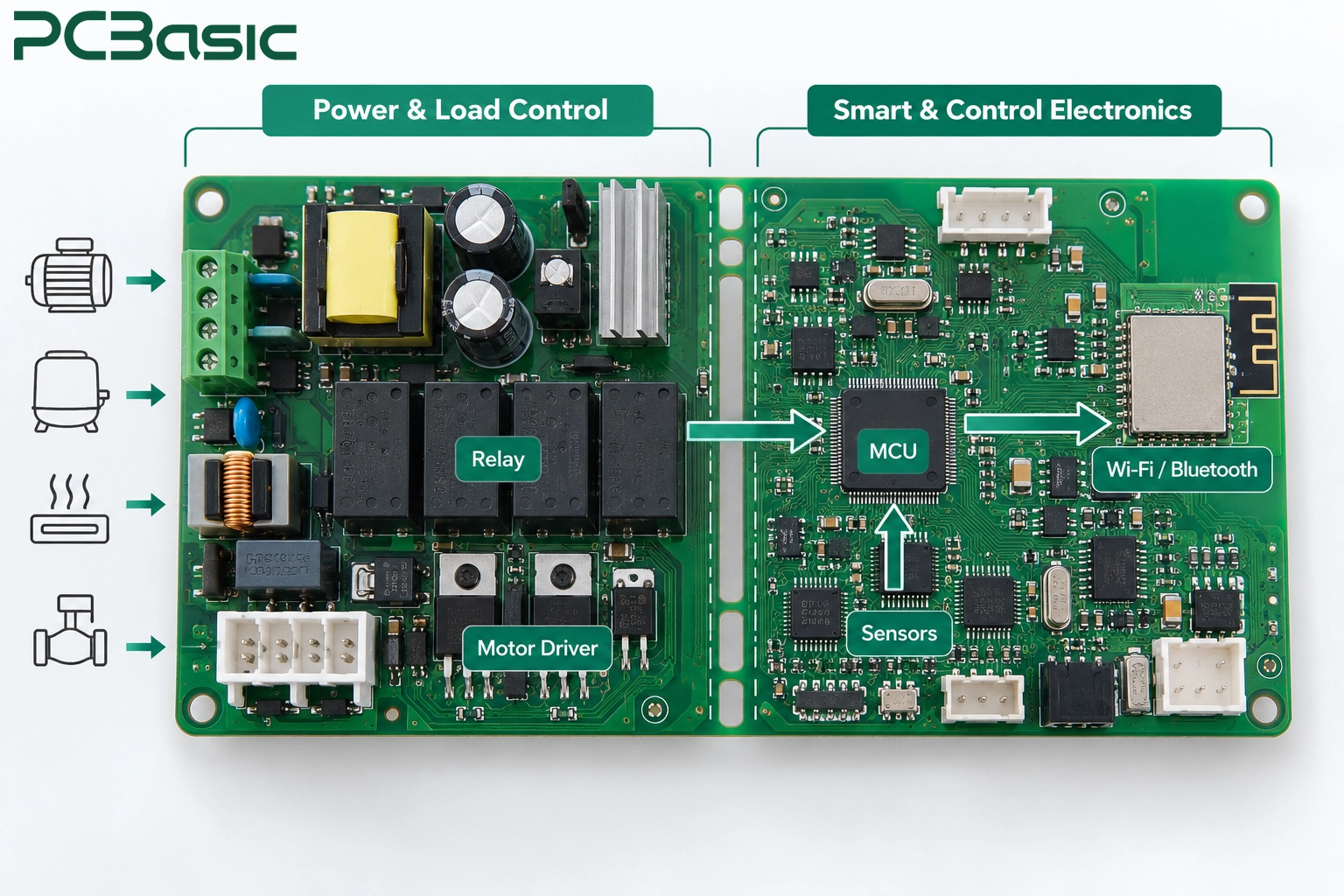
A smart appliance PCB carries two very different worlds on one board, and neither can be designed in isolation from the other.
The appliance portion of the board controls actual loads such as relays, motors, pumps, valves, fans, compressors, or heaters. On the smart portion of the board, the intelligence is controlled by an MCU, sensors, memory, an HMI screen, and connectivity via Wi-Fi or Bluetooth.
To do so, a smart appliance control board has to be able to isolate these two portions electrically but use the same substrate because placing switching and power circuitry too close to a Wi-Fi module can introduce interference that degrades wireless performance precisely when the user needs it the most.
Ground planes, proper component layout, and shielding of the wireless portion of the circuit help in doing that.
Relays and driver circuits operating at mains voltages require appropriate separation from a 3.3V microcontroller system. Creepage and clearance spacings, isolation barriers, and thoughtful copper layout protect against transient currents on the load side from interfering with sensors and resetting the microcontroller on the intelligent side.
Being mistaken about this separation doesn't necessarily result in the problem appearing on a bench test. Instead, the issue may show up later when your customer's appliance intermittently restarts as the compressor switches on and, by this time, the failure is likely to look like a bug in the firmware rather than a problem in the design.
The PCB assembly of a smart appliance meant for a washing machine encounters vibration and occasional exposure to moisture. An appliance PCB assembly for an oven control panel encounters continuous heat emanating from the cavity beneath it.
A home appliance PCB assembly must take into consideration the stress environment of the particular appliance; indoor electronic equipment should not be a universal assumption for all home appliances. Appliances may fail prematurely in the field if their boards are reused without proper reassessment for the intended operating environment.
Standard surface-mount assembly covers only part of what a finished smart appliance PCBA actually needs.
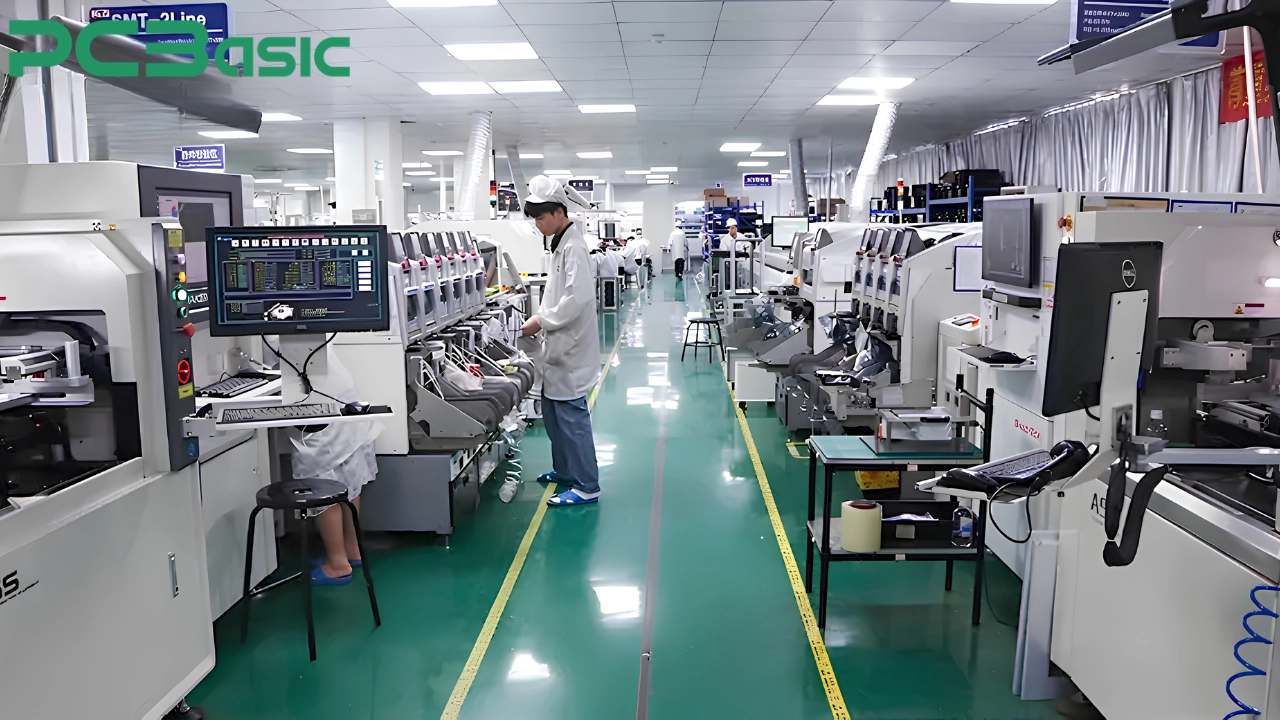
Solder paste printing, pick-and-place, and reflow are responsible for the microcontroller, memory, sensors, and PCB assembly work involving the Wi-Fi or IoT module. This part of the manufacturing process is similar to the assembly of consumer electronics in terms of component pitches and the high precision of radio frequency modules. Inspection of solder paste at this stage helps detect printing defects that could otherwise contribute to open joints later in the process.
Relays, terminal blocks, high current connectors, and even the power transformer are often supplied as through-hole components, particularly where stronger mechanical support is required. An assembled PCB right out of the reflow oven will need an entirely new assembly step before being able to undergo testing. This is often underestimated during scheduling of the production cycle based on SMT throughput alone.
Transitioning from SMT to through hole component assembly entails incorporating either wave soldering or selective soldering in a procedure that has already been through the reflow stage without harming the heat-sensitive devices assembled prior to the transition stage. PCBasic is capable of conducting SMT assembly, DIP assembly, wave soldering, and manual soldering in the same production workflow, with SPI and AOI used at appropriate stages.
A board can look flawless under inspection and still fail the moment it's asked to actually run an appliance.
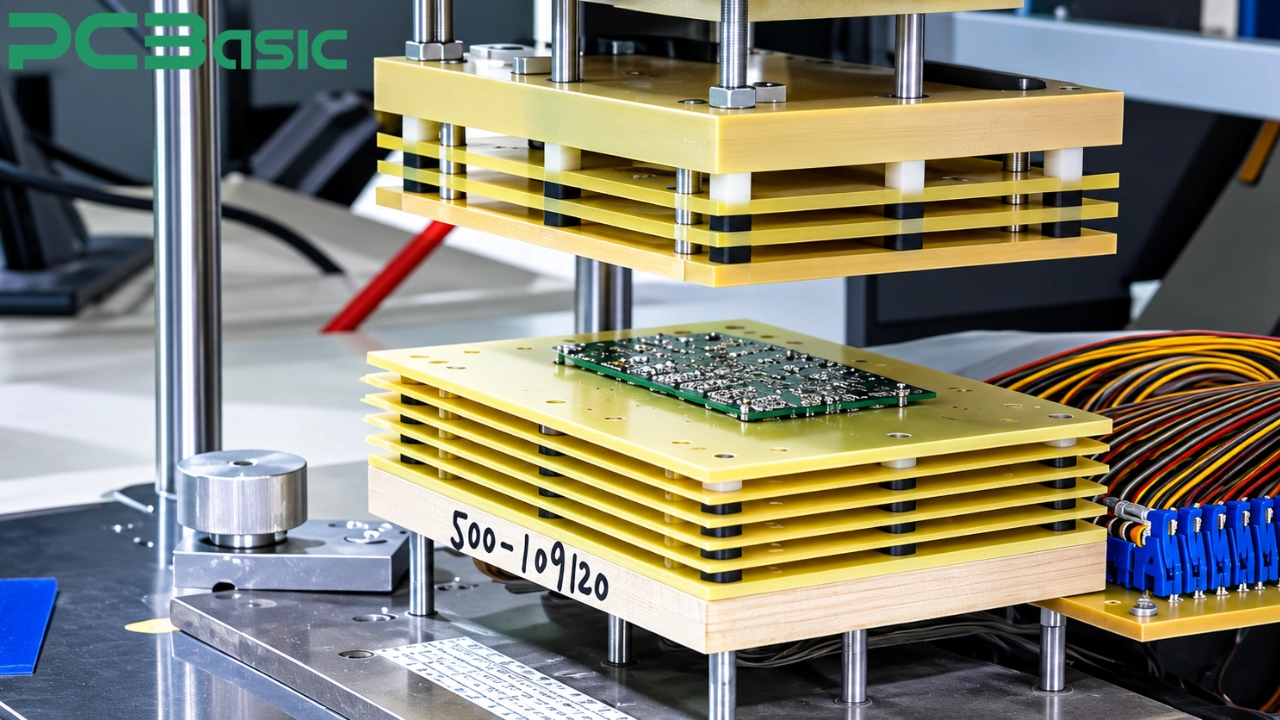
Solder paste inspection and automated optical inspection verify solder-paste conditions, component placement, and visible solder-joint quality. Neither one verifies that the relay operates the load, or that the WiFi module associates with a router. The board could appear to be flawless under the microscope but may never activate the device for which it was designed.
For PCBA functional testing, it is necessary to go through the whole signal path: from the input of the sensor to the processing by the MCU and the output to the load, rather than only ensuring that each individual block is tested. Even a temperature sensor reading perfectly well on the bench may send wrong information to the control unit via a marginal connection.
The test setup requirements for a washing machine controller and an oven display board are very different, as one requires simulation of water level sensors and loads of motors, whereas the other involves simulation of heating elements and door interlocks. An off-the-shelf test jig which is designed neither for the washing machine nor the oven will end up approving defective boards.
PCBasic combines SPI, AOI, 3D X-ray, ICT, and FCT with custom functional test fixtures matched to each appliance's actual signal chain, rather than running every board through a generic bed-of-nails test that was never designed for it.

A process that works for fifty prototype units doesn't automatically survive fifty thousand.
Component tolerances, volume of solder paste, and technique of the operator have some small variability that is not very important for small volume production. However, when you multiply that variability during the production process, smart appliance PCB manufacturing will produce circuit boards that test as good separately, but become inconsistent as a group.
Incoming quality control for components, first article inspection for each new build, and process control throughout will detect drift long before it turns into a field return. Detecting a marginal reel of components during incoming inspection is much cheaper than detecting the marginal reel of components when ten thousand boards have already been built. IQC and FAI allow for a system of early detection rather than one of post-mortem.
Change control must be implemented for reflow profiles, fixture calibration, and approved source parts after a design release, because any unapproved substitution may affect reliability without being noticed until there is a claim under warranty.
MES traceability connects every board produced to its actual production information. This allows a supplier to pinpoint the problem, and not just speculate as to how many boards are affected by the problem, enabling more targeted investigation and containment rather than unnecessarily broad corrective action.
Appliance PCBA priorities shift depending on what the appliance actually does, not just how complex its electronics are.
|
Appliance |
Typical Functions |
Manufacturing / Test Focus |
|
Washing machine |
Motor control, water-level sensing, Wi-Fi app connectivity |
Vibration resistance, moisture protection, load switching validation |
|
Refrigerator |
Compressor control, temperature sensing, door alerts |
Long-term thermal cycling, sensor accuracy over years of use |
|
Smart oven |
Heating element control, touch HMI, temperature profiles |
High-temperature component ratings, thermal isolation from control electronics |
|
Air conditioner |
Compressor and fan control, remote connectivity |
EMI shielding, high-current relay reliability |
Even if both the home appliance PCB designed to last for ten years and another that was designed for a consumer product with only two years to go have identical sensors and wireless modules, there will be an entirely different reliability discussion when designing each of them. This is because making sure that you design your test plan based on the expected lifetime of your PCB makes all the difference between a good and a poor reliability program.

Smart appliance PCB assembly works effectively if the power electronic assembly and IoT electronic assembly are considered together as one design issue, and not two independent boards that happen to be placed on the same substrate. Every step in SMT, through-hole assembly, custom functional testing, and control of volume production determines whether your appliance works without problems for many years or causes you warranty claims in its first season.
PCBasic creates smart appliance PCB assembly programs based precisely on such a discipline, starting from prototypes up to mass production. If the upcoming connected appliance requires an assembly partner that has knowledge from both ends of the board, and you are looking for either an entire smart appliance PCB assembly, an appliance control board, or even just IoT module PCB assembly, then we would love to have that discussion.
Q1: What is smart appliance PCB assembly?
This is the process of manufacturing circuit boards that integrate appliances’ power controllers (e.g., relays and motors) with smart electronic components, including microcontrollers, sensors, and wireless communication technology, all within one printed circuit board.
Q2: Why can't standard SMT assembly finish a smart appliance PCBA?
Many smart appliance boards use through-hole components, such as relays, terminal blocks, and connectors, where stronger mechanical support or specific component requirements favor THT, making wave, selective, or manual soldering after SMT necessary in some designs.
Q3: Why does a smart appliance PCBA sometimes pass inspection but fail functional testing?
Inspection confirms components are placed and soldered correctly, but only functional testing confirms that the full signal chain, from sensor to MCU to load, actually behaves correctly under real operating conditions.
Q4: What changes when smart appliance PCB manufacturing moves to high volume?
Small variations in components, solder paste, and process control that don't matter in prototypes can accumulate at scale, making incoming quality control, first article inspection, and traceability essential.
Q5: Do all smart appliances need the same PCBA reliability testing?
No. A washing machine controller, a refrigerator board, and a smart oven display each face different stresses, so test focus should match the specific appliance's operating environment and expected service life.

Assembly Enquiry
Instant Quote
Phone contact

+86-755-27218592
In addition, we've prepared a Help Center. We recommend checking it before reaching out, as your question and its answer may already be clearly explained there.
Wechat Support

In addition, we've prepared a Help Center. We recommend checking it before reaching out, as your question and its answer may already be clearly explained there.
WhatsApp Support

In addition, we've prepared a Help Center. We recommend checking it before reaching out, as your question and its answer may already be clearly explained there.
